Black Friday Prep: How to Get Your Online Shop Ready to Sell in South Africa
Prepare your South African Black Friday online shop for 27 November 2026: update products, test mobile checkout and use an online store builder.
14 min read

On this page
Black Friday Online Shop Prep: How to Get Your South African Store Ready to Sell
Short version: start preparing six to eight weeks before Black Friday, which falls on 27 November 2026. That's early October. Lock in your offers and prices, tidy up your product pages, test your checkout on a phone, and point every social profile to one link-in-bio page. A Black Friday online shop built on a simple online store builder is usually easier to manage than a DM-and-EFT system held together with screenshots. But that only holds if your stock, delivery promises and after-sale plan are sorted before the rush.
I'm writing this as part of the Shopstar team. When we talk to small South African sellers, we hear the same thing again and again: everything gets left to the last week. So here's a practical plan for a shop run by one person, or maybe two, who also have a day job's worth of other things to do. 🛍️
How Early Should You Prepare for Black Friday? A Realistic Timeline 🗓️
Here's the honest bit. In our experience, many small shops start in the last week. By then supplier stock is tight, couriers are stretched, and you're editing product photos at 11pm. Larger retailers typically plan months ahead, but for a small team, six to eight weeks is a sensible countdown. These are our planning recommendations, not fixed industry deadlines, so adjust them to your supplier lead times and how much you can pack in a day.
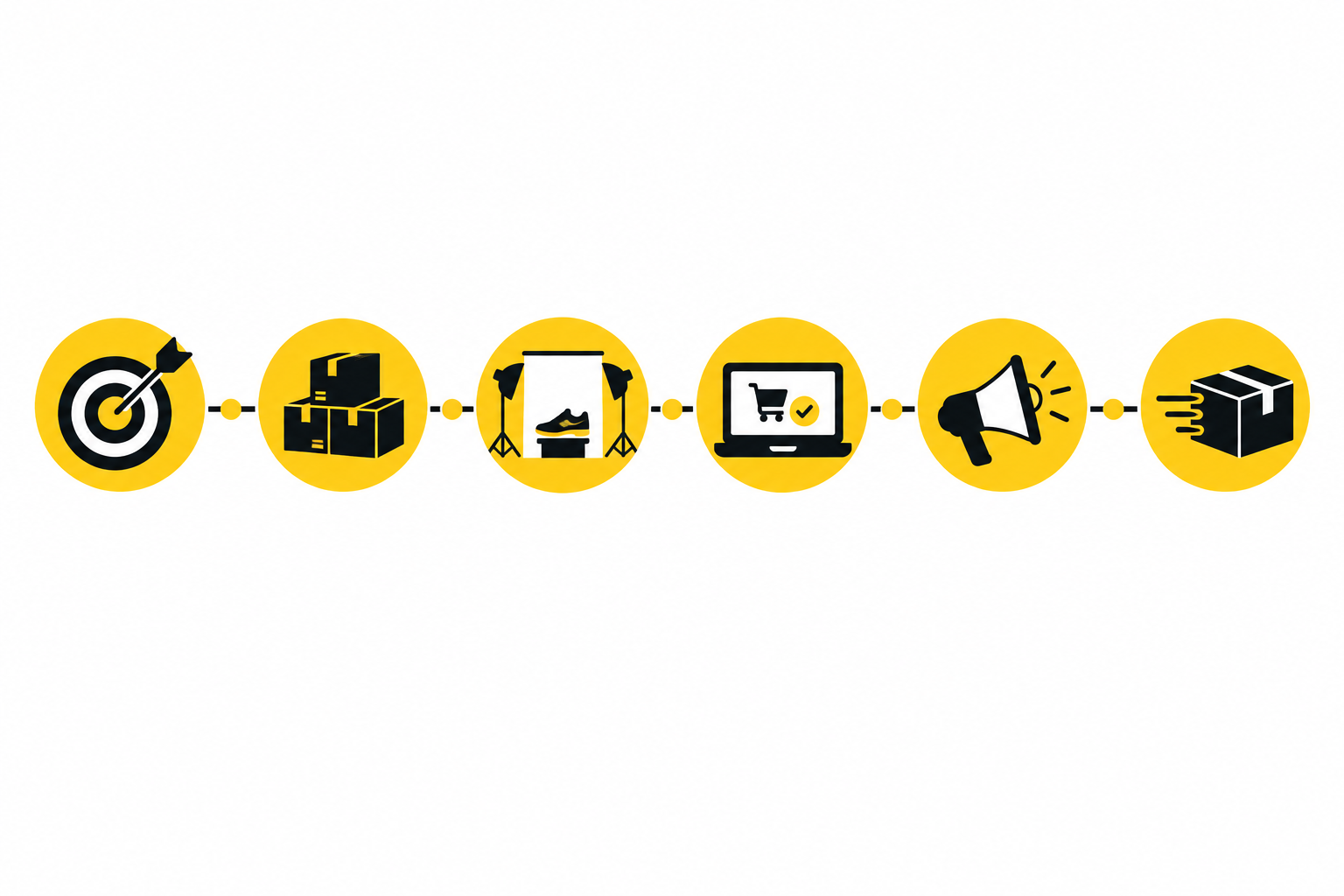
- 6 to 8 weeks out (early October): Decide what you want from the sale. Revenue? Clearing old stock? Building an email list? Then pick the products or services that are in. Fewer is better.
- 4 to 6 weeks out: Confirm supplier lead times and stock. Local couriers and suppliers get squeezed in November, so ask now, not in sale week.
- 3 to 4 weeks out: Update product pages, photos and pricing. Set up bundles or gift vouchers.
- 2 weeks out: Place a few test orders and check that payouts and emails behave. Start teasing the sale to your list and followers.
- Sale week: Do a final stock count, pre-pack what you can, schedule posts and brief anyone helping you.
Black Friday has also stretched well beyond one day. Adobe's US online retail reporting for 2024 showed Cyber Monday outperforming Black Friday itself (see Adobe's holiday shopping reports for the original data). That's a US benchmark, not a South African forecast, but the pattern is worth borrowing. Plan an early-bird window for subscribers and a Cyber Monday tail (30 November 2026) for stragglers.
Update Product Pages and Pricing for Your Black Friday Online Shop
When shoppers are comparing five tabs at once, your product page does the heavy lifting. It needs clear photos, a short description that leads with the benefit, an honest stock status, and the delivery cost and timing where nobody has to hunt for them.
Two pieces of research explain why. The Baymard Institute, which compiles studies of online checkout behaviour, puts the average documented cart abandonment rate at roughly 70% (Baymard's cart abandonment statistics), and unexpected costs are among the most common reasons. Google and Deloitte's Milliseconds Make Millions study found that shaving 0.1 seconds off mobile load time was associated with an 8.4% lift in retail conversions. Both are global figures, not South African ones, and the Google/Deloitte study dates from 2020, so treat them as direction rather than prediction. The takeaway is simple: compress your images, keep one strong hero shot per product, and check the price, sale terms and buy button on a small screen.
Work out your margins before setting Black Friday prices
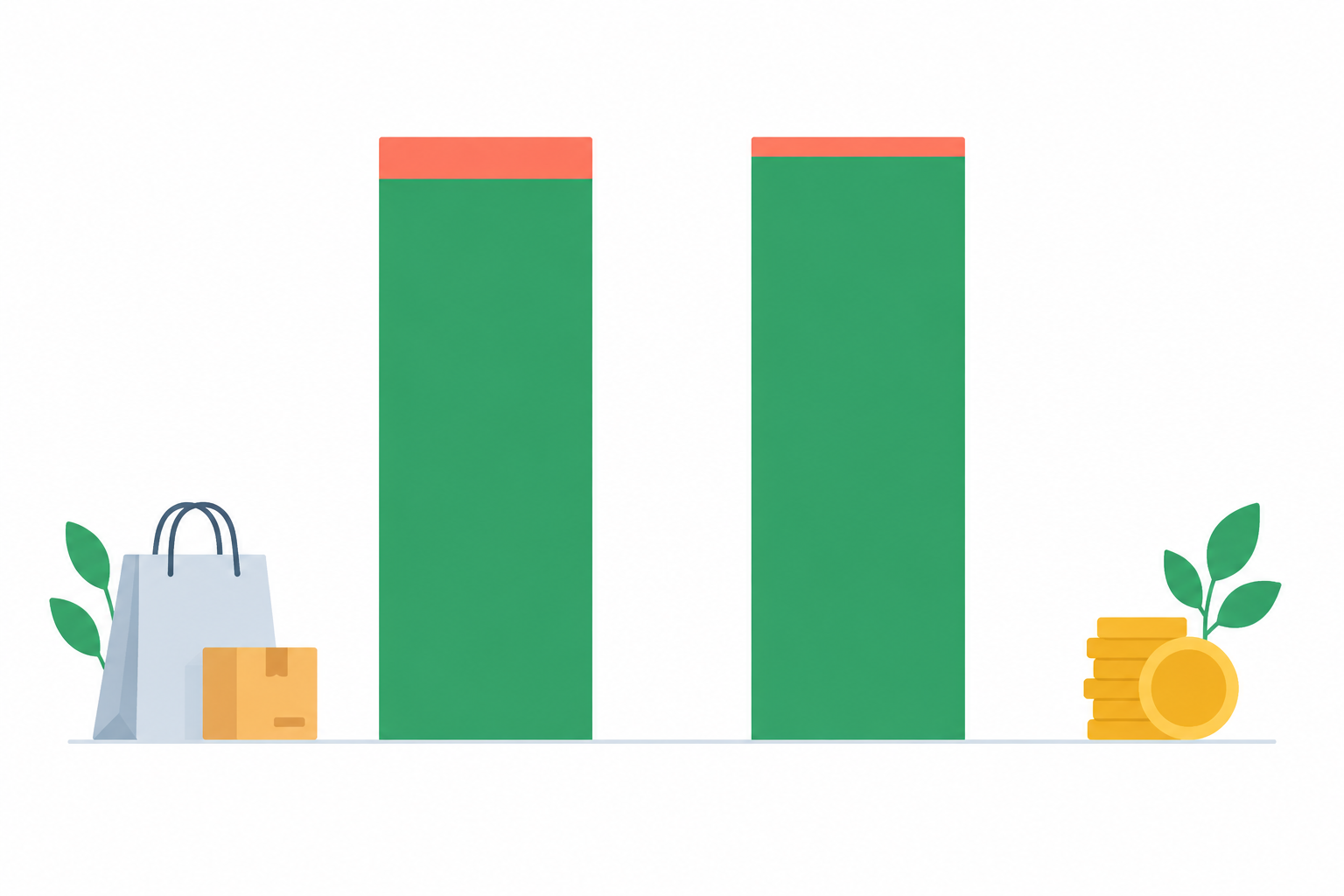
Before you discount anything, know what you actually keep. Here's a worked example on a R500 product. These figures show what's left after payment fees only, before your product cost, packaging, delivery and any applicable tax.
- Start Free plan (no monthly fee, 6% all-in per sale, made up of a 2.9% payment gateway fee and a 3.1% Shopstar fee): R30 in fees, so R470 is left.
- Lower Fees plan (monthly fee, 2.9% per sale): R14.50 in fees, so R485.50 is left, before the monthly fee.
Now put that R500 item on a 20% sale. It sells for R400, and on Start Free the fee drops to R24, leaving R376. Subtract your cost price and packaging from that and you'll see quickly whether the sale pays or just feels busy. Fees are worth checking on any platform you consider, so compare like with like.
Get VAT, the CPA and ECTA right
This is general guidance, not legal or tax advice. Rules have conditions and exceptions, so check with SARS, a registered accountant or a legal adviser for your situation.
- VAT: VAT in South Africa is 15%. If you're VAT-registered, prices shown to consumers must include it, and your records for the South African Revenue Service (SARS) should reflect your actual sale prices. Registration becomes compulsory once your taxable turnover passes R1 million in any 12-month period. Check current thresholds on the SARS website.
- Truthful discounts: The Consumer Protection Act (CPA) requires clear, accurate pricing and prohibits false or misleading representations. Only show a 'was' price that you genuinely charged. If in doubt, show the sale price and the end date. The National Consumer Commission publishes guidance.
- Seller details: Section 43 of the Electronic Communications and Transactions Act (ECTA) requires online sellers to put certain information on their site. That includes your name, physical and email address, a description of what's on offer, the full price (delivery and other costs included) and the terms of sale. Put delivery times, your returns policy and your contact details where shoppers can see them. It also makes buyers feel safer buying from a small brand.
It's not just physical products
If you run a studio or offer services, the same tidy-up applies. Open extra booking slots, set up class packs, create tickets for a December workshop, and refresh your digital downloads. With a unified checkout, a customer can buy a candle, a gift voucher and a class booking in one go.
A quick styling tip: use consistent sale labels and one hero image per offer instead of a page cluttered with banners. Calm pages are easier to shop.
Should You Offer Black Friday Discounts, Bundles or Something Else?
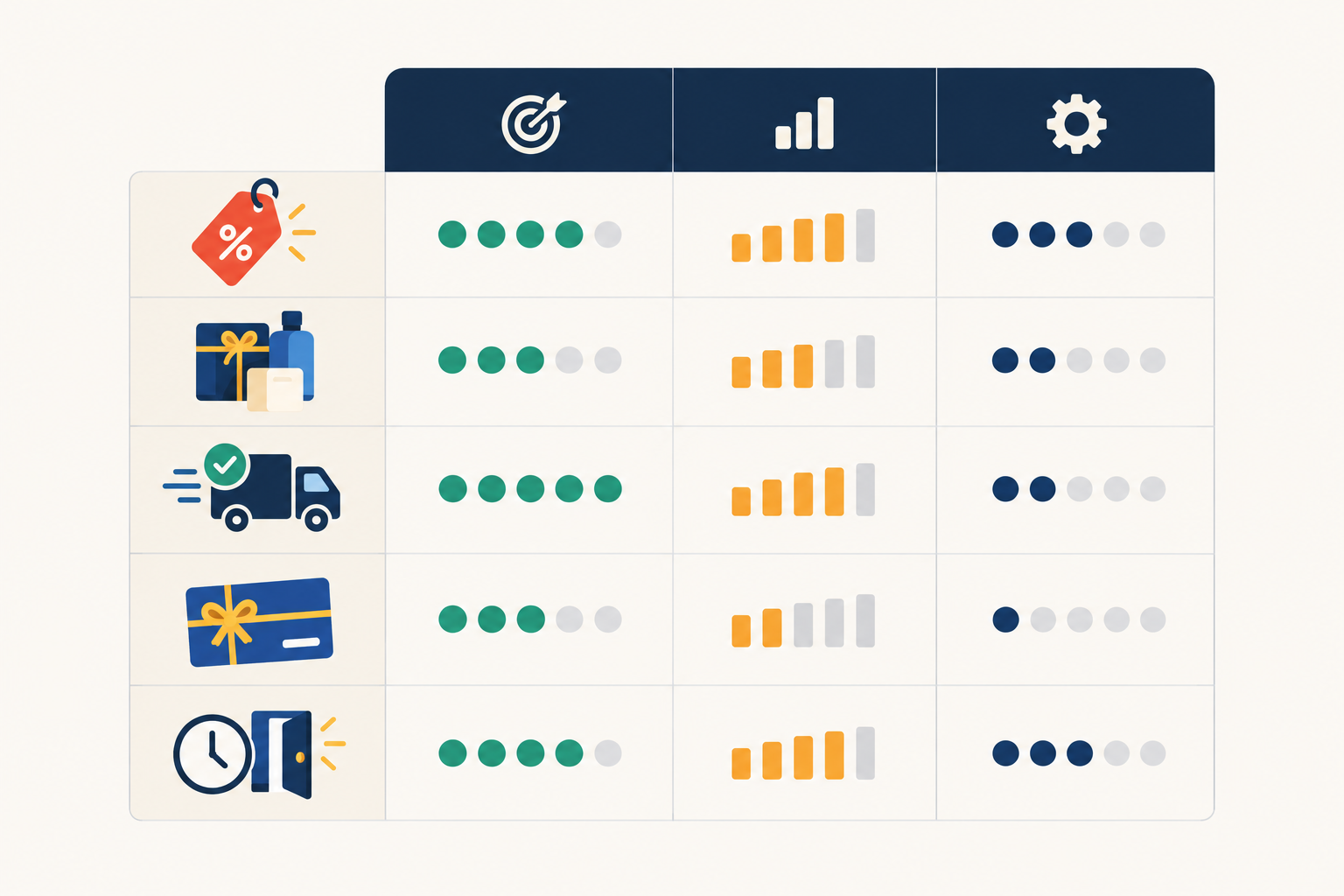
You don't have to slash everything by 50% to do well on Black Friday. Pick two or three hero offers and let the rest of the catalogue stay at normal prices. Here's how the main options compare:
| Offer type | Suits | Margin impact | Risk |
|---|---|---|---|
| Percentage discount | Candle makers, clothing, anything with healthy margins | Direct hit on every sale | Trains customers to wait for sales |
| Bundle | Salons (product sets), skincare, template creators | Can protect margin and lift basket size | Slow-moving items can pile up |
| Free delivery threshold | Shops with heavy parcels | Absorbs courier cost in rand | Eats profit on small orders if set too low |
| Gift-with-purchase | Boutiques, gifting brands | Cost of a small item | Gift stock runs out |
| Early access for subscribers | Anyone building a list | Low | Needs a list to start with |
| Limited-run vouchers | Yoga studios, salons, workshops | Cash now, service later | Must honour them, so cap the number |
Bundle maths that works
Say you sell three items at R180 each, so R540 together. A flat 20% off makes a full basket R432. Bundling all three at R450 is about 17% off, which brings in R18 more revenue on that basket, before costs and fees. It also nudges a shopper who came for a single R180 item (R144 after a 20% cut) towards a R450 basket, which lifts your average order value.
Revenue isn't profit, though. The bundle only wins if the combined product costs, packaging, delivery, payment fees and any applicable VAT still leave you the margin you want. Run those numbers for your own products before you commit.
Ideas for service businesses
If you sell time rather than things, think about pre-selling. Discounted session packs, gift vouchers and memberships bring cash in now and bookings later. A yoga studio might sell a ten-class pack in November that gets used through the first quarter. Set an expiry date and a cap, and say so up front.
One CPA reminder: state clearly when the offer starts and ends, and whether stock is limited. Shoppers shouldn't have to guess.
Prepare Your Online Shop for Higher Order Volume
For many small shops, the bigger bottleneck is stock, time and fulfilment rather than the page itself. Hosted ecommerce platforms generally run on infrastructure built for traffic bursts. Shopify, for example, reported merchants peaking at US$4.6 million in sales per minute over the 2024 Black Friday weekend (Shopify's announcement). That's a global platform figure, not a promise for any individual shop, and capacity and support differ from provider to provider. So before the sale, ask your platform about plan limits, peak-period support and any known restrictions, then test your own setup end to end.
What I'd check in the weeks before:
- Stock counts are accurate. Do a physical count, not a guess.
- Low-stock alerts are on, and sold-out items are marked so you never oversell. Under the CPA you're expected to supply what you advertised, so overselling creates real problems.
- Delivery messaging is honest. Check your courier's Black Friday cut-offs and surcharges, and write them into your delivery information. A collection-point option such as Pargo alongside home delivery helps shoppers who aren't home during courier hours.
- Pre-Christmas cut-off dates are published, so nobody expects a parcel to Cape Town on 23 December.
Choose payment options that keep cash flowing
A built-in checkout means one less system to juggle. On Shopstar, for example, Shopstar Go covers card, Apple Pay and Scan to Pay, with automatic daily payouts to your South African bank account (timing still depends on your bank, so check the details for your account). Whichever platform you use, ask what payment methods it supports and how quickly payouts land.
Here's a composite scenario, not a single customer story. A candle maker used to run Black Friday through Instagram DMs and manual EFTs. By Saturday night she was matching screenshots of proofs of payment to names and asking, 'Did you pay yet?' The next year she moved to one online page, with payment confirmations arriving automatically. We can't promise any seller the same result, but matching payments by hand is exactly the kind of admin a proper checkout removes.
Have a load-shedding plan
Keep a charged phone, a power bank and an offline pick list (printed, or a notebook) so a power cut doesn't stop you packing. Pre-label parcels and stock up on packaging in October, not on the Wednesday of sale week. ⚡
Simplify Checkout for Rushed Black Friday Shoppers
Every extra tap costs you sales, and Black Friday shoppers tend to be impatient. In Baymard's survey of US shoppers who had abandoned carts, 48% cited extra costs, 26% were forced to create an account, and 18% found checkout too long or complicated (see Baymard's checkout research). Those are US numbers, not South African data, but the lesson applies in Joburg just as much as in Jacksonville.
Here's how to smooth the path:
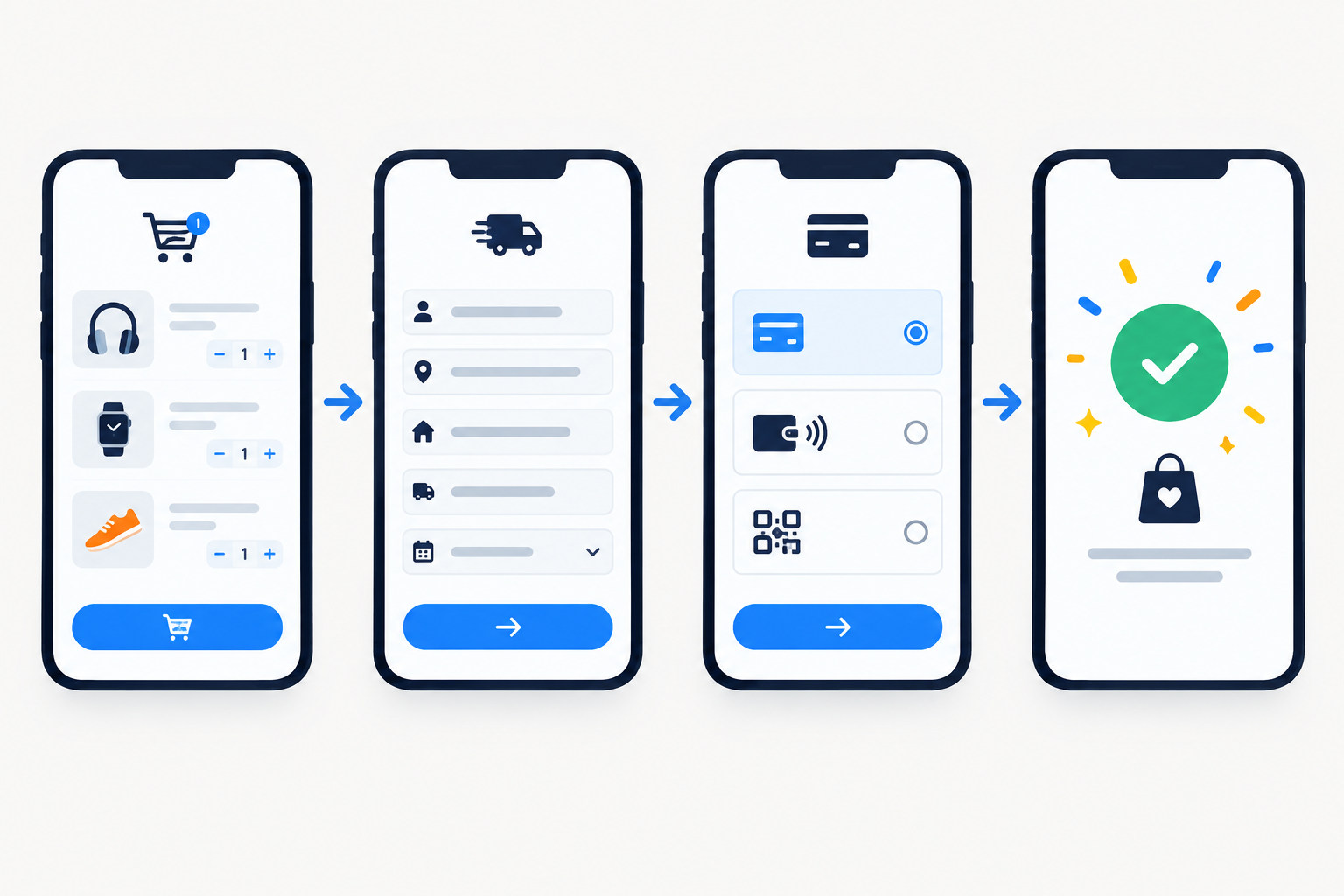
- Test a full order on your phone, start to finish, on mobile data rather than wifi. Wifi hides the slowness your customers may feel.
- Offer the payment methods your customers actually use. Card, Apple Pay and Scan to Pay through one checkout covers a lot of ground.
- Show total cost, delivery fees and delivery timeframes up front, so there are no surprises at the last step.
- Keep mixed carts in one checkout. A physical product plus a booking or ticket shouldn't mean paying twice.
- Send confirmation emails and receipts instantly, with the seller and price details ECTA expects.
- Collect only the personal information you need. The Protection of Personal Information Act (POPIA) requires you to process data lawfully and for a specific purpose. Marketing is covered in the FAQ below.
While you're there, link to a short, plain-language returns policy on the checkout page. ECTA gives consumers a 7-day cooling-off right for many distance sales, but there are exemptions (for example, certain services, personalised goods and event tickets), so check how it applies to what you sell.
Promote Black Friday Deals Through Your Link in Bio 📲
A single link in bio is the easiest way to route Instagram, TikTok, WhatsApp and Facebook traffic to the right offer. No digging through old posts, no 'DM me for prices'. Everyone lands in the same place.
Here's how I'd set it up:
- Build one Black Friday landing page. Put your top offers first, show the end date or a countdown, and add a simple 'Shop now' button.
- Use one URL everywhere. Claim a custom shopstar.page address or connect your own domain, and keep it identical across every profile.
- Plan a content calendar: teaser week, launch day, mid-weekend reminder, last-chance post, Cyber Monday follow-up. Five touchpoints are plenty.
- Rotate featured products as stock sells out. Shoppers shouldn't click through to a dead end.
- Be careful with WhatsApp broadcast lists. POPIA's direct-marketing rules apply (see the FAQ), so only message people who've agreed, and make it easy to opt out.
- Team up locally. Swap shout-outs with the neighbouring coffee shop, post in your suburb's Facebook group, or share a table at a December market and send everyone back to your page.
- Track what works. Ask 'How did you hear about us?' or use a different link per channel to see which one pays off.
For studios, point the same link to booking slots and gift vouchers, so one tap takes someone from a Reel to a booked class.

Handle Orders After the Black Friday Rush
Monday morning after Black Friday is when many small shops feel the pressure. Orders are in, the stockroom is chaos, and customers want updates. A simple plan helps:
- Batch orders by delivery method and pack in sessions rather than one at a time.
- Communicate early. Send shipping updates and honest delay notices. Under the CPA you should deliver by the agreed date, or within a reasonable time if none was agreed, so tell customers promptly if that's at risk. Keep 'order confirmed' separate from 'order dispatched', and include tracking when you have it.
- Reconcile your payouts against your bank statement and orders.
- Keep records for SARS. Save sale reports, invoices and VAT details in one folder for tax season.
- Handle returns and queries calmly, using your published policy and the consumer rights that apply.
- Follow up with a thank-you and a request for a review. Keep service messages (dispatch, delays) separate from marketing.
- Do a quick debrief. What sold? What didn't? What would you change next year? Write it down while it's fresh.
Choose the Right Online Store Builder for Black Friday
What do small shops need before Black Friday? Ideally no developer, no big monthly bill, and no steep learning curve. South African online retail was estimated at around R71 billion in 2023, up 29% on the year before, according to research from World Wide Worx (worldwideworx.com). So plenty of your shoppers are already comfortable buying online, and they'll compare you with every other tab they have open.
Whichever online store builder you look at, compare these things:
- Fees: monthly fees, per-sale fees and payment fees.
- Payments and payouts: which methods are supported and how quickly money reaches your bank.
- What you can sell: physical products, digital downloads, bookings or tickets, and whether they share one checkout.
- Support: who helps you when something breaks at 9pm on a Friday.
Shopstar is one option. We have two plans:
- Start Free: no monthly fee, 6% all-in per sale (a 2.9% payment gateway fee plus a 3.1% Shopstar fee).
- Lower Fees: a monthly fee, and 2.9% per sale.
The gap between them is 3.1% of your sales, which gives you a simple break-even. If the monthly fee were R200 (an illustration only, so check the current price on our pricing page), you'd need roughly R6,450 in sales a month before Lower Fees comes out ahead. If you expect Black Friday to push you well above your usual volume, run that calculation with your own numbers. If you're testing the waters or sell a few items a week, a no-monthly-fee plan keeps your risk low.
No builder replaces preparation, and none guarantees legal compliance, so keep your pricing, privacy and returns information accurate. Your next step is a small one: this week, pick your two or three hero offers and run a few test orders. Then give yourself time to fix what you find, instead of building everything in sale week.
FAQ
How early should I prepare for Black Friday?
Ideally six to eight weeks before, which means early October for Black Friday on 27 November 2026. That gives you time to confirm stock, update product pages, test checkout and build some anticipation. If you're short on time, focus on the essentials: accurate stock, clear pricing, a working checkout and one link-in-bio page.
Can my page handle a spike in traffic and orders?
Hosted platforms are generally built for busy periods, but limits and support vary, so ask your provider. The bigger risks for small shops are overselling, running out of packaging and falling behind on fulfilment. Test your checkout on a phone, keep stock counts current and have a load-shedding plan.
Should I offer discounts or bundles for the sale?
It depends on your margins. Bundles and gift vouchers can protect profit better than deep percentage cuts, and service businesses can pre-sell packs or memberships. Work out the numbers after costs and fees first, and keep your pricing honest and the offer period clear, as the CPA requires.
How do I manage fulfilment after a busy weekend?
Batch your orders, pack in sessions, and tell customers early if there are delays. Reconcile your payouts against your orders and keep records for SARS.
Do I need to charge VAT on my Black Friday sales?
Only if you're registered for VAT with SARS, which becomes compulsory once your taxable turnover passes R1 million in a 12-month period. If you are registered, VAT at 15% must be included in your consumer prices. If you're unsure, check with SARS or your accountant.
Can I email my customers about my Black Friday deals?
It depends on who they are. Under POPIA, unsolicited electronic direct marketing generally needs the person's consent. There's a limited exception for existing customers whose details you collected during a sale, where you're marketing your own similar products and gave them a chance to opt out when you collected their details and in every message. Always make opting out easy, and use details only for the purpose people gave them. The Information Regulator publishes guidance, and a legal adviser can confirm what applies to you.