How to Build Recurring Revenue With a Membership Site: A Simple Guide for South African Sellers
Learn how to build recurring revenue in South Africa with memberships and subscriptions. Price in rand, bill automatically, keep members and track chu
13 min read

On this page
How to Build a Membership Site for Recurring Revenue in South Africa (Without Complex Software)
You don't need a custom-built membership site or expensive software to start earning recurring revenue. You need a clear offer, a fair monthly price in rand, billing that charges members automatically, and a reason for them to stay. With an online store builder like Shopstar, you can sell memberships from one simple page alongside everything else you sell.
That's the short version. The rest of this guide is the practical one: what to sell, how to price it, how to stay on the right side of South African law, and how to keep people around once they've joined. I'll be upfront about the limits too. A membership is a steady-growth model, not a shortcut. 🙂
Why recurring revenue beats one-off sales
We all know the month-end scramble. Rent is due, suppliers want paying, and your income depends on how many new customers happened to show up this week. One slow fortnight and the whole month feels shaky.
Recurring revenue changes the maths. Picture 40 members paying R250 a month. That's R10,000 in scheduled gross monthly charges before you make a single new sale that month. It isn't guaranteed cash. Failed payments, cancellations, refunds, payment fees and tax will all shave something off. But compare it with one-off sales, where you start every month at zero and have to win every rand again.

Even an imperfect baseline makes planning easier:
- You can place stock orders with a bit more confidence when you know roughly what's coming in.
- Membership income can cover a good chunk of rent, software and data, as long as you plan conservatively.
- A part-timer feels less risky when there's a steady stream of income behind them.
- An inverter, power bank or generator fund for load shedding is easier to justify when cash flow is more predictable.
There's a compounding effect too. Every member you keep is revenue you don't have to win again, which lowers the cost of every rand you earn. Winning a customer costs time, ads or effort. Keeping one costs a good experience.
Now the honest bit: recurring revenue starts small and builds slowly. Your first month might bring in five members, not fifty. That's normal. And you don't have to pick one model over the other, because a good ecommerce platform can sell once-off products, service bookings and digital downloads right alongside your membership.
What can you offer as a paid membership? 7 ideas for small businesses
The best membership offers are simple. Members get something useful every single month. Here are seven ideas that suit small South African businesses (the businesses mentioned are examples, not case studies):
- Content and learning. Monthly lessons, templates, recipes or workout plans delivered as digital downloads. Think of a Joburg bookkeeper sharing monthly admin and VAT checklists for freelancers.
- Community access. A paid group for support, accountability and Q&A. A Cape Town running coach could run a members-only training circle with Saturday-morning check-ins.
- Service memberships. A set number of sessions or a monthly discount, like a monthly facial, a car wash plan or a standing massage slot managed through a booking system.
- Product subscriptions. A recurring box or refill, such as coffee beans from a Durban roaster, biltong, skincare or pet treats.
- Early or exclusive access. First dibs on new stock, limited drops or members-only pricing.
- Event perks. Free or discounted entry to workshops, markets or classes through event ticketing.
- Professional retainers. A fixed monthly fee for ongoing advice, content creation or admin support.
My tip: choose the offer where members get something useful every month, because that's what keeps them paying. If a member can't remember what they got last month, they'll be tempted to cancel this month.
Do you need a membership site? Start with a simple sales page
Many small business owners hear 'membership site' and picture developers, plugins and monthly tech headaches. That fear is understandable, but at the start it's often unnecessary.
Think about what members actually need: a clear promise, a price, a simple way to pay and an easy way to get what they bought. A simple sales page can explain the offer and collect sign-ups. You can handle delivery with tools you already use, which is how many sellers begin.
On an ecommerce platform like Shopstar, that page can be your link in bio or sit on your own domain. Your membership sits next to your other offers, and everything goes through one checkout.
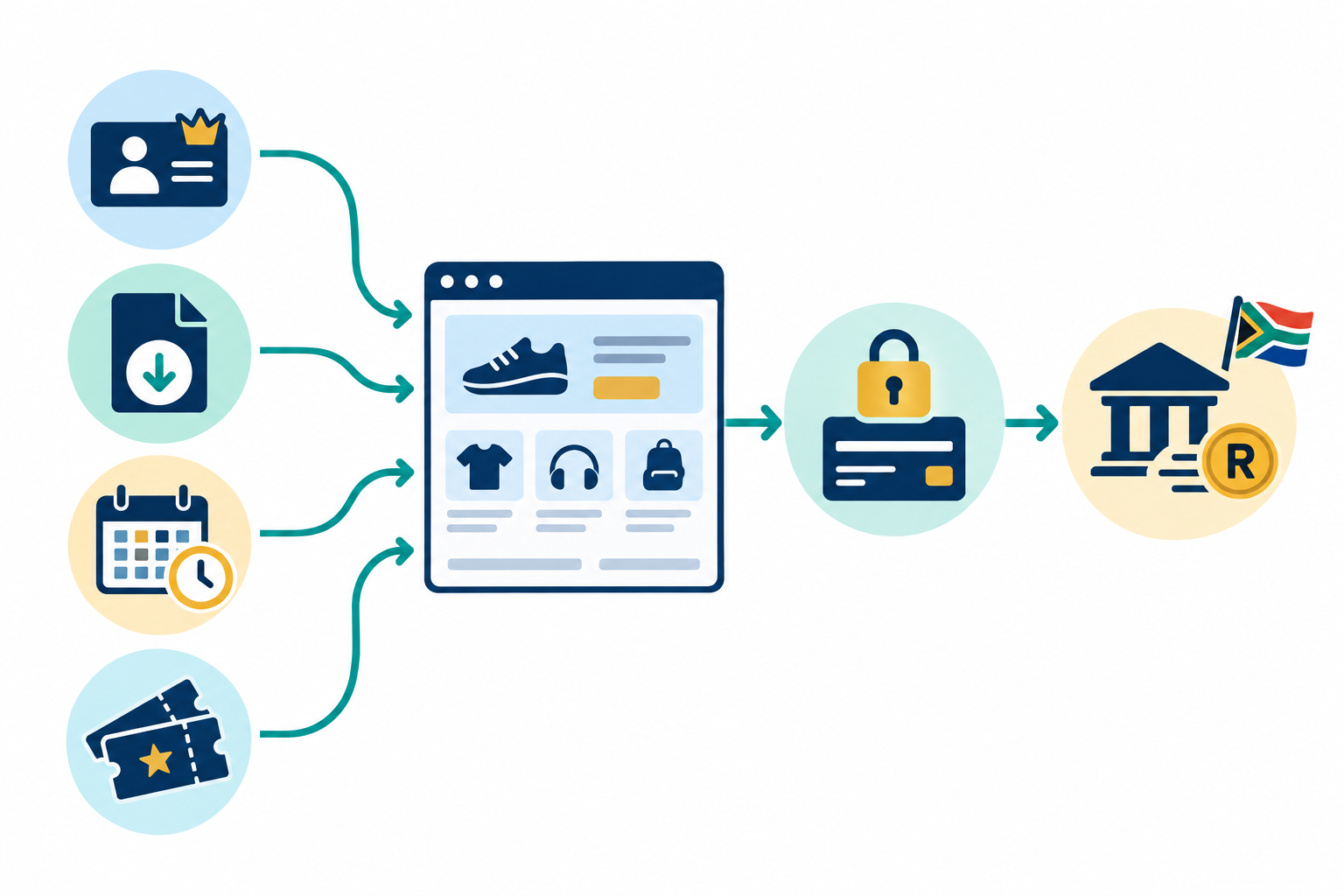
How members get their membership benefits
You can deliver the perks outside the platform and keep things manageable. A WhatsApp community or broadcast channel works for members-only tips and chat. Email suits monthly downloads, checklists or updates. A private social group is good for accountability and Q&A, and your booking system can handle member sessions and slots.
On the money side, Shopstar's payment processing runs through Shopstar Go, which at the time of writing supports card, Apple Pay and Scan to Pay, with daily payouts to a South African bank account. Payment methods, payout timing and recurring-billing options can vary by account and change over time, so confirm what's available to you on Shopstar's website or with its support team before you build your offer around them.
If you're not technical, Shopstar also offers onboarding support, so a real person can help you get your first membership page live.
When might you outgrow a simple membership page?
I'd rather be straight with you than oversell. A simple page works best when you have one or a few plans, the benefits are easy to deliver, and you can handle access changes by hand. You might eventually want dedicated membership software if you have:
- A very large community that needs a member directory
- A course platform with locked lessons and progress tracking
- Several tiers that need automated access rules
Many sellers never get there, and those who do will usually have the income to justify it. Whichever setup you choose, check that it supports recurring payments, cancellations, customer records and failed-payment handling.
Can you offer different membership tiers? How to structure them
Yes, and for most small businesses two or three tiers is plenty. Here's an illustrative example for a fitness coach:
| Basic | Plus | Premium | |
|---|---|---|---|
| Price | R149 a month | R349 a month | R799 a month |
| Monthly workout plan | ✅ | ✅ | ✅ |
| Group check-ins | ❌ | ✅ | ✅ |
| One-on-one session | ❌ | ❌ | ✅ |
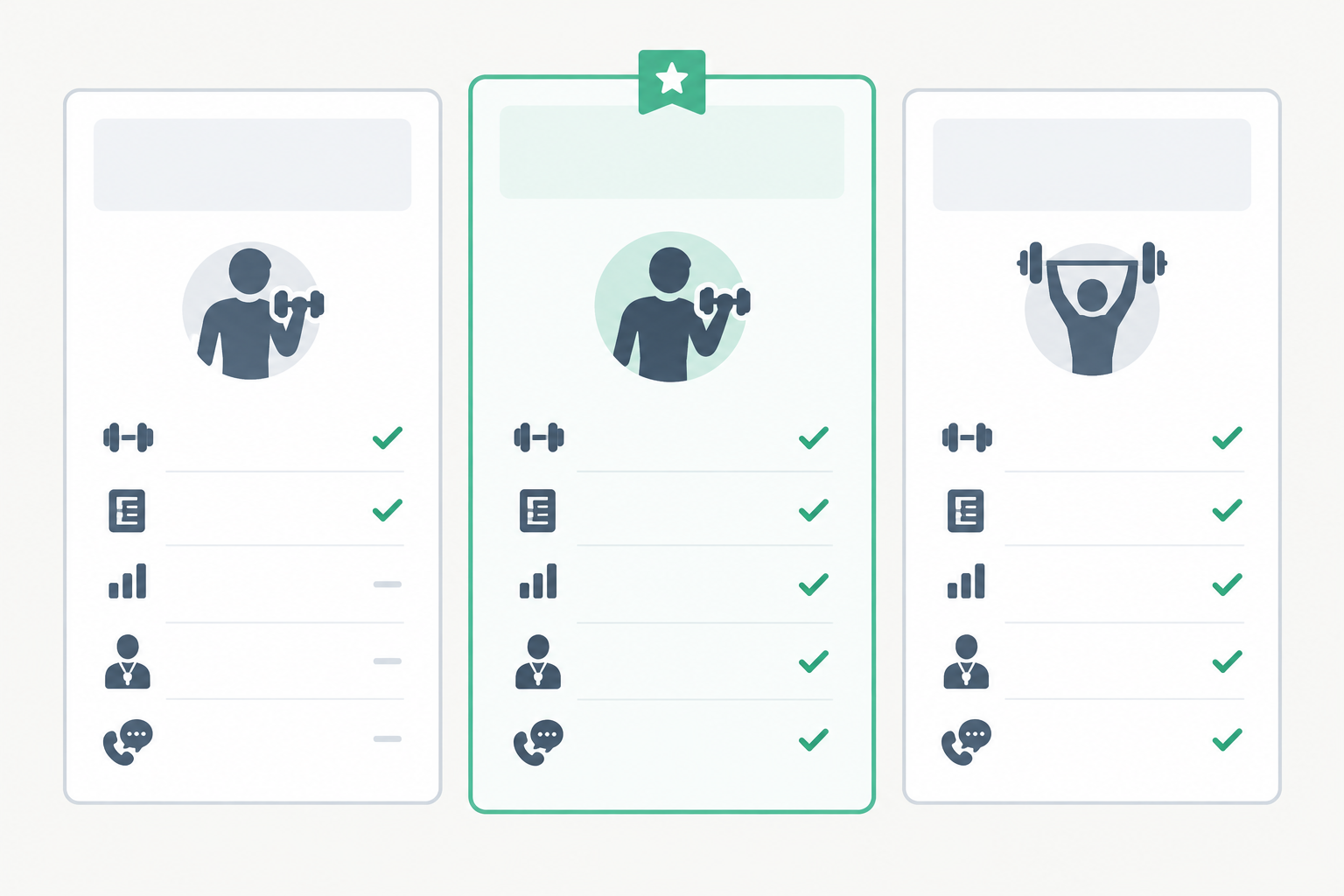
What changes between tiers is usually access, frequency, personal attention or perks. A few guidelines:
- Make the middle tier the obvious best value. It should feel like the sensible choice, without making the entry tier feel useless. Basic should still deliver real value.
- Don't over-complicate. Every extra tier is something to explain, deliver and support.
- Start with one tier. Learn what members love, then add a second once you hear what people ask for.
- Consider an annual option. If it suits your business, offer a discount for members who prefer to pay upfront, and state the total and the saving clearly.
Setting up membership pricing and subscription billing
Here's the step-by-step version, in the order I'd do it.
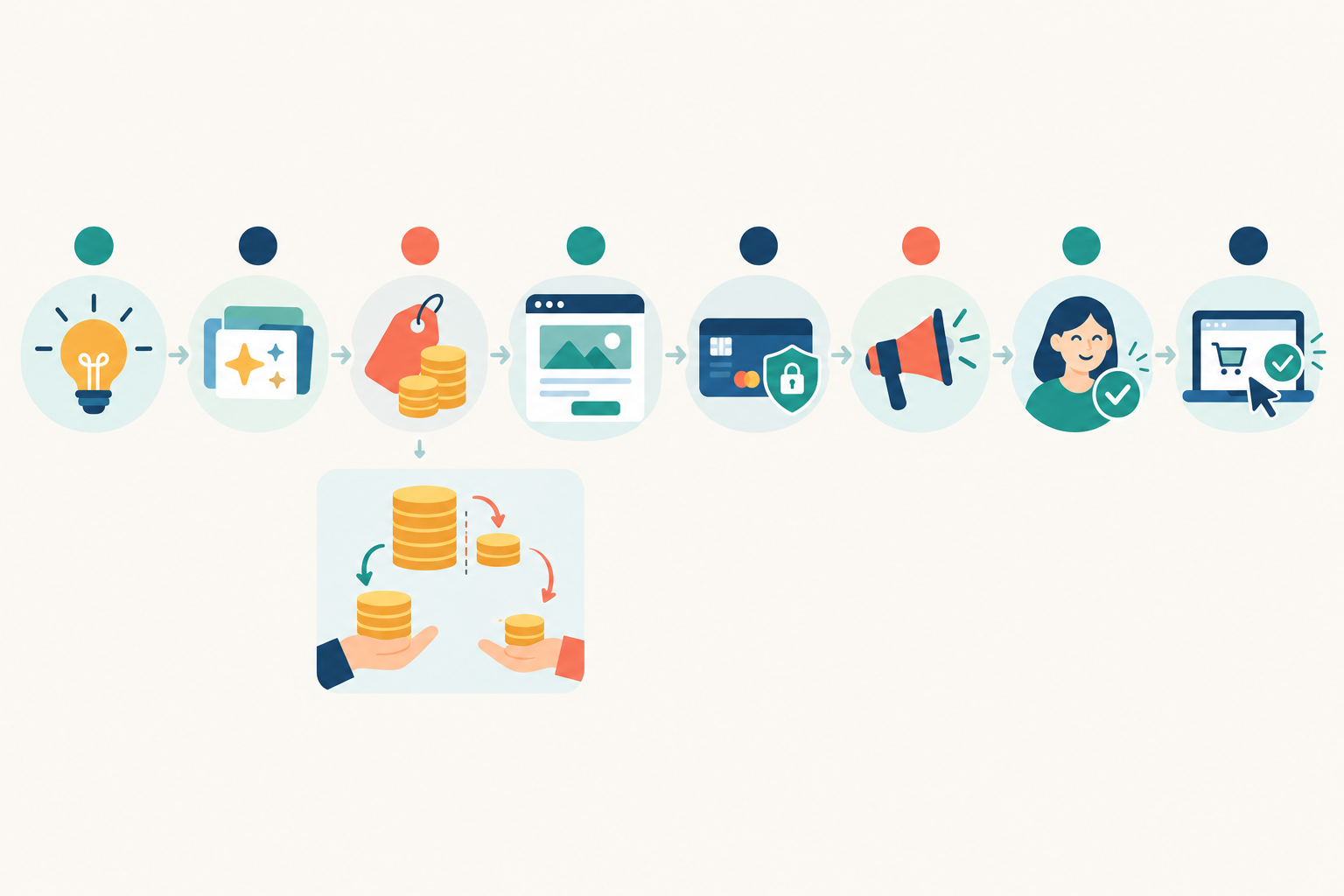
Step 1: Define what members get each month
Write it in plain language so the value is obvious. 'Four new recipes, one live Q&A and 10% off all stock' beats 'premium wellness access'.
Step 2: Pick a price
Work backwards from your time and costs, then sanity-check the result against what similar South African offers charge. Ask yourself what a member would happily pay without having to think twice.
Step 3: Factor in fees
Fees change, so treat these numbers as an example and check Shopstar's current pricing page before you decide. At the time of writing, the Start Free plan has no monthly fee, and the all-in rate is 6% per sale (a 2.9% payment gateway fee plus a 3.1% Shopstar fee). On a R299 membership that's R17.94, so R281.06 is left before your own costs such as stock, delivery, tax and your time.
The Lower Fees plan charges 2.9% per sale plus a monthly fee. It can work out cheaper once you have enough members. Here's a quick way to check: 40 members at R250 is R10,000 a month, and the 3.1% Shopstar portion on that is R310. If the monthly fee on the Lower Fees plan is less than R310, the maths favours Lower Fees. Fees shouldn't drive the whole decision, though. Start on whichever plan lets you launch with the least risk, and review it once your member numbers settle.
Step 4: Check whether VAT applies
VAT in South Africa is 15%. At the time of writing, registration is compulsory once your taxable turnover exceeds R1 million in a 12-month period, and you can register voluntarily below that, subject to SARS conditions. If you are registered, show the full price customers pay. For example, a R299 price that includes VAT is about R260 plus R39 VAT. Whether VAT applies to a particular membership can depend on what it includes and how your business is set up, so check the current rules on the SARS website (sars.gov.za) or ask your accountant.
Step 5: Create the membership on your Shopstar page
Add it as a sellable item with a clear description, what's included, and how and when members get access. Show the price, the billing cycle and the cancellation steps before checkout.
Step 6: Understand how automatic subscription billing works
In plain terms, the member agrees to the recurring charge at checkout and is billed on the same cycle after that. Recurring billing options depend on your account and payment method, so confirm exactly how it works for you in your dashboard or with support before you promise it to members. Keep a record of the plan and terms each member accepted, and have a plan for failed payments, such as a friendly reminder to update card details.
Step 7: Write a friendly welcome message
Tell new members what happens next, when their first perk arrives and how to reach you. A short, warm note does a lot of work.
Step 8: Test the whole thing
Buy your own membership first. Then ask a friend to try it on their phone, because most of your customers will be on mobile. If anything confuses them, fix it before you launch.
South African legal basics for membership sites: CPA, ECTA, POPIA and SARS
This part isn't exciting, but it protects you and builds trust with members. What follows is a plain-language overview, and how each rule applies depends on your offer and your customers.
- Consumer Protection Act (CPA): be clear about the price, what's included and how to cancel. Fixed-term agreements carry specific rules on cancellation (including a 20 business day notice period in certain cases) and on renewal notices. Month-to-month is the simplest option. The National Consumer Commission (thencc.org.za) publishes guidance.
- Electronic Communications and Transactions Act (ECTA): online sellers must give clear information about the business, the full price and the terms before the sale. ECTA also provides a seven-day cooling-off right for certain online transactions, with exceptions, so check whether and how it applies to your offer rather than assuming.
- POPIA: you're collecting names, emails and payment-related details. Only collect what you need, store it safely, explain why you're collecting it and respect opt-outs. Direct marketing generally needs consent (with limited exceptions for existing customers) and a clear way to unsubscribe. The Information Regulator (inforegulator.org.za) has guidance for small businesses.
- SARS: membership income is business income and must be declared. Keep records of every payment, refund and, where relevant, VAT. SARS generally requires records to be kept for five years, so confirm the current requirements on sars.gov.za.
Put a short terms page and cancellation policy on your page in plain English. 'Cancel any time before your next billing date and you won't be charged again' is the sort of line members love to see.
One caveat: this is general information, not legal or tax advice. Rules change, so check the official sources above and speak to an accountant or attorney about your specific situation before you launch.
Keeping membership site members engaged long term
Signing someone up is the easy part. Keeping them is where the real money is. Here's what tends to work:
- Nail the first 30 days. A warm welcome, a quick win and clear expectations often decide whether someone stays. Send a welcome message on day one and a 'how's it going?' check on day seven.
- Set a rhythm. A weekly tip, a monthly live Q&A or a regular drop gives members something to look forward to.
- Make members feel known. Use their names, reply to messages within a day, and share a member's win (with their permission) in your group or newsletter.
- Ask for feedback. Send a two-question check-in, then act on what you hear and tell members what you changed.
- Reward loyalty. A surprise bonus download, early access or a thank-you at the six-month mark goes a long way.
- Keep cancellation easy. It builds trust, and members who leave on good terms often come back.
Here's a small, imagined example. Picture a baker in a small Karoo town who starts a monthly bread club. She hand-writes a note in every box about what's in the loaf and a tip for eating it. Members don't just get bread, they get a person who knows them. That kind of personal touch won't stop every cancellation, but it gives people a reason to stay and a reason to tell their friends.
Measuring membership growth and churn
You don't need a fancy dashboard. Four numbers cover most of what matters:
- Active members: how many people are currently paying.
- Monthly recurring revenue (MRR): what those members pay you each month.
- New members: who joined this month.
- Cancellations: who left this month.

What churn actually means
Churn is the percentage of members who cancel in a month. Divide cancellations by the number of members at the start of the month. If you begin with 50 members and 3 cancel, your churn is 3 ÷ 50 = 6%.
That number looks small, but it compounds. At a steady 5% monthly churn with no new members, only about 54% of your starting group would still be with you after 12 months. That's why retention matters as much as sign-ups.
One wrinkle: member churn and revenue churn can differ. If your R149 members leave more often than your R799 members, you might lose a fair share of members but only a small share of revenue. Track both once you have more than one tier.
What's a healthy churn rate to expect?
Honestly, it depends on your industry, price, audience and how long members have been with you. I don't have a reliable South African benchmark to give you, and figures quoted for subscriptions elsewhere often describe very different businesses, so treat any universal number with caution. Your own trend matters more. Is your churn heading down over three to six months? That's the signal to watch.
What to do when churn rises
Before you cut your price, look closer:
- When do people cancel? If it's in the first month, fix your welcome and onboarding.
- Why are they leaving? Ask them. A short message goes a long way.
- Are payments failing? Cancellations from failed payments need a different fix (like reminders to update payment details) than people who simply lose interest.
Your order and customer records can help you spot patterns and see who is active. Fix onboarding and content first, and only then think about pricing.
A 30-minute monthly habit
On the first of each month, spend 30 minutes with your numbers. Note your members, MRR, new sign-ups and cancellations, then choose one improvement for the month. That's it.
Your first step: launch a small membership this month
Start small. One offer, one price and a handful of founding members from your existing customers or followers. Invite the first 20 people with a founding member price, say R149 instead of R199, to build momentum and collect testimonials.
Shopstar lets you claim a free shopstar.page URL or connect your own domain, and the Start Free plan has no monthly fee at the time of writing. Shopstar also reports a 4.9-star Google rating and over R250 million in paid orders processed through its stores. Those figures were supplied by Shopstar and change over time, so check the current numbers on its website and the Google listing yourself rather than taking my word for it.
So here's the plan: pick your offer, write your page, share your link in bio and ask for your first five members. After that, the job is keeping them happy. 🎉
Membership site FAQ
What can I offer as a paid membership?
Anything members value every month: exclusive content, a private community, regular service sessions, a recurring product box, early access to stock, or event perks. The best offers give people a clear benefit each month. See the seven ideas above for examples.
How do subscriptions get billed automatically?
Members agree to a recurring charge when they check out, and the payment is then taken on the same cycle each month. Exactly how this works depends on your platform, account and payment method, so confirm the current set-up with Shopstar support before you launch. Plan for failed payments, because cards expire and accounts run short.
What's a healthy churn rate to expect?
There's no single number that fits every business. Track your own monthly churn, look at both member churn and revenue churn, and work on bringing it down by improving onboarding and engagement.
Can I offer different membership tiers?
Yes. Two or three tiers is usually enough. Start with one and add more once you know what members ask for.
Do I need to charge VAT on my membership?
Only if you are registered for VAT. In South Africa VAT is 15%, and registration is compulsory once your taxable turnover exceeds R1 million in 12 months. Check the current rules with SARS or your accountant.
Can I sell memberships alongside other products and services?
Yes. On Shopstar you can sell physical products, digital downloads, bookings, event tickets and memberships from one page with a single checkout.