Sell Online Without a Website: A Beginner's Guide for South African Entrepreneurs
Want to sell online without building a website? Here's how South African small business owners can set up a simple sales page, accept payments, and ge
8 min read

On this page
How to sell online without a website in South Africa
You don't need a website to sell online in South Africa. What you actually need is a simple sales page (think link-in-bio style) that handles your products, bookings, and payments in one spot. Platforms like Shopstar let you build a working online store with secure checkout and payment processing in under an hour, with zero coding and zero design skills required.
If that sounds too good to be true, I get it. Most of us grew up with the idea that "going online" meant hiring a developer, picking a domain, fighting with hosting, and hoping the whole thing didn't break the moment real customers showed up. That world still exists, but it's not the only option anymore, and for most small business owners just starting out, it's not even the best one.
Let's walk through exactly how to sell online without a website, step by step.
Why you don't need a full website to start selling
The old assumption was simple: no website, no online sales. That made sense when ecommerce meant custom-built shopping carts and expensive developers. But South Africa's internet and social media use has grown a lot in the past decade. We've got around 45 million internet users and over 26 million social media identities active across the country. Your customers are already on Instagram, WhatsApp, and Facebook, scrolling, chatting, and increasingly, buying.
Traditional website builders still carry real costs for beginners: hosting fees, domain registration, design time, and often a learning curve that eats entire weekends. For a solo seller testing a product idea, that's a lot of investment before you've even made your first sale.
This is the gap link-in-bio commerce tools were built to fill. Instead of building a multi-page website with menus and navigation, you get one page that does the job: a place to show what you're selling and let people pay you, right there.
South African entrepreneurs face some specific friction points too. Local payment gateways, settlement times in rand, data costs, and patchy connectivity in some areas all matter. A lightweight sales page that loads fast on mobile data and connects to a local-friendly ecommerce platform solves a lot of these headaches without you having to think about server configuration or currency settings.
What a link-in-bio store actually looks like
So what are we actually talking about here? A link-in-bio store is a single page, one URL, that houses everything a customer needs to buy from you. No menus to click through, no hosting setup, no "About Us" page you forgot to finish.
Here's where it typically lives:
- Your Instagram bio (the one link slot everyone fights over)
- Your WhatsApp Business status or profile
- Your Facebook page
- A custom URL like yourname.shopstar.page, which you can share anywhere
And if your business grows and you eventually want your own domain, most of these platforms let you connect that later, no need to rebuild from scratch.
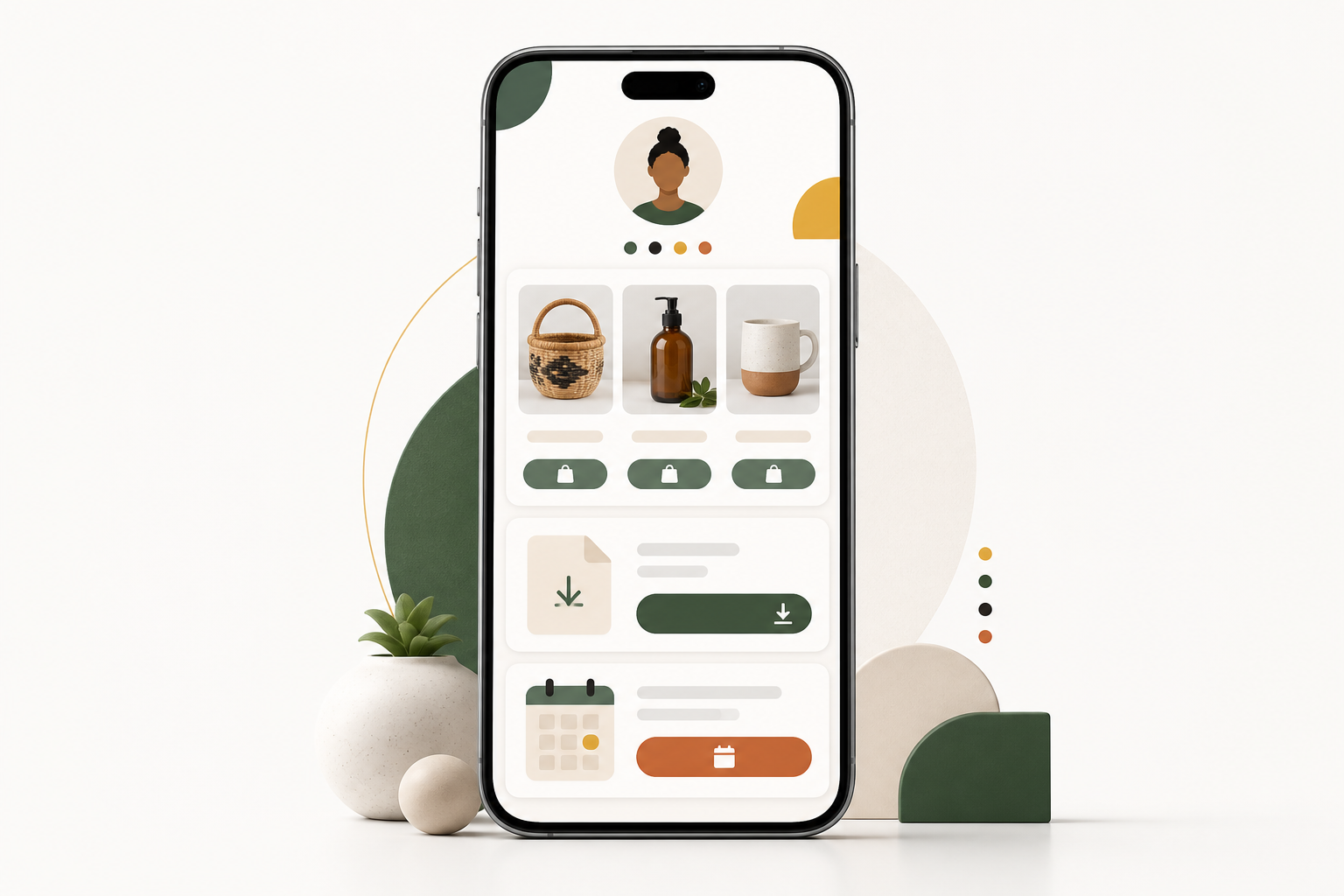
What do real sellers actually put on these pages? More than you'd think:
- Physical products like clothing, skincare, baked goods, and handmade crafts
- Digital downloads like ebooks, templates, Lightroom presets, and printables
- Memberships and subscriptions for recurring access to content or perks
- Service bookings such as consultations, salon appointments, or coaching sessions
- Event tickets for workshops, pop-up markets, or classes
All of it, on one page, through one checkout. That's the entire point.
Setting up your first products and checkout
I know the idea of "setting up a store" can feel intimidating, especially if your last attempt at a website involved a template that never quite worked right. Here's how simple it actually is with an ecommerce platform built for beginners:
- Choose what you're selling. Physical product, digital download, service booking, subscription, or event ticket, decide your starting point. You don't need to offer everything on day one.
- Create your page and claim your URL. This is where you'd grab something like yourbusinessname.shopstar.page, quick, memorable, and ready to share immediately.
- Add your first product or service. Upload a few clear photos, write an honest description, and set your price. This step usually takes less time than writing an Instagram caption.
- Set up your checkout. Because it's unified, customers can buy in just a few taps: no separate payment app, no redirect to a confusing third-party page.
- Share your link everywhere. Bio, WhatsApp status, business card, email signature, wherever your customers already are.
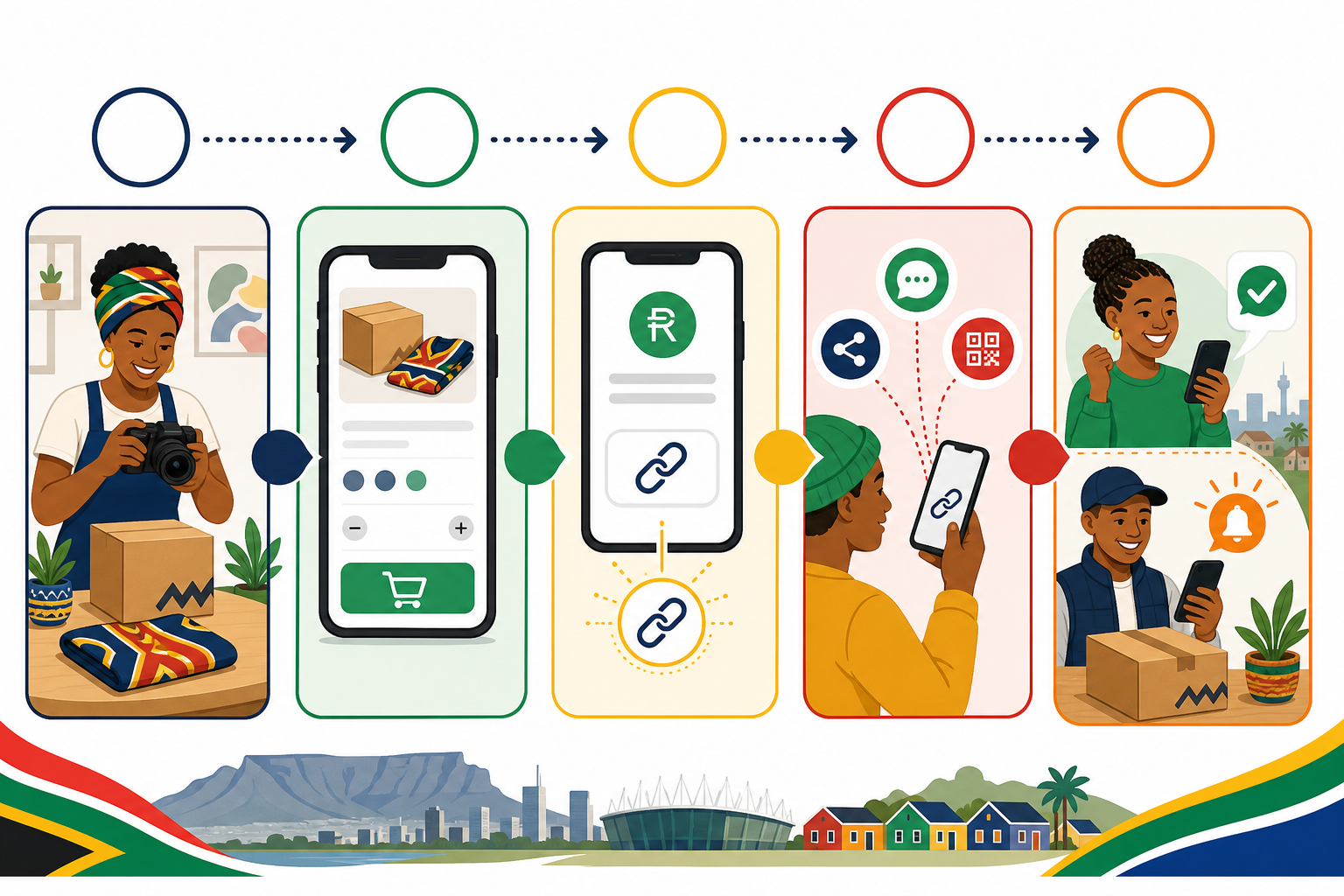
If you've already got your product photos and pricing sorted, you can genuinely have this live in 30 to 60 minutes. That's not a marketing line, it's just how little friction there is when you're not wrestling with page builders and plugins.
Getting paid: how payments reach your bank
This is usually the part that worries people most. "Okay, but how do I actually get the money?"
With Shopstar Go, payments move directly into your bank account. No separate merchant account application, no wrestling with a payment gateway integration, no mystery fees buried in fine print. You connect your bank details once, and from then on, sales come through to you.
This matters a lot in South Africa specifically. Local entrepreneurs need payment processing that understands rand-based transactions, reasonable settlement times, and fee structures that make sense for small-scale selling. Settlement timing isn't always instant with every provider. Weekends, verification steps, and payment method can all affect when funds land, so it's worth knowing how your chosen platform handles this before you rely on it for cash flow.
There's also a trust angle worth mentioning. Customers paying through a simple sales page still want reassurance that their money is safe, even without a big, polished website backing it up. A secure, recognisable checkout experience does a lot of the heavy lifting here: it tells the buyer "this is a real transaction," regardless of how many pages your "site" has.
The bigger win, though, is what you're avoiding: there's no need to separately integrate a payment gateway, negotiate with a bank for a merchant account, or manage multiple systems that don't talk to each other. It's one setup, one checkout, one flow of money into your account.
Will customers trust a simple sales page?
Short answer: yes, if you get the fundamentals right. Trust online has never really come from how many pages a business has. It comes from clear product photos, honest descriptions, visible reviews, and someone actually replying when a customer messages with a question.
In South Africa especially, a lot of buying decisions already happen through WhatsApp recommendations and Instagram tags rather than Google searches. Social proof travels fast here. A friend's tag or a quick "yes, this seller is legit" in a group chat often matters more than a polished homepage.
I'll use Shopstar as an example of how this plays out in practice, since it's a platform I know well. It has over 160 verified five-star reviews, holds a 4.9-star Google rating from 120+ reviews, and has processed more than R250 million in paid orders, all without merchants needing a traditional website. That legitimacy was built through consistent, trustworthy transactions, not fancy web design.
If you're just starting out, here's how to build that same credibility quickly:
- Ask happy customers for a quick testimonial or review, even a short WhatsApp message you can screenshot
- State your return or refund policy clearly, even if it's just two sentences
- Reply fast, responsiveness builds more trust than almost anything else
- Use real photos of your actual product, not generic stock images
What you can sell with a link-in-bio store
One of the quiet advantages of this setup is how much it covers beyond just "stuff in a box." If you're juggling a few income streams, which a lot of small business owners are, having them all under one checkout keeps your life considerably simpler.
- Digital downloads like ebooks, templates, photography presets, and printable planners
- Memberships and subscriptions for recurring access to exclusive content, communities, or perks
- Service bookings and appointments for consultants, coaches, hairdressers, and tutors
- Event tickets for workshops, pop-up shop dates, and online classes
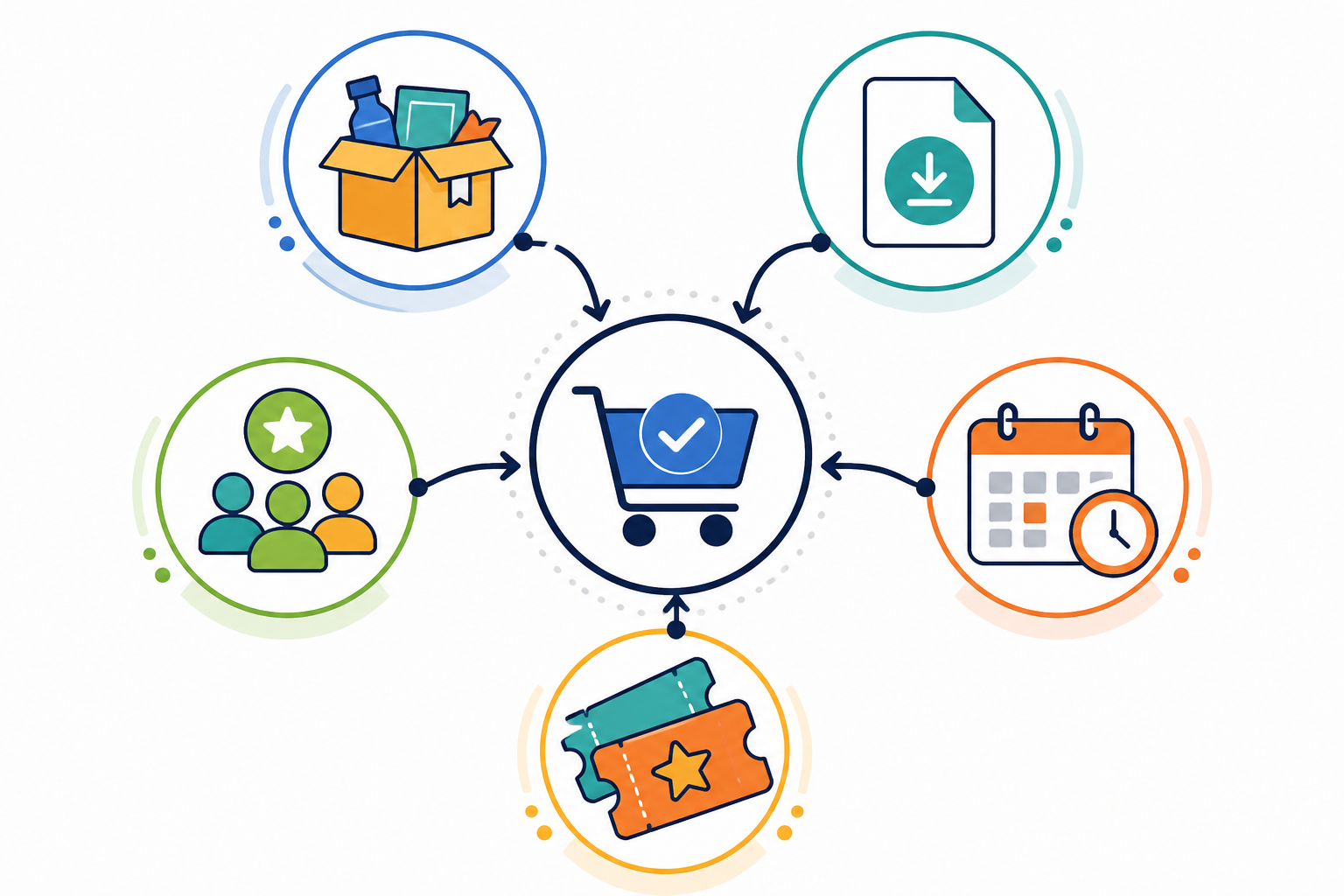
Instead of using one tool for bookings, another for digital files, and a third for event tickets, everything routes through the same sales page and the same checkout. For a beginner wearing five hats already, that consolidation alone can save hours a week.
Using AI tools to manage your online store
Here's something beginners don't always expect to need early on: help managing the admin side. Even a small volume of orders creates a surprising amount of behind-the-scenes work: tracking who bought what, following up with repeat customers, keeping product details current.
AI-powered tools built into modern selling platforms handle a lot of this automatically. Order tracking, customer data organisation, and product management happen in the background, so you're not manually updating a spreadsheet every time someone buys something. If a customer orders from you three times, that information is there without you having to dig for it.
For a solo seller, this is the difference between spending your evening on admin and spending it on the parts of the business you actually enjoy: making the product, chatting with customers, planning your next launch.
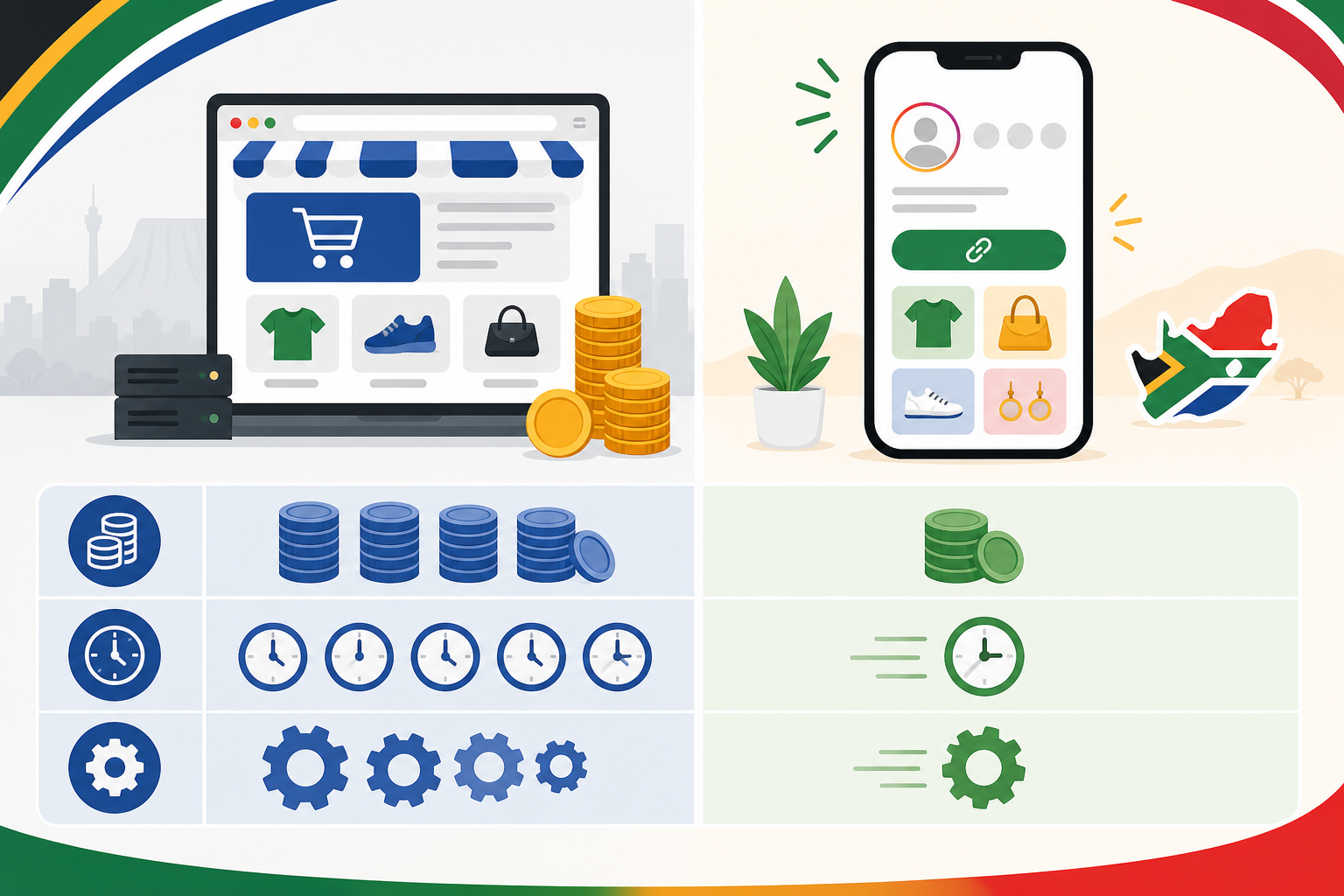
Traditional website vs link-in-bio store
| Question | Traditional Website | Link-in-Bio Store |
|---|---|---|
| Coding skills needed? | Often yes, or hire a developer | None – drag, tap, fill in details |
| Setup time | Days to weeks | 30–60 minutes |
| Upfront cost | Hosting, domain, design fees | Often free to start, small fees on sales |
| Payment setup | Separate gateway integration | Built-in, pays directly to your bank |
| Can sell bookings/digital/events together? | Usually needs separate plugins | Unified checkout, one page |
Frequently asked questions about selling online without a website
Do I need coding skills to sell online without a website?
Not at all. Platforms built for beginners, like Shopstar, are designed so you drag, tap, and fill in details rather than write a single line of code. If you can post on Instagram, you can set up a sales page.
How much does it cost to start selling online this way?
Starting costs are typically far lower than building a traditional website. There's no need to pay for hosting, domain setup, or a web developer. Most link-in-bio commerce platforms let you get started for free or a small monthly fee, with payment processing fees only applying when you actually make a sale.
How fast can I get a store live?
If you already have product photos and pricing ready, you can realistically have a working sales page live within 30 to 60 minutes. Adding your first product, connecting payments, and sharing your link is a same-day process for most beginners.
Will customers trust a simple sales page as much as a full website?
Yes, especially in South Africa where WhatsApp and Instagram-driven shopping is already the norm. Trust comes from clear photos, honest descriptions, visible reviews, and fast responses, not from how many pages your site has. A well-built single page with a secure checkout can build just as much confidence as a traditional website.
Can I eventually move to a full website if my business grows?
Yes. Many sellers start with a simple link-in-bio page and later connect their own custom domain as their brand grows, without needing to rebuild everything from scratch.
Start selling online without a website
If there's one thing I'd want you to take from all this, it's that the barrier to selling online was never really about your product or your ambition. It was about outdated assumptions around what "going online" had to look like. You don't need months of preparation. You need a page, a product, and a way to get paid. That's genuinely it.