How to Cut No-Shows: A Guide to Smarter Appointment Booking for South African Service Providers
Cut appointment booking no-shows in South Africa with deposits, automated reminders and easy rescheduling—practical steps for busy service providers.
12 min read
On this page
How to Cut No-Shows with Smarter Appointment Booking for South African Service Providers
The most reliable way I know to cut no-shows is to ask for a deposit or full prepayment when the client books, then back it up with timely reminders and an easy way to reschedule. A deposit won't stop every no-show, but it nudges people to commit and limits what you lose when someone doesn't pitch. You can set up the whole booking and payment flow on a single page, with no developer needed.
I'll walk you through what no-shows really cost, why they happen, how to set deposits and cancellation terms that are reasonable under South African law, and how to track your progress. 🙂
What No-Shows Really Cost Your Business (In Rands)
Picture this. It's Saturday, 10am. You've set up, switched on the lights and laid out your tools. Your client doesn't pitch and doesn't reply to your message. Meanwhile your rent, data, transport and product costs carry on as normal.
Let's do the maths on a simple example:
- Your average treatment is R450
- You get 3 no-shows a week
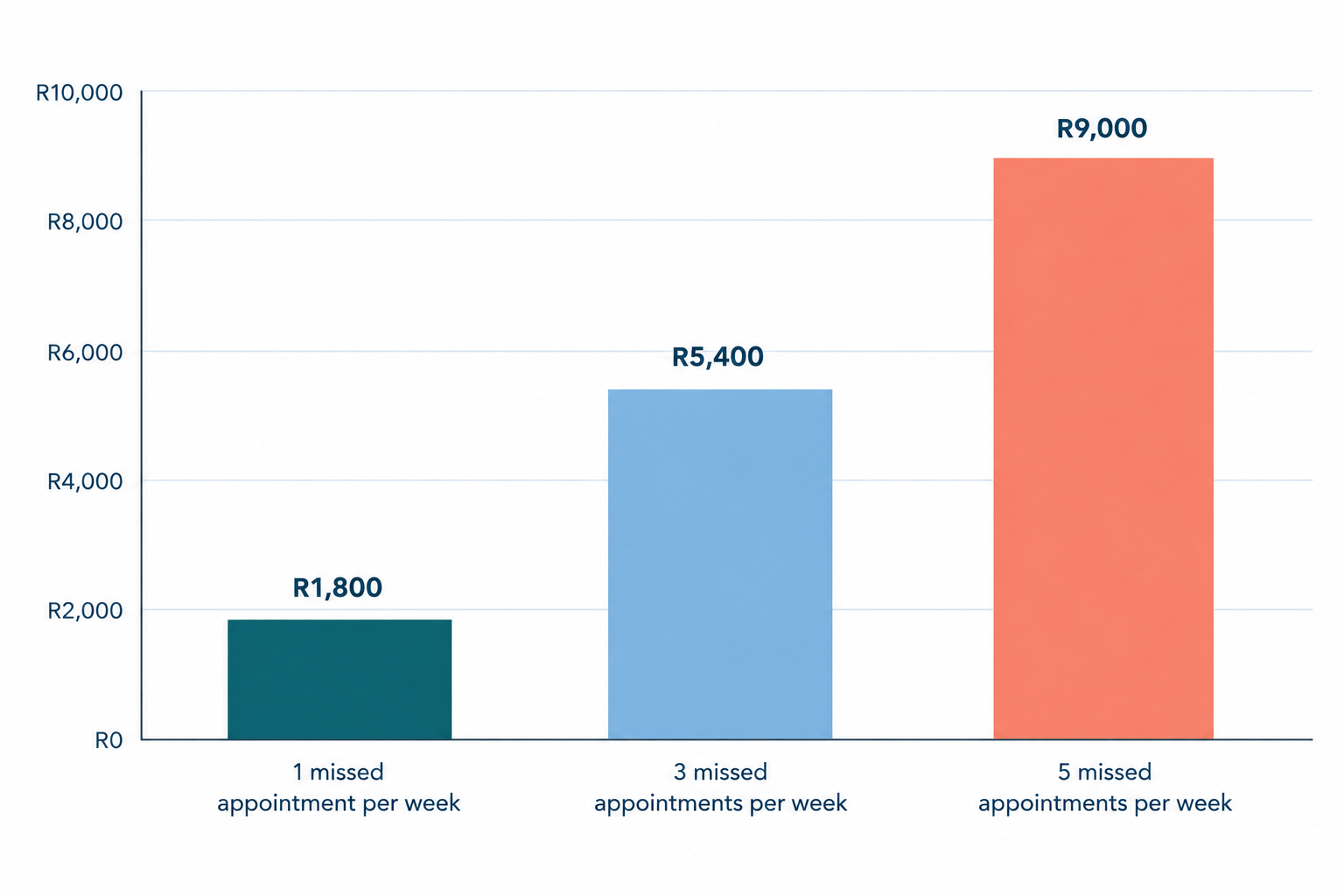
- That's R1,350 a week, or roughly R5,400 a month in lost income
Want your own number? Here's the formula:
Average price × no-shows per month = monthly income lost
The hidden costs add up too. You turned away other clients who would happily have taken that slot. You spent time preparing. And there's the emotional drain of sitting there wondering whether you did something wrong.
The good news is that there's a practical fix, and it doesn't mean being harsh with your clients.
Why Clients No-Show (It's Not Always Personal)
Most missed appointments come down to convenience, not disrespect. Once you understand the cause, you can build a system instead of taking it personally. The usual suspects:
- Forgetfulness. The booking was made two weeks ago and nobody has been in touch since.
- Life happening. Load shedding, a late taxi, traffic on the N1, childcare falling through, a sudden demand from work.
- Low commitment. Free or 'pay on the day' bookings are easy to drop because nothing is at stake.
- Booking friction. If clients can't find a simple way to cancel or reschedule, many just don't pitch.
- Shopping around. Some people book with two or three providers and only show up to one.
A small number of clients are chronic repeat offenders. Handle them separately by requiring full prepayment, or politely decline further bookings. Don't redesign your whole appointment booking policy around the few.
The Power of Deposits for Appointment Booking
Here's the psychology. A small payment turns a vague intention ('I'll probably come') into a commitment ('I've paid, so I'm coming'). It also softens the blow if someone doesn't show. To be fair, a deposit doesn't eliminate no-shows, so treat it as one part of your policy and not a guarantee.
Deposit or full prepayment for an appointment?
A rule of thumb: ask for 20-50% of the price for most services, and full payment for low-priced or high-demand slots.
- Deposit: R150 up front on a R600 session, with R450 due on the day.
- Full prepayment: a R300 consultation, a workshop seat or a photoshoot mini-session.
Keep the amount in line with what you'd realistically lose from a late cancellation. And credit the deposit toward the final price, so clients never feel double-charged.
Should you always require an appointment deposit? A quick decision guide
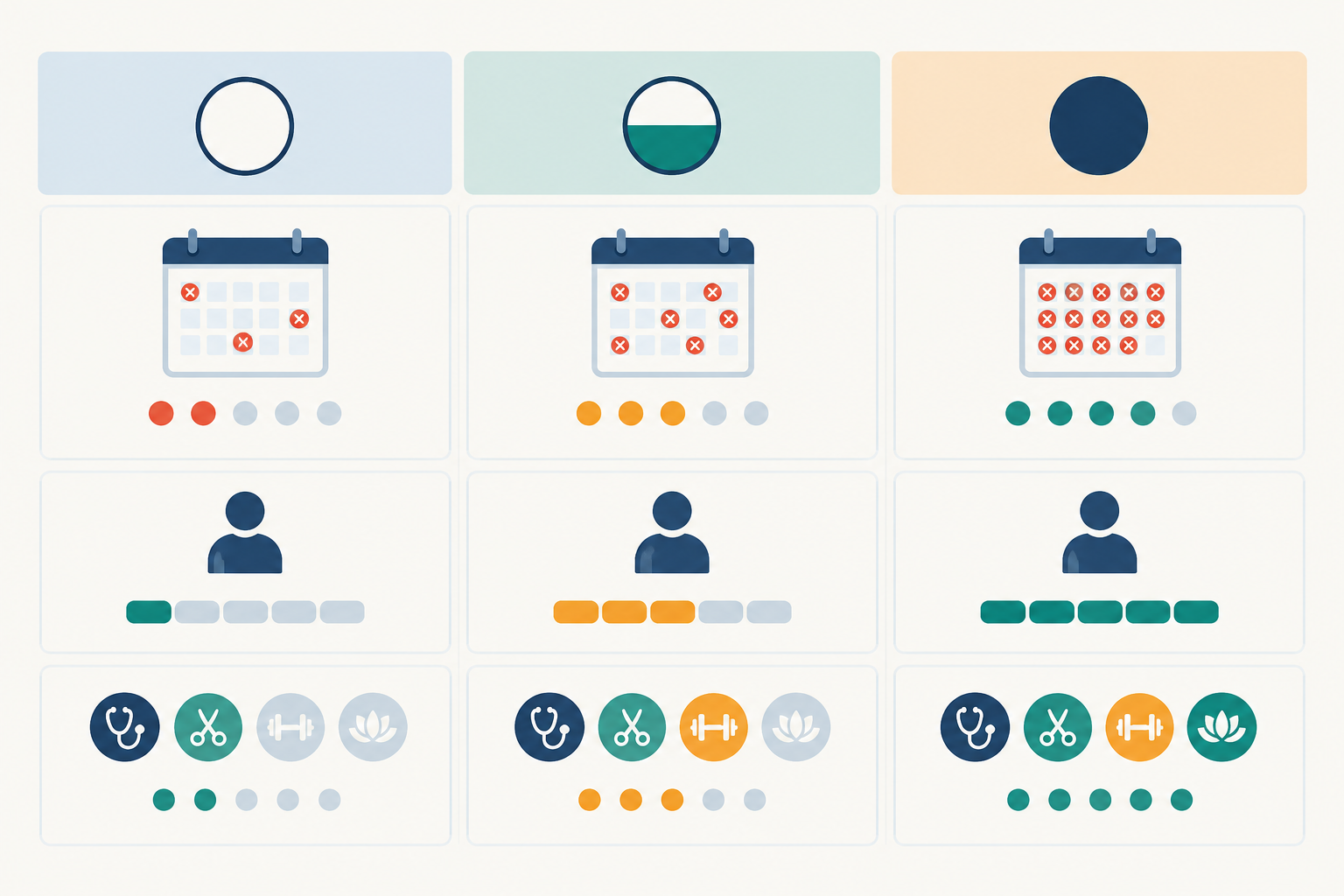
Not always. Here's how the three approaches compare:
| No deposit | Partial deposit | Full prepayment | |
|---|---|---|---|
| Best for | Loyal regulars with a clean record | New clients, long or high-value appointments, busy slots | Group sessions, workshops, event ticketing, low-priced or in-demand slots |
| Risk of no-shows | Highest | Moderate to low | Lowest |
| Client friction | Lowest | Low | Highest |
| Example services | Weekly PT clients, repeat hair clients | Colour treatments, photoshoots, coaching packages | Tutoring workshops, group classes, R300 consultations |
A hybrid works well: take a deposit from new clients, and waive it for repeat clients with a clean record. You reward loyalty without leaving yourself exposed.
How you word it matters. Try something like:
'This secures your spot and comes off your final bill.'
That feels fair, not suspicious.
Setting Up Appointment Booking With Deposits on Shopstar
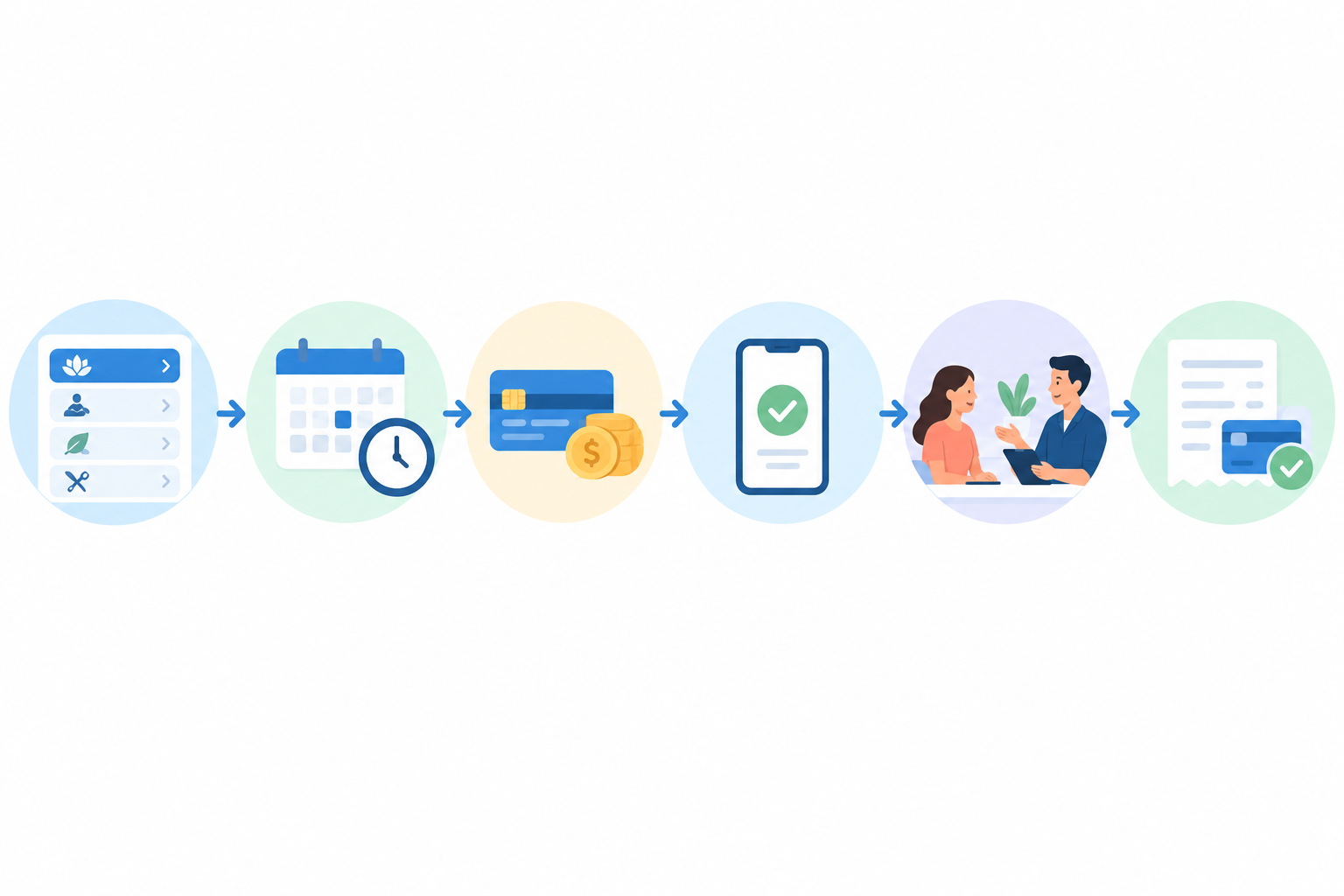
On Shopstar, your services, time slots and deposit amounts can sit on a single page, either a shopstar.page URL or your own domain. The client journey typically looks like this:
- They pick a service and a time slot.
- They pay the deposit online.
- They get a confirmation.
- The money is paid out to your South African bank account.
That means no chasing EFTs and no screenshots of proof of payment. Payment methods, payout timing and booking features can vary by plan and account setup, and they can change. Check Shopstar's current help documentation before you promise anything to clients.
What does online appointment booking cost? A rand example
I like being upfront about fees. At the time of writing, here's what a R200 deposit costs on each plan (please confirm current pricing on Shopstar's pricing page):
- Start Free plan: no monthly fee, and 6% all-in per sale (a 2.9% payment gateway fee plus a 3.1% Shopstar fee). On R200, that's R12.
- Lower Fees plan: 2.9% per sale, so R5.80 on the same deposit, plus a monthly fee.
If you only take a handful of bookings a month, Start Free is usually the easy choice. If you're busy, run the numbers for the Lower Fees plan.
A quick word on VAT for appointment deposits
VAT in South Africa is 15%, but it only applies if you're a registered VAT vendor and the service is a taxable supply. If you are registered, say clearly whether your prices include VAT. Whether and when a deposit triggers VAT can depend on the time-of-supply rules, so don't assume. Check SARS guidance at sars.gov.za or ask your accountant about your specific situation.
Setting Reasonable Appointment Cancellation Terms in South Africa
This is where many providers get nervous, so let's keep it practical. This isn't legal advice. I've tried to separate what the law says from what's simply common practice.
What South African law says about cancellation fees
Consumer Protection Act (CPA), section 17. Where the CPA applies to your transaction, a consumer may cancel an advance booking or reservation, and you may charge a cancellation fee, but it must be reasonable. The Act doesn't set a fixed percentage or notice period for ordinary appointments. The CPA Regulations point to factors such as:
- the nature of the service
- how much notice the client gave
- your realistic chance of filling the slot
- general practice in your industry
The regulations also limit when you may charge at all. For example, no fee applies if the client couldn't attend because of the death or hospitalisation of the person the booking was for. Calling something a 'non-refundable deposit' doesn't automatically make it forfeitable. A sliding scale is the safer route, rather than charging the full price every time. For the exact wording, see the CPA and its Regulations, or the National Consumer Commission's guidance.
ECTA. Under the Electronic Communications and Transactions Act, make your terms clearly available on your online page before the client pays, and keep a record that they accepted. Repeat them in the confirmation message.
POPIA. Only collect the contact details you need, tell clients you'll use them for reminders, and store them safely. Promotions are a separate matter. Section 69 of POPIA regulates unsolicited direct marketing, so get proper consent and offer an opt-out.
How much notice should you give before charging cancellation fees?
There's no legal set period for ordinary appointments. Typical industry practice looks like this:
- 24 hours for short appointments
- 48 hours for longer sessions
- 7 days or more for photoshoots, events or full-day bookings
Sample appointment booking and cancellation policy
Booking & cancellation policy
- Your deposit secures your slot and is deducted from your final price.
- Cancel or reschedule at least 24 hours before your appointment and your deposit is refunded or moved to your new date.
- Cancel with less than 24 hours' notice, or don't arrive, and I may keep a reasonable portion of your deposit to cover the lost time.
- If you can't attend because of a hospitalisation or bereavement, please tell me and we'll reschedule at no charge.
That last line goes a little beyond what the regulations strictly cover. It's goodwill, not a legal rule. Keep records of notice received, any attempts to refill the slot, and how you calculated any fee. Before you publish your final wording, have a South African legal professional check it, especially if the amounts are large.
Automating Appointment Reminder Messages: What Timing Works Best?
Reminders can help. A 2013 Cochrane systematic review of text-message reminders for healthcare appointments (Gurol-Urganci and colleagues, in the Cochrane Database of Systematic Reviews) found attendance of around 67.8% with reminders versus 59.0% without. Two caveats. It looked at healthcare appointments, not salons or studios, and the evidence was rated low quality. So treat it as encouraging, not guaranteed. It also didn't identify one perfect send time, so test what works for your clients.
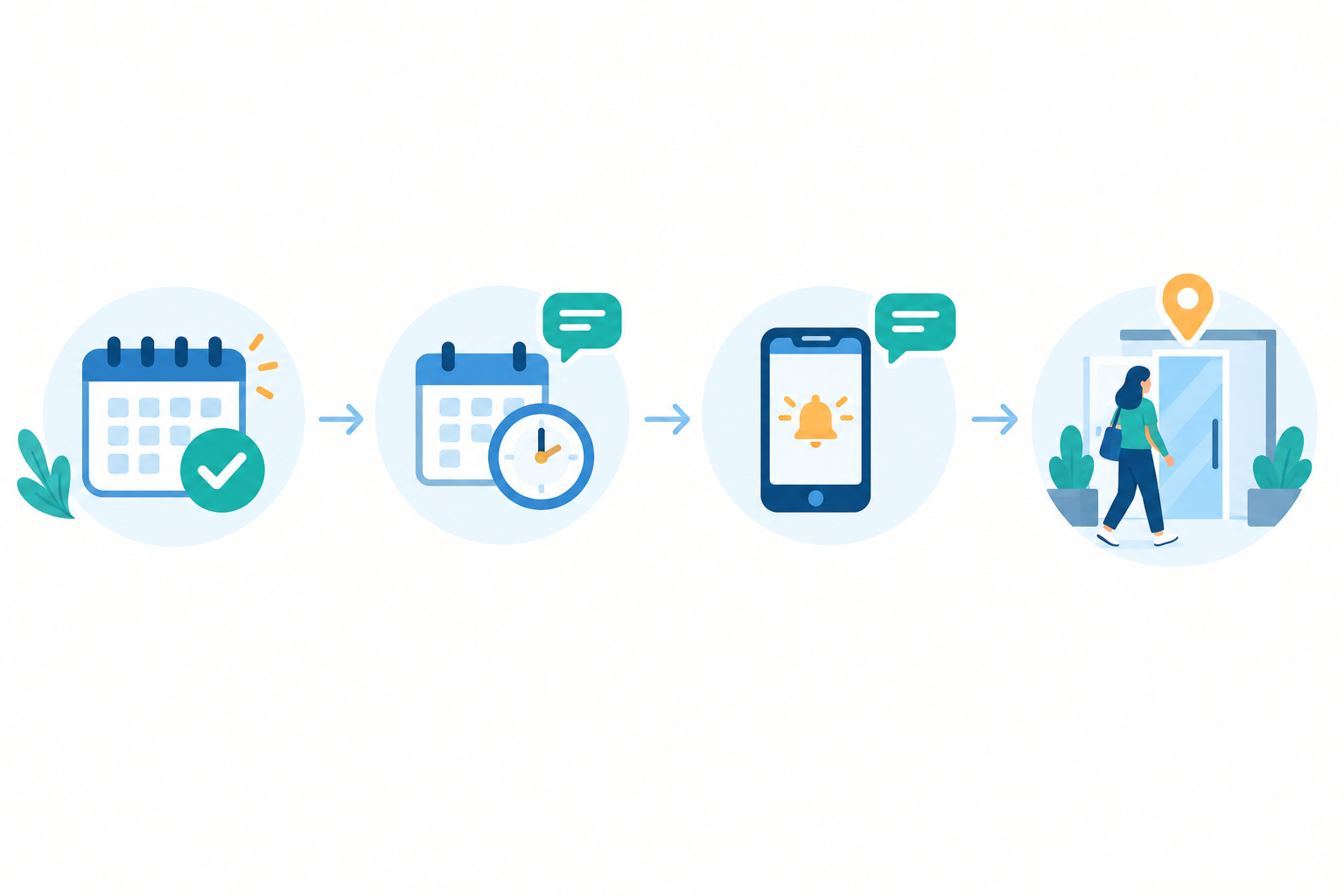
Here's a sensible starting sequence:
- Instant confirmation. Include the date, time, address or meeting link, and your cancellation terms.
- A reminder 48 hours before. This gives clients time to reschedule and gives you time to refill the slot.
- A short final nudge on the morning of the appointment, or 2-3 hours before for shorter ones.
- A reschedule link in every message. Changing a booking should be as easy as making one.
Be honest about which appointment reminders are automatic
Your booking page can handle the booking, payment and confirmation in one place. Depending on your plan and settings, you may still need to send some reminders yourself by WhatsApp or email, so check what Shopstar sends automatically and fill any gaps with simple templates. The basic WhatsApp Business app has quick replies and labels, but it doesn't send timed reminders on its own.
Many clients find WhatsApp more convenient than email, but test it with your own clients. Only message people who've given you their number for this purpose (that's POPIA again), keep messages brief, and keep reminders separate from promotions.
Appointment reminder templates you can copy and paste
Confirmation:
Hi [Name]! 🎉 You're booked for [service] on [date] at [time] at [address]. Your deposit of R[amount] comes off your final bill. Need to change something? Use this link at least 24 hours before: [link]. See you soon!
48-hour reminder:
Hi [Name], just a reminder that I'm seeing you on [date] at [time]. If something has come up, no stress, you can reschedule here: [link]. It helps me offer your slot to someone else. Thank you!
Same-day nudge:
Morning [Name]! Looking forward to seeing you at [time] today. Running late or stuck with load shedding? Send me a quick message and we'll sort it out. 😊
Making Rescheduling Easy for Clients
A painless reschedule beats a no-show every time. You keep the client, and you keep the income. Here's how to make it easy:
- Give a clear path. Put a reschedule link in the confirmation. 'Please DM me' creates friction and gets ignored.
- Set sensible limits, such as one free reschedule up to 24 hours before.
- Keep your calendar realistic. Build in buffer times and show true availability, so clients don't over-book themselves.
- Fill cancelled slots quickly. Keep a short waitlist, or post a 'last-minute slots' message on your socials.
- Use your link in bio. Your booking page link works on Instagram, your WhatsApp status and your email signature, so clients can book, pay and reschedule wherever they find you.
Can You Automate Appointment Booking Without Extra Apps?
For most solo providers, mostly yes. One booking system can cover booking, payment, deposits and confirmations, so you don't need to stitch together a calendar app, a payment tool and an invoicing tool. The same Shopstar page can also offer digital downloads (like an aftercare PDF), a membership site for regulars, or event ticketing for workshops. If you're not technical, Shopstar offers hands-on onboarding support, so it feels more like a small business tool than a web-development project.
To make it concrete, imagine a Cape Town hair stylist who used to take bookings only through WhatsApp. Clients said 'see you Saturday!' and then vanished, and she spent her evenings chasing replies. She moves to a booking page with a R150 deposit on colour appointments, which comes off the final bill. Her terms are visible before payment, and the confirmation includes a reschedule link. She'd likely spend less time on admin and more time on hair. (This is a hypothetical example, not a guaranteed result.)
What still needs a human touch? Personal replies, special cases and goodwill gestures, like waiving a fee for a client who's had a genuinely rough week. Automation handles the routine and you handle the relationships.
Tracking Your Appointment No-Show Rate Over Time
If you don't measure it, you can't improve it. Here's a simple monthly routine:
- Record the basics: total bookings, no-shows, late cancellations and reschedules.
- Calculate your no-show rate. No-shows ÷ total bookings × 100. For example, 8 no-shows out of 40 bookings is 20%.
- Compare before and after. Look at the months before and after you introduced deposits and reminders.
- Change one thing at a time, whether that's deposit size, reminder timing or notice period, so you know what made the difference.
- Look for patterns. Certain days, certain services or first-time clients may be the culprits.
Your order and customer data make it easy to spot repeat no-show clients. Set a simple target, like halving your no-shows within three months, and track the income you recover in rands. If you halved the R5,400 a month from our earlier example, that's R2,700 back in your pocket.
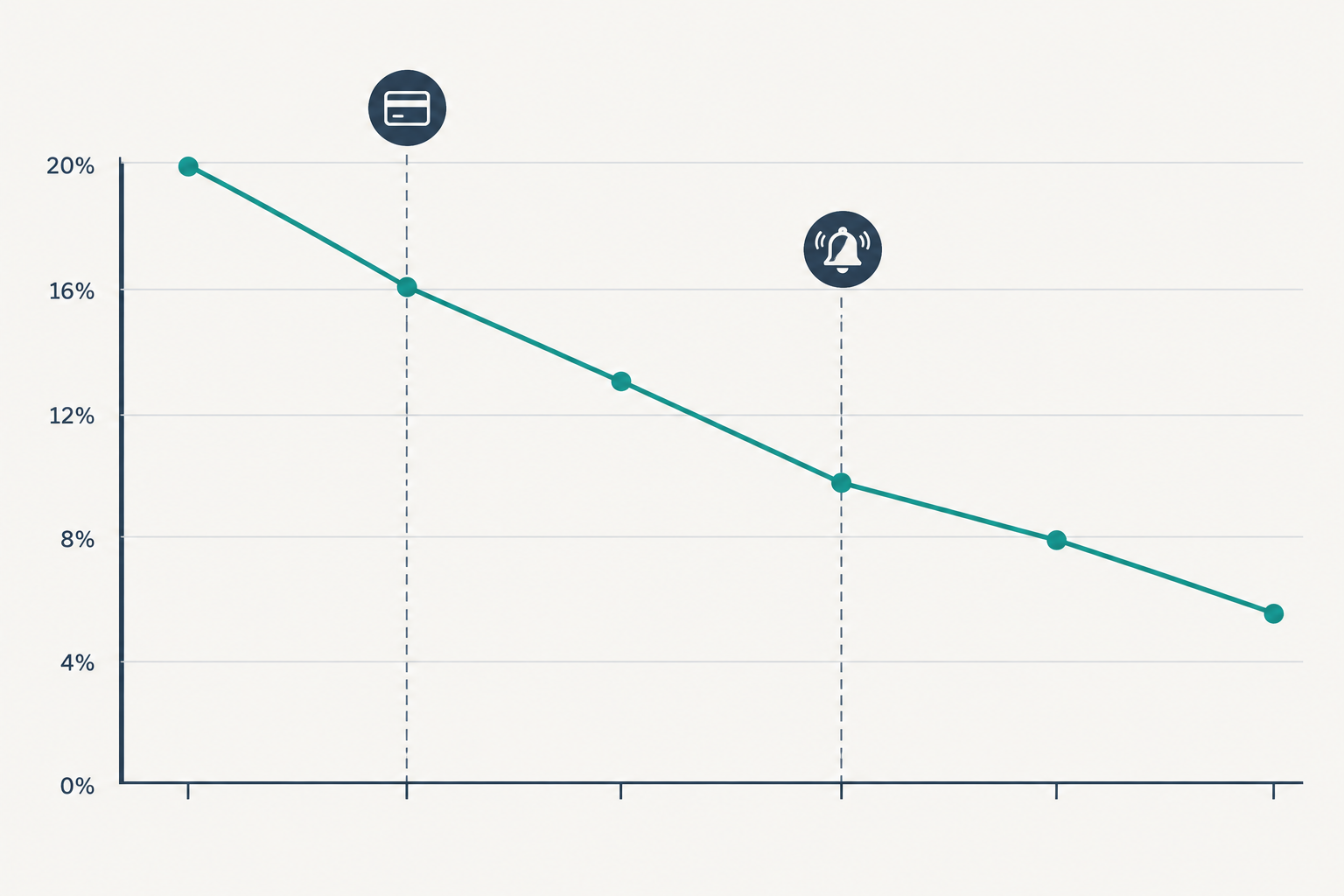
The chart above is a hypothetical illustration of how you might track progress. It is not data from real businesses and not a typical or promised result.
Your First-Week Appointment Booking Action Plan
You don't need a month for this. Here's a week:
- Day 1: Work out what no-shows cost you per month.
- Day 2: Decide your deposit rules for new and returning clients.
- Day 3: Write your cancellation policy in plain language and get it checked.
- Day 4: Set up your booking and payment page with services, slots and deposit amounts.
- Day 5: Draft your three reminder messages.
- Day 6: Share the link in your bio, WhatsApp status and email signature.
- Day 7: Start your no-show tracker.
At the end of it you'll have a more professional process, steadier income and fewer awkward Saturday mornings. The Start Free plan has no monthly fee, so you can try it before committing to anything.
Frequently Asked Questions About Appointment Booking and No-Shows
Should I always require a deposit?
Not necessarily. Deposits make the most sense for new clients, long or high-value appointments, and busy slots. If you're just starting out, asking everyone is simpler and fairer, and you can relax the rule for loyal regulars later. See the decision guide above.
How much notice should I give before charging cancellation fees?
There's no legal set period for ordinary appointments. Many providers use 24 to 48 hours, or longer for full-day bookings. Under the CPA, what matters is that any fee is reasonable and your terms are shown before payment. See the section on cancellation terms for details.
What reminder timing works best?
A confirmation straight after booking, a reminder 48 hours before and a short nudge on the day is a solid starting point. Test timings with your own clients, since the evidence doesn't point to one perfect time.
Can I automate appointment booking without extra apps?
Much of it, yes. Booking, deposit payment and confirmations can sit on one page, but you may still send some reminders yourself. Check what your plan sends automatically.
What does it cost to take deposits online with Shopstar?
At the time of writing, the Start Free plan has no monthly fee and costs 6% all-in per sale, so a R200 deposit costs R12. The Lower Fees plan is 2.9% per sale plus a monthly fee, or R5.80 on the same deposit. Confirm current pricing on Shopstar's website.
Do I have to charge VAT on deposits?
Only if you're a VAT-registered vendor and the service is a taxable supply, in which case VAT is 15%. How a deposit is treated depends on the time-of-supply rules, so check SARS guidance or speak to your accountant.