Do You Pay Tax on Online Sales in South Africa? The Basics
Tax on online sales in South Africa: understand income tax and VAT basics, keep clear records, track platform fees and know what to ask an accountant.
12 min read
On this page
For anyone searching “tax on online sales South Africa,” the short answer is that online income is generally handled like income from a shop or market stall. Whether you actually owe tax depends on your profit, your total income for the year and whether you need to register for VAT. The best thing you can do is keep clean records from day one and bring good questions to a registered tax practitioner or accountant.
Tax on online sales South Africa: the short answer
Tax on online sales sounds scary, but the basics are very manageable. Most of the stress comes from not knowing what you don't know, and that's fixable.
A quick note first. This guide is general information from our team at Shopstar, not tax advice. SARS (the South African Revenue Service) and a registered tax practitioner are the real authorities, and your situation is yours alone.
Here's what we'll cover:
- Why online income still counts
- Registering your business, and what that actually means
- VAT at a high level
- Records, fees and expenses
- Exporting your sales data at tax time
- When to call in an accountant, and what to ask
This isn't a filing manual. We want you to walk away with the right questions and a tidy system, so that when you do sit down with a professional, the conversation is short, calm and cheaper. 😊
Why does online income count for tax?
SARS cares about income, not where the sale happened. A sale through a link in bio page, an online store, Instagram DMs or a table at a Saturday market is treated in broadly the same way. There's no special tax because a sale happened online, and no exemption either.
Turnover versus taxable profit
These two words get mixed up all the time:
- Turnover is everything you take in from sales.
- Taxable profit is what's left after you subtract allowable business expenses.
Say you sell R80,000 worth of products and spend R50,000 on stock, packaging, courier costs and tools. Your taxable profit is generally the difference, not the full R80,000. That's why expense records matter so much. (Which expenses qualify is a question for your accountant.)
I have a day job. Do I still need to declare online sales?
This is the one that surprises people. If you earn a salary and get a payslip, you may still need to declare your side-hustle income on your tax return. Your employer only deals with your salary and knows nothing about your online sales, so that part is on you.
What is the income tax threshold?
Below a certain income, an individual doesn't pay income tax. For the 2025/26 tax year, that figure is R95,750 for people under 65. Please don't treat it as a free pass, though. Filing requirements depend on your full circumstances, and business income can mean you need to submit a return even if no tax ends up being payable. Thresholds also change, so check the current figures on sars.gov.za rather than guessing.
A quick example of why online sellers need records
Picture a candle maker in Johannesburg who sells through a link in bio page. She assumes her sales are too small to count, because it's only a few orders a week. A year later she's brought in a decent amount, but she has no records of what she spent on wax, jars and courier costs. She can't easily show her profit and isn't sure what to declare. Nothing dramatic has gone wrong, but she spends a stressful few weeks rebuilding her year from WhatsApp chats and bank statements. Records from day one would have saved her all of that.
Online selling is growing fast here. World Wide Worx reported online retail of roughly R71 billion in 2023, up 29% on the year before. More sellers means more people asking exactly these questions, and that's perfectly normal.
Do I have to register my small business?
Short answer: you may need to register with SARS, but you don't automatically need to register a company. People mix these up constantly, so let's pull them apart.
- Registering as a taxpayer with SARS is about declaring income and paying any tax due.
- Registering a company with the CIPC (the Companies and Intellectual Property Commission) creates a separate legal entity. Companies are generally registered for income tax through that process, but company registration doesn't automatically register you for VAT or for employer taxes like PAYE.
Sole proprietors and tax on online sales
Many online sellers start out as sole proprietors. In that case, you generally declare your business income and expenses on your personal tax return rather than filing a separate company return. If part of your income isn't taxed through an employer, you may also need to become a provisional taxpayer, which just means paying tax in instalments during the year instead of one lump sum. It's a payment method, not an extra tax, and it doesn't replace your annual return.
Simplified tax options for small businesses
Micro businesses may have simplified options, such as turnover tax. Eligibility depends on your circumstances, so check with SARS or an accountant before assuming either way.
Questions to ask a tax professional
- Should I operate as a sole proprietor or a company at my stage?
- Do I need to be a provisional taxpayer?
- Am I eligible for any simplified small-business regimes?
And a reassurance: you can start small and formalise as you grow. You don't need a company, a fancy setup or a big budget to begin selling.
When does VAT apply to online sales in South Africa?
VAT in South Africa is 15%. It's a consumption tax. The customer ultimately bears the cost, but a VAT-registered seller (called a vendor) is responsible for charging it, reporting it and paying it over to SARS.
The big thing to know is that selling online doesn't, by itself, make you liable for VAT. What matters is whether you're carrying on an enterprise and how much you sell.
VAT registration thresholds
- Compulsory registration: when your taxable turnover exceeds R1 million in any consecutive 12-month period.
- Voluntary registration: possible once your taxable turnover passes R50,000 in 12 months, subject to SARS requirements.
These are the figures at the time of writing, so please verify them with SARS before relying on them. Rules can change. Also note that it's a rolling 12-month period, not the tax year, which means you need to watch your running total.
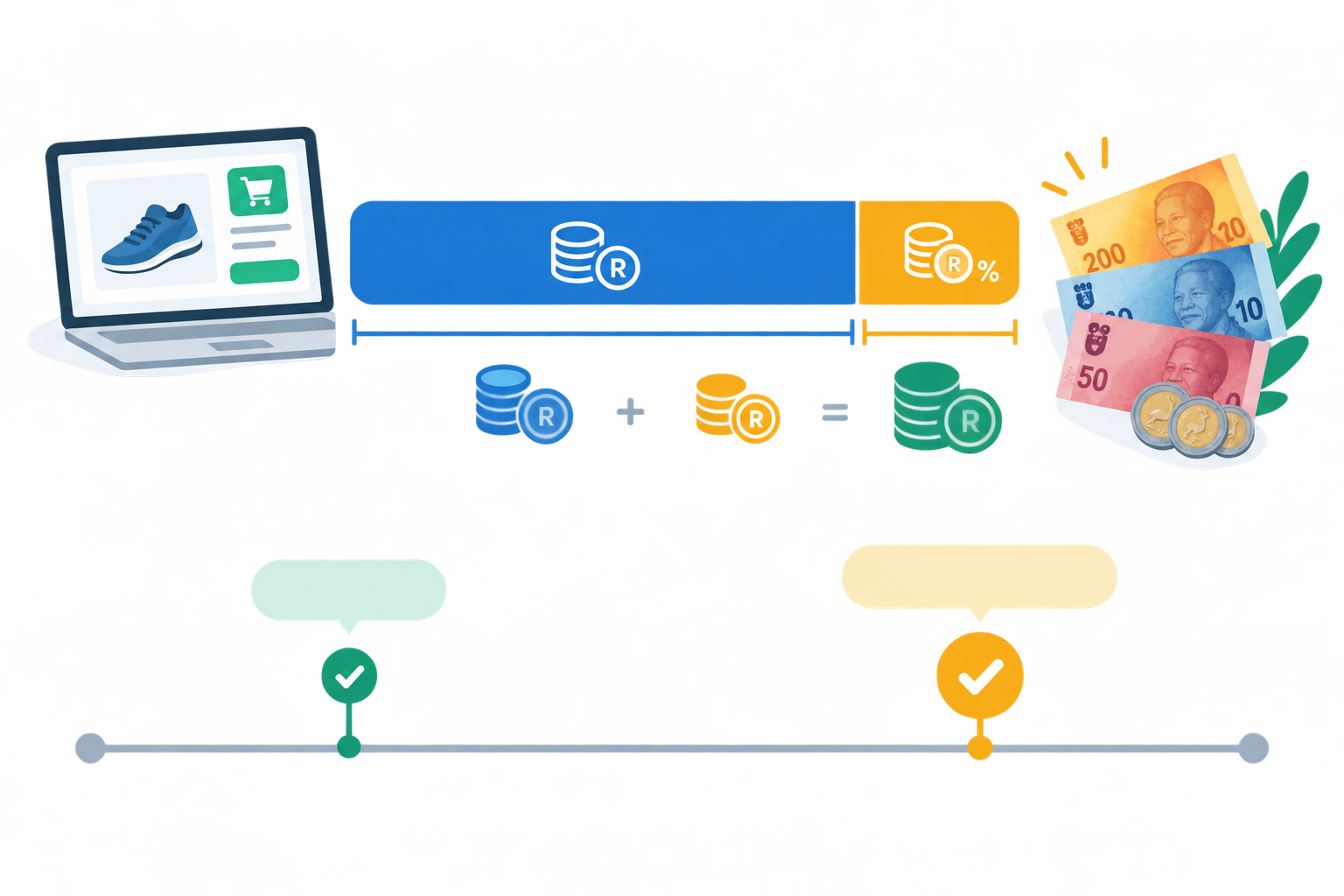
A simple VAT example
Say a product is priced at R1,150 including VAT:
- The ex-VAT amount is R1,000
- The VAT portion is R150 (15% of R1,000)
If you're a registered vendor, that R150 isn't yours to keep. It goes to SARS, although you can generally claim back the VAT you paid on qualifying business purchases (called input VAT).
Is voluntary VAT registration right for my online business?
Registering early might feel professional, but it comes with admin. You charge VAT, issue valid tax invoices and file returns. If your customers are mostly individuals who can't claim VAT back, your products effectively get more expensive or your margins shrink. On the other hand, if you buy a lot of VAT-bearing stock or equipment, claiming input VAT could help. It really comes down to your numbers.
What counts towards VAT turnover?
Whatever you sell through your page can count: physical products, digital downloads, bookings and appointments, event tickets and memberships. VAT treatment can differ depending on what you sell (some supplies are standard-rated, some zero-rated, some exempt), so don't assume everything is treated the same. Selling to customers abroad has its own rules too, and a foreign customer isn't automatically zero-rated.
VAT and online pricing rules
The Consumer Protection Act (CPA) expects clear, honest pricing, and the Electronic Communications and Transactions Act (ECTA) sets expectations for online suppliers. In practice, make sure your displayed prices say whether VAT is included. And if you're not VAT registered, don't present yourself as charging VAT.
Question to ask a professional: is VAT registration worth it for me at my current turnover?
What records should I keep for online sales?
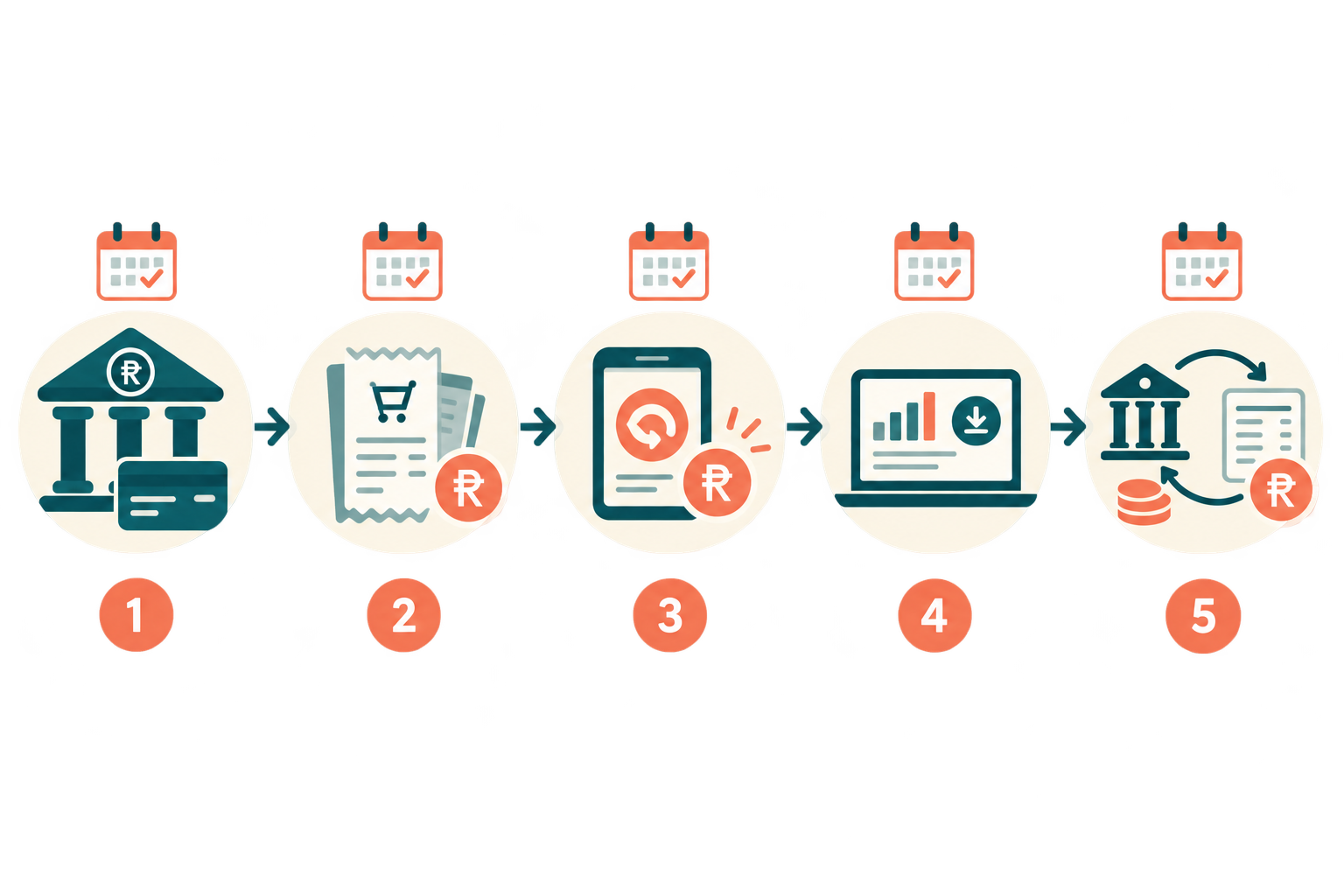
South African tax law requires you to keep records that let you explain your return. SARS generally expects you to keep them for five years, but confirm the detail for your situation with a professional. Here's a routine that works for most small sellers:
- Open a separate business bank account. Even as a sole proprietor, keeping personal and business money apart makes everything easier to follow.
- Save every order record, invoice and receipt in one place. One folder or cloud drive, with a simple naming habit.
- Keep proof of expenses, like packaging, courier costs, software, stock, event venue hire and marketing.
- Record refunds and cancellations. Your income figures should match reality, not just what looked good on the day of the sale.
- Reconcile monthly. Match your sales report to your bank payouts so tax time isn't a panic.
Protect customer information under POPIA
Your order records contain customer names, addresses and contact details. Under the Protection of Personal Information Act (POPIA), that's personal information. Store it securely, limit who can see it and only keep what you genuinely need.
Why one record-keeping system beats ten
Juggling WhatsApp chats, screenshots and half-finished spreadsheets is how records go missing. An online store builder or ecommerce platform with built-in order history keeps everything in one place. That's a big reason we built Shopstar the way we did: one page, one unified checkout, and a full record of every order, whether it's a physical product, a booking, a ticket or a digital download.
Can I deduct platform and payment fees?
In general, expenses incurred in carrying on your business and producing income are often deductible. Private expenses and capital items are treated differently. Your tax practitioner should confirm what applies to you, but here's how to set up your records so they have what they need.
Record gross sales and fees separately
If I could only give you one habit, it would be this one. If a customer pays R500 and fees are deducted before payout, your records should show R500 in sales and the fees as a separate line, not just the smaller amount that landed in your account. Otherwise your income looks understated.
What platform and payment fees look like in practice
Here's a R500 sale on each Shopstar plan. These are payment processing and platform fees, built into each sale and visible in your sales reports.
| Start Free | Lower Fees | |
|---|---|---|
| Monthly fee | None | Yes |
| Per-sale fee | 6% all-in (2.9% payment gateway + 3.1% Shopstar fee) | 2.9% |
| Fees on a R500 sale | R30 | R14.50 |
| Amount after per-sale fees | R470 | R485.50 (before the monthly fee) |
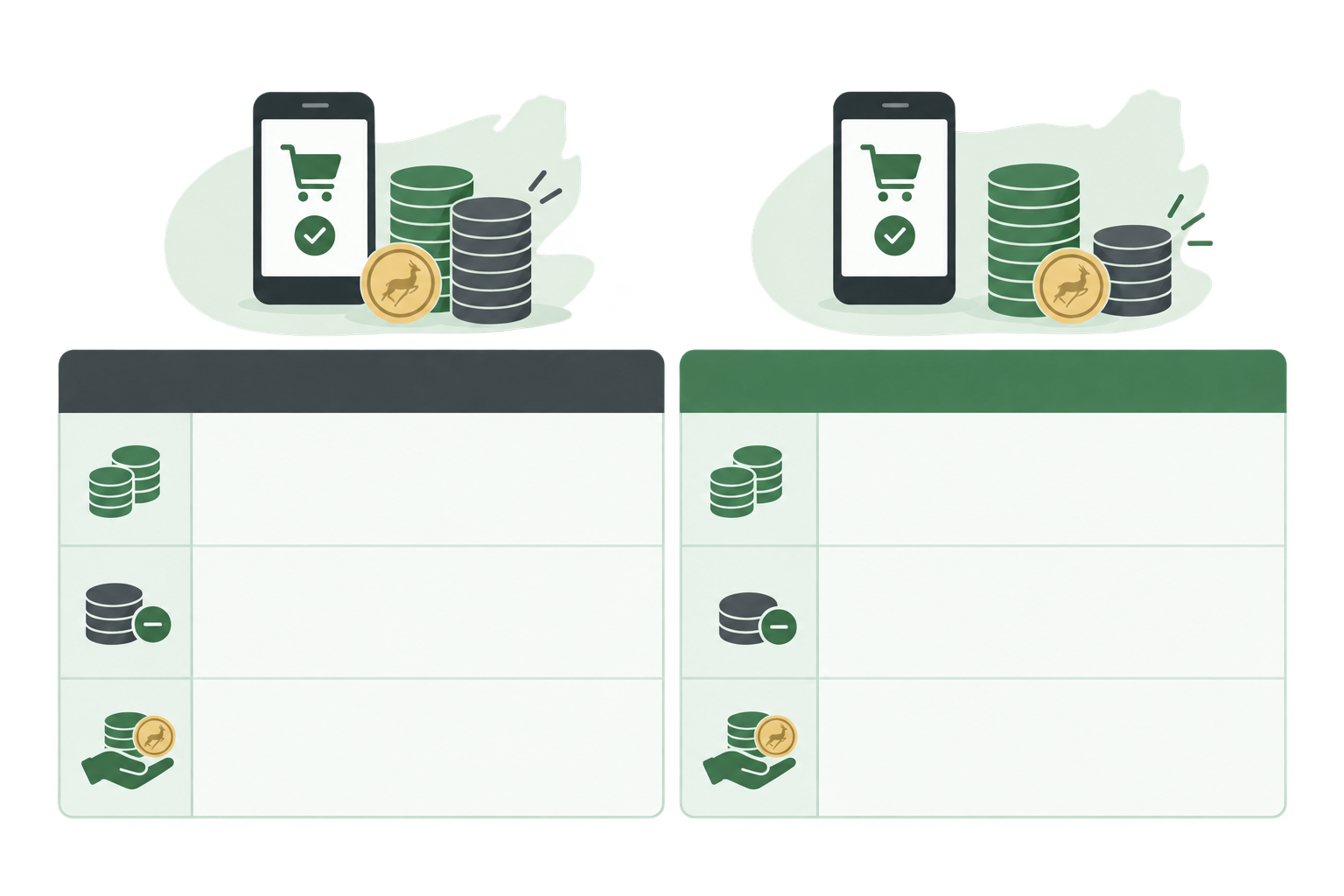
Which plan suits you depends on your sales volume. Start Free works well while you're testing the waters, since there's no monthly cost. Lower Fees can make sense once your sales are steady enough that the lower per-sale rate outweighs the monthly fee.
Other business expenses worth tracking
- Data and airtime used for the business
- Packaging and courier costs
- Design tools and software subscriptions
- Stock or materials
- Equipment such as a laptop, camera or label printer
- A portion of home-office costs, if you qualify (ask your accountant)
One more subtle point: income tax deductions and VAT input claims are separate questions. If you're ever VAT-registered, an expense being deductible doesn't automatically mean you can claim the VAT on it. You'd generally need a valid tax invoice and the right use for the expense.
Question to ask a professional: how should I record fees deducted before payout?
How to export online sales data for tax time
Your accountant needs clear, consistent numbers. Screenshots of chats and bank apps just don't cut it, and every hour they spend untangling your records is an hour you're paying for.
- Pick your tax period. The SARS tax year for individuals runs from 1 March to the end of February.
- Export your orders, payouts and refunds. Download them from your Shopstar dashboard as a spreadsheet.
- Match payouts to your bank statements. Automatic daily payouts make this easier, since each deposit lines up with a day's sales.
- Add your expense records and receipts to the same folder.
- Send the lot to your accountant, with a short note on anything unusual, like a big refund, a one-off equipment purchase or a month you were away.
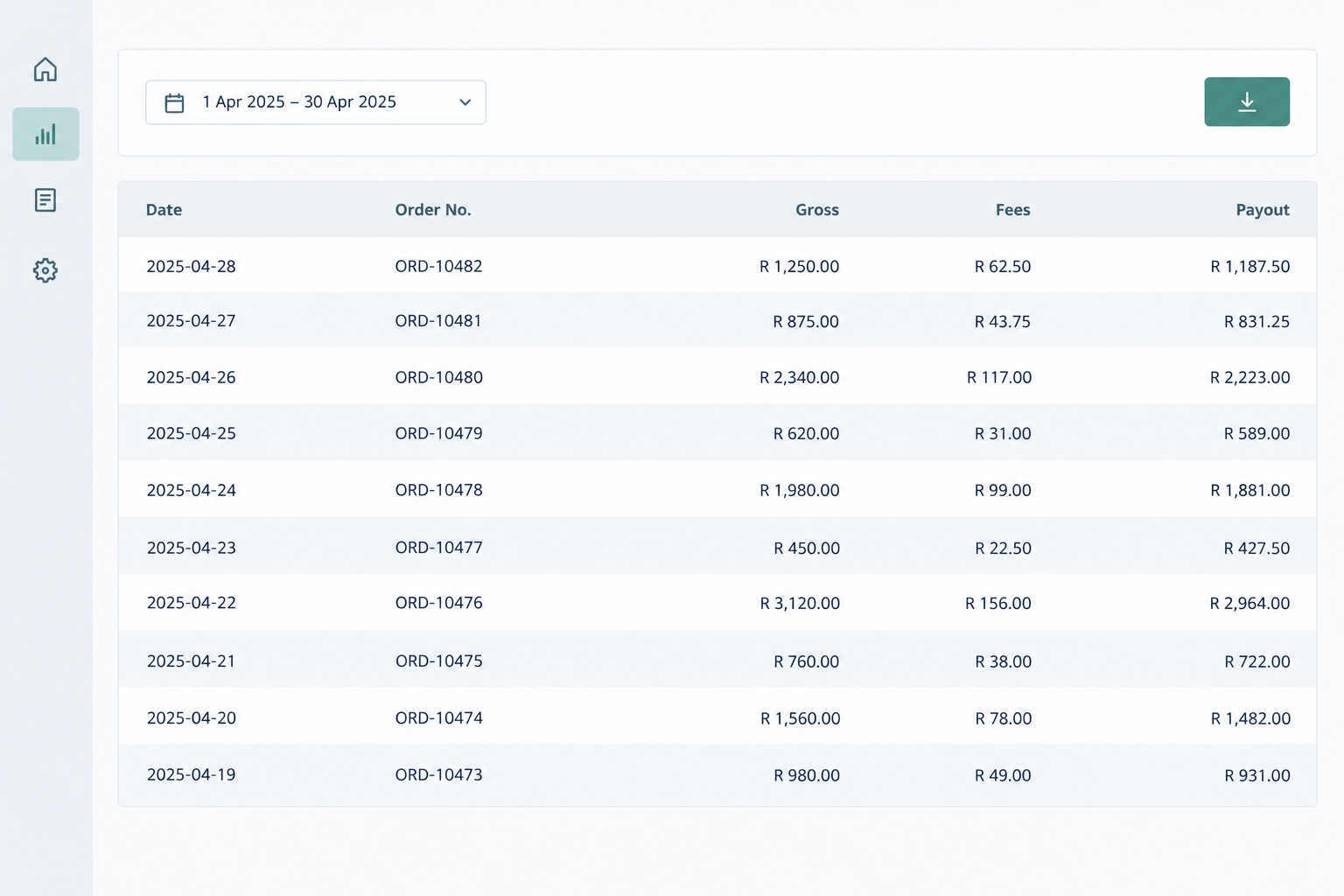
Not comfortable with spreadsheets? You're not alone, and our support team helps with this all the time. Reach out and we'll help you find and export the right reports. Our AI-powered tools for managing orders, products and customer data can also make your records easier to review, so you spot gaps before your accountant does.
When should I talk to an accountant about online sales tax?
You don't need to wait until something goes wrong. But a few signs suggest it's time to book a conversation:
- Your turnover is climbing steadily
- You're approaching the VAT threshold
- You've hired (or are about to hire) someone
- You sell across several product types, like products, bookings, tickets and memberships
- You're unsure whether you should be a provisional taxpayer
Questions to bring to an accountant
- Which tax category am I in?
- Do I need to be a provisional taxpayer?
- Should I register for VAT, and when?
- What can I deduct?
- How should I treat fees, refunds and stock?
- Should I stay a sole proprietor or consider a company?
How to find the right tax professional
Look for a registered tax practitioner, meaning someone who belongs to a SARS-recognised professional body. Ask about their credentials and check them. Ask what they charge upfront, too.
On budget: a few hundred rand for an initial consultation can save you far more in penalties, missed deductions and sleepless nights. You don't need to be a tax expert. Tidy records and a good professional are enough.
Online sales tax-readiness checklist
- ☐ Separate business bank account set up
- ☐ All orders, fees and refunds exported monthly
- ☐ Receipts for every expense saved
- ☐ VAT and income tax thresholds checked on sars.gov.za
- ☐ Accountant questions written down
- ☐ Customer data stored securely in line with POPIA
If you'd like all of this in one place, that's what Shopstar is built for. Our single checkout, built-in payment processing with Shopstar Go (card, Apple Pay and Scan to Pay) and automatic daily payouts to your South African bank account keep your sales, fees and refunds together. Our hands-on onboarding and support mean you don't need any technical skills to get set up. Whether you're running a link in bio page, a booking system, event ticketing or a membership site, your records are ready when you need them.
Frequently asked questions about tax on online sales in South Africa
Do I have to pay tax if I only sell a little bit online?
Income from online sales is generally taxable, but whether you actually owe tax depends on your total taxable income for the year and your allowable expenses. Even if you owe nothing, you may still need to declare the income. Check the current thresholds on the SARS website or ask a registered tax practitioner.
At what point do I need to register for VAT?
VAT registration is compulsory if your taxable turnover goes over R1 million in any consecutive 12-month period. You can register voluntarily if you earn more than R50,000, but it isn't always beneficial. Confirm the current rules with SARS or an accountant. VAT in South Africa is charged at 15%.
What records should I keep for my online store?
Keep order records, invoices, refund details, bank statements, payout reports and receipts for all business expenses. SARS generally expects records to be kept for five years. Store customer details securely in line with POPIA.
Can I deduct platform and payment fees?
Fees incurred to earn your income are often treated as business expenses, but treatment depends on your situation. For example, on a R500 sale with a 6% all-in fee you'd see R30 in fees. Record the gross sale and the fee separately and confirm the treatment with your accountant.
Do I need a company to sell online?
No. Many sellers start as sole proprietors and declare their business income on their personal tax return. A company can make sense as you grow, but that's a conversation to have with an accountant.
Is this article tax advice?
No. It's general information to help you get organised and ask better questions. Your circumstances are unique, so please speak to SARS or a registered tax practitioner for advice.