How to Turn a Side Hustle Into a Real Online Business in South Africa
Learn how to turn a side hustle into a business in South Africa with a branded online page, clear pricing in rand, easy payments and simple systems.
12 min read

On this page
How to turn a side hustle into a business in South Africa
You turn a side hustle into a real business by giving it a proper name and online home, setting clear prices in rand, taking payments through a trusted checkout, keeping your money and admin separate, and automating repetitive work. You don't need to build a full website or learn code. A single branded page with built-in payments gets you most of the way there, and I'll walk you through each step so you can go at your own pace. 🚀
Moving from side hustle to business is less about one big leap and more about putting a handful of small systems in place. Let's take them one at a time.
Is your side hustle ready to grow? Signs it's time to go professional
Picture this. An order arrives as a WhatsApp voice note. Another lands in your Instagram DMs. A third is an EFT screenshot with no reference, and you're scrolling back through three chats trying to work out who paid for what. If that sounds familiar, you're not disorganised. You've just outgrown the tools you started with.
Here are the signs I see most often:
- Repeat customers and referrals. People come back, or send friends your way, without you chasing them.
- You're turning down work. Your evenings and weekends are full, and you're saying 'sorry, I'm booked' more than you'd like.
- Customers ask for a link. 'Do you have a link? Can I pay by card?' means people want an easier way to buy from you.
- Your money is mixed up. Business income sits next to groceries and rent in your personal account, and you couldn't say what you actually earned last month.
- SARS starts to matter. You're earning enough that you need to know what you owe and when.
The good news is that you don't have to quit your job to act like a business. Going professional is about systems, not a leap of faith. You can keep your day job and still have a proper name, clear prices and a tidy checkout.
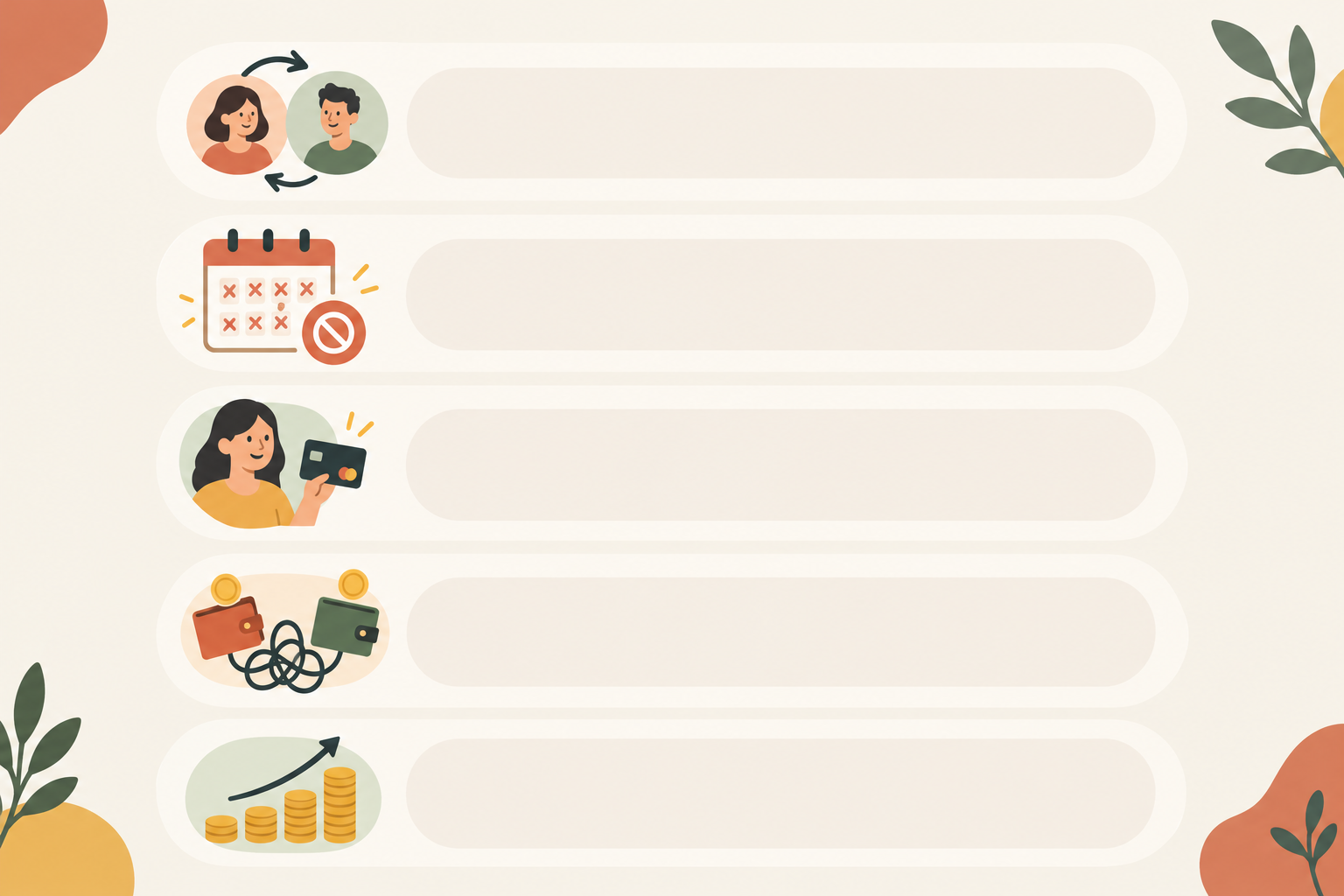
The 5-question 'Am I ready?' checklist
Screenshot this and tick what applies:
- Do I have customers who buy again or refer others?
- Am I running short of hours, or turning work away?
- Have customers asked to pay by card or through a link?
- Is business money mixed up with my personal spending?
- Is my income high enough that I need to think about tax?
Three or more ticks? You're ready. Keep reading.
Give your side hustle a name and a home online
Do you need a website to turn your side hustle into a business?
Let's answer the big question first. Most side hustles don't need a full website to start. They need one clear, trustworthy place to send people. South Africa had around 50.8 million internet users at the start of 2025, according to DataReportal, so social media is a handy way to reach customers. But you don't fully own your Instagram profile. A single page with your catalogue, prices, policies and checkout gives your business a home base that's yours.
Use a link-in-bio page as your online home
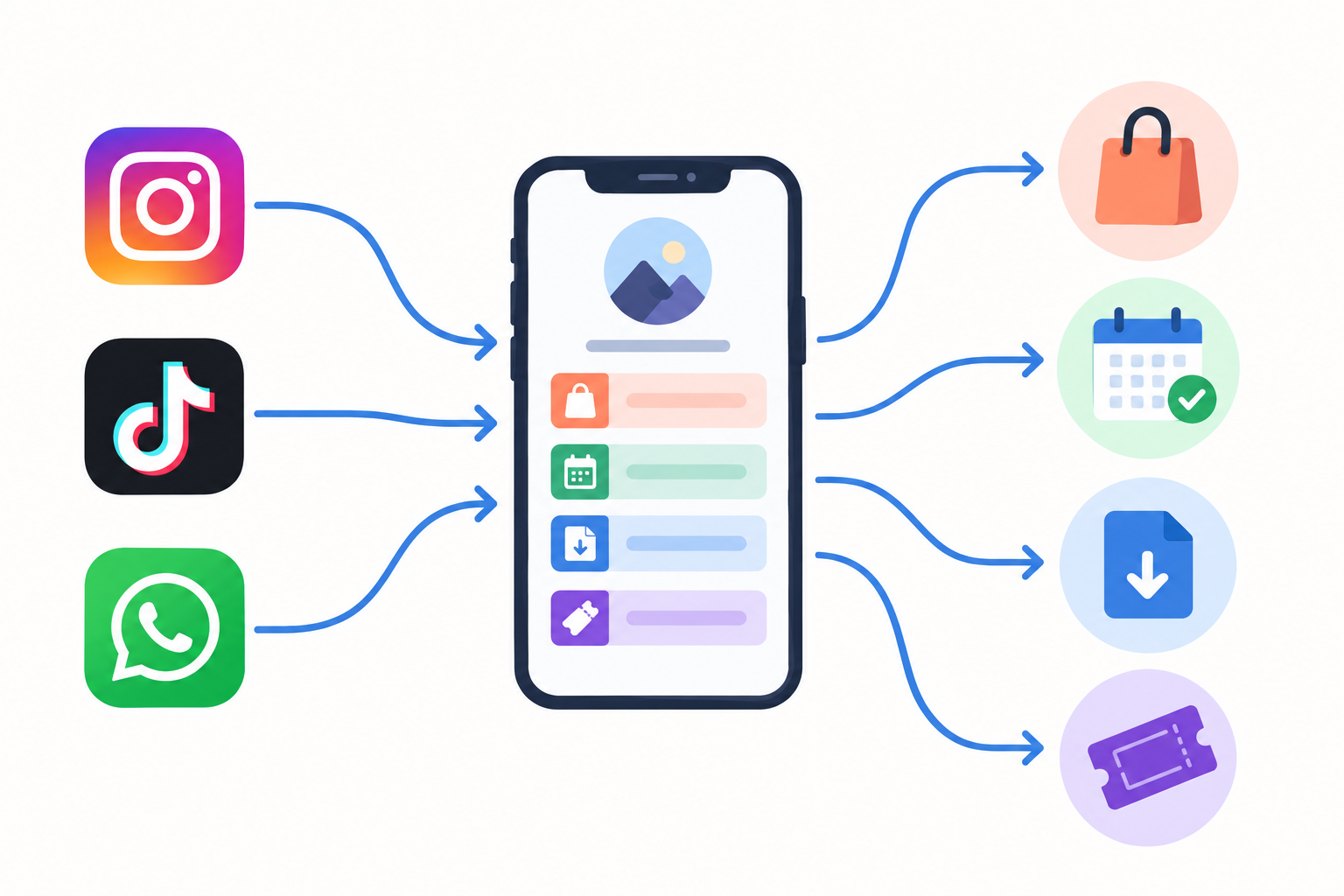
A link-in-bio page is one web address you can put on your Instagram and TikTok bios, your WhatsApp status, your business cards and your invoices. Everything you offer sits in one place, so customers don't have to scroll through old posts or ask 'how much is it again?'
With Shopstar, that page can hold physical products, digital downloads, bookings, memberships and event tickets, all through one checkout. It's a simple online store builder, and you don't have to build a website from scratch.
Pick a business name that's easy to say, spell and find
Test your name by saying it out loud on a phone call. If you have to spell it twice, it's probably too tricky. Before you spend money on packaging or signage:
- Search the CIPC company-name records if you might register a company later.
- Remember that company-name registration and trademark protection are separate checks.
- Check that matching social handles and a web address are available.
Should you use a shopstar.page address or your own domain?
A custom shopstar.page address is the quickest way to start. It's simple, needs no technical setup, and works well while you're testing what sells. Connecting your own domain (a .co.za, for example) makes sense once you want a more established look on print materials, or you're building a brand you'll grow for years. Just remember that owning a domain doesn't give you trademark rights to the name.
Branding basics for a professional look
You don't need a designer to look consistent. Keep it simple:
- One logo
- Two or three colours you use everywhere
- A clear, friendly profile photo
- A short line: 'what I do and who it's for'
What to include on your business page
Put up your story, contact details, good photos of your products or services, delivery areas (say, Joburg, Cape Town and Durban) and your policies. Under the Electronic Communications and Transactions Act (ECTA), online sellers need to be clear about who they are, what things cost and how customers can reach them. So this isn't just good manners. It builds trust.
If the tech side feels intimidating, Shopstar's onboarding team can help you set the page up. You're not expected to figure it out alone.
Set clear offers and prices for your side hustle
Pricing is where a lot of side hustles quietly lose money. Here are seven steps to get it right, with your costs and payment fees in rand.
Step 1: List what you sell and group it into offers
Write down everything you sell. Then group it into simple offers: products, digital downloads, bookings, memberships or event tickets. Be specific about what the customer gets, what's excluded and how long it takes.
Step 2: Work out your real cost per sale
Count materials, packaging, data, transport, payment fees and, importantly, your time. Your time is a cost even if you don't pay yourself yet.
Step 3: Run the numbers on one offer
Take a R350 hamper. Here's an illustrative breakdown:
| Cost | Amount |
|---|---|
| Ingredients and goodies | R140 |
| Packaging and ribbon | R30 |
| Delivery | R40 |
| Your time (1 hour at R50) | R50 |
| Costs before fees | R260 |
On the Start Free plan, the 6% all-in fee on R350 is R21, which leaves you R69. On the Lower Fees plan, 2.9% is about R10.15, leaving roughly R79.85. Same hamper, same price, but the fees change what you keep. Price with the fee included from the start, not as an afterthought.
One more thing: markup and margin aren't the same. A 25% markup on cost gives you only a 20% margin, and that catches plenty of new sellers out.
Step 4: Set your price and stop discounting from nerves
The 'R5 cheaper than the next person' trap is real. Sell 40 hampers a month at R5 off and you've handed over R200 for nothing. Compare yourself with alternatives that meet the same need, not only the cheapest one, and make your offer easy to explain: faster turnaround, nicer packaging, included support.
Step 5: Write plain-language product and service descriptions
Say what's included, how long it takes and what happens after the customer pays. Fewer questions means fewer DMs.
Step 6: Add policies that match the CPA and ECTA
The Consumer Protection Act (CPA) covers fair descriptions, faulty goods and refunds. ECTA covers clear seller details and cooling-off rights for many online sales. Write your refund, cancellation and returns terms in simple words and put them where customers can find them. Then apply them the same way every time.
Step 7: Think about VAT and your side-hustle income
VAT in South Africa is 15 percent. Registration becomes compulsory once your taxable turnover passes R1 million in any 12-month period, and it's voluntary from R50,000. If you do register, the VAT you collect isn't your income. It's tax you account for to SARS. Thresholds and conditions can change, so confirm the current rules on the SARS website or with an accountant before you publish prices.
Add new offers without changing tools
Say you start with hampers, then add a Saturday workshop, a downloadable recipe pack and a monthly subscription box. On Shopstar, all of those can live on the same page and checkout, so you can grow without rebuilding.
Take payments professionally and keep business money separate
'Just EFT me and WhatsApp the proof' costs you time, trust and sales. You end up checking your banking app at 9pm, customers wait for confirmation, and some simply drop off. People expect to pay in seconds.
What Shopstar Go offers for online payments
Shopstar Go lets customers pay by card, Apple Pay or Scan to Pay, and your money is paid out automatically every day into your South African bank account. The payment processing is built in, so you're not stitching together separate tools. A good habit: confirm payments on your dashboard rather than trusting a screenshot.
Shopstar payment plans, explained
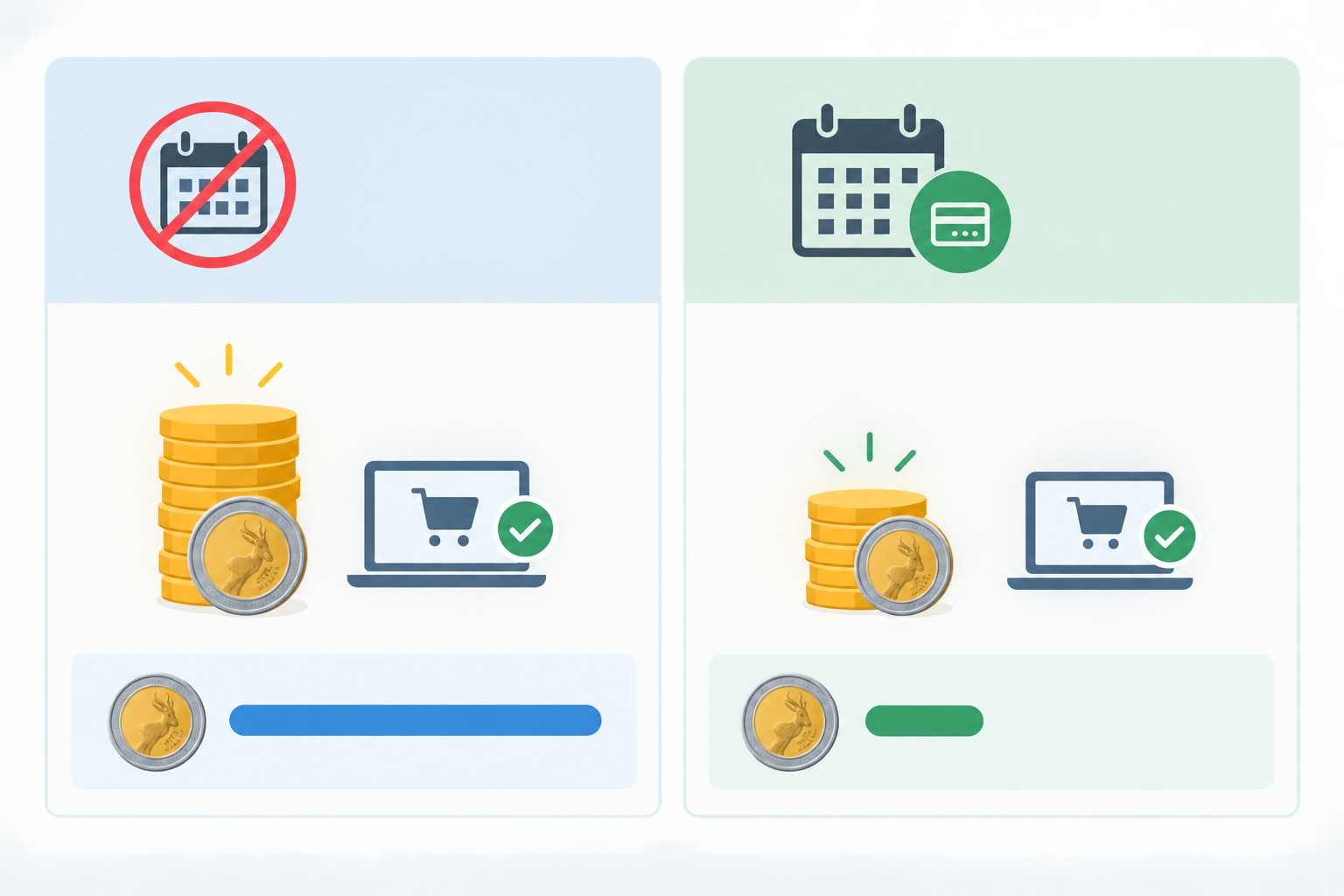
- Start Free has no monthly fee and charges 6% all-in per sale (a 2.9% payment gateway fee plus a 3.1% Shopstar fee).
- Lower Fees has a monthly fee and charges 2.9% per sale.
On a R1,000 sale, Start Free costs R60 in fees and Lower Fees costs R29.
Here's a simple, illustrative way to think about break-even. The difference between the plans is 3.1% of your sales:
- At R10,000 in monthly sales, that's R310.
- At R30,000 in monthly sales, that's R930.
If the Lower Fees monthly fee is less than that saving, Lower Fees wins. Check the current monthly fee on the Shopstar pricing page and do the sum with your own numbers. Start Free is a good fit while you're testing the waters.
How do you separate business and personal money?
It's simpler than it sounds:
- Open a dedicated business or second bank account.
- Have your payouts go there.
- Pay yourself a regular 'salary' into your personal account.
- Keep invoices, receipts and records of sales, fees, refunds and expenses.
Your cash flow gets clearer, and tax time gets far less stressful.
Tax basics for a South African side hustle
Side-hustle income is still taxable. As a sole proprietor, your business income is generally added to your personal taxable income, while a registered company is a separate taxpayer. SARS also has options for small businesses, such as turnover tax for micro businesses. Which structure suits you depends on your situation, so a quick chat with a registered tax practitioner or accountant is worth every rand.
Customer data and POPIA
The moment you collect names, phone numbers and addresses, the Protection of Personal Information Act (POPIA) applies. Keep it simple: collect only what you need, be clear about why, and keep it safe. If you use a reputable hosted checkout, you never store card details yourself.
Build customer trust with a reliable checkout
Shopstar stores have processed over R250 million in paid orders, and Shopstar holds a 4.9-star Google rating from 120+ reviews. That track record helps your customers feel comfortable paying you.
Build systems that save your side hustle time
The aim is to stop being the human glue between ten different apps. Here's what I'd put in place.
- Keep orders, bookings, tickets and customer details in one place instead of scattered across DMs and spreadsheets.
- If you sell services, use a booking system. Clients pick their own slots, so you skip the 15 back-and-forth messages. It's brilliant for tutors, beauty therapists and coaches.
- Sell digital downloads like templates, recipes, guides and courses, which get delivered automatically once someone pays.
- Offer a membership or subscription option. Monthly boxes, classes or a paid community give you predictable, repeat income.
- Sell tickets for workshops, markets and pop-ups through the same checkout.
- Try Shopstar's AI tools for managing orders, products and customer data. Be realistic, though: they save admin time, but they don't replace your judgement.
- Save short message templates for 'order confirmed', 'running late' and 'how to book again'.
A 30-minute weekly admin routine
Pick the same slot each week, say Sunday evening, and:
- Check orders and bookings.
- Reconcile payouts against your bank account.
- Restock what's running low.
- Post one update to your page or socials.
That's it. Small, boring, and very effective.
Handle growing demand without burning out
Demand is lovely until it's 1am and you're still wrapping parcels. Here's how to grow your side hustle without losing control of it.
Step 1: Set capacity limits
Decide on a maximum number of orders or bookings per week. That lets you say yes to the right amount, and no without guilt.
Step 2: Build lead times into your page
Tell customers how long things take, for example 'orders placed by Wednesday ship Friday'. When expectations are clear, you're not working through the night.
Step 3: Batch your work
Bake, pack or shoot content on set days instead of squeezing it in everywhere.
Step 4: Raise prices when you're booked out
Demand is a signal, not a burden. If you're consistently full, your prices have room to move.
Step 5: Know when to get help
A part-time packer, virtual assistant or bookkeeper can free up your hours. Costs vary, but as a rough guide you might budget a few hundred rand a month for a bookkeeper, or pay a packer per busy weekend. Bring help in once your numbers support it.
Step 6: Use customer support when you hit a snag
You're never stuck alone. Shopstar's hands-on support team can help with setup and questions, so a technical hiccup doesn't derail your week.
Step 7: Review your numbers monthly
Look at revenue, costs, fees and profit. Then decide what to keep, stop or grow.
Your first 30 days moving from side hustle to business
- Week 1: Choose your name and branding basics, and set up your page. Ask for onboarding help if you want it.
- Week 2: Price your top offers properly in rand, with costs and fees included, and write your policies.
- Week 3: Open a business bank account, switch on card payments and send your link to your best customers.
- Week 4: Set capacity limits, start your 30-minute weekly routine and book a chat with an accountant.
You don't need to do it perfectly. You just need to start.
Frequently asked questions about moving from side hustle to business
When is it time to go professional with my side hustle?
If customers are asking how to pay you, you're getting repeat orders or referrals, or admin is eating into your evenings, it's time. You don't need to quit your job. Start with a branded page, clear prices and a proper payment method, then build from there.
Do I need a website to run an online business in South Africa?
Not at the start. A single online page that shows what you sell, your prices and a simple checkout is enough for many small businesses. Shopstar lets you sell products, services, digital downloads, memberships and event tickets from one page, and you can connect your own domain later if you want to.
How do I separate business and personal money?
Open a dedicated bank account for the business, have your sales payouts go there, and pay yourself a set amount regularly. Keep invoices and receipts so tax time with SARS is easier. A registered accountant can advise on what suits your situation.
What does it cost to take payments through Shopstar?
There are two plans. Start Free has no monthly fee and charges 6% all-in per sale (a 2.9% payment gateway fee plus a 3.1% Shopstar fee). Lower Fees has a monthly fee and charges 2.9% per sale. Start Free suits you while you're testing the waters, and Lower Fees can work out cheaper as your sales grow.
Do I have to register for VAT?
VAT in South Africa is 15 percent. Registration is compulsory once your taxable turnover goes above R1 million in any 12-month period, and voluntary from R50,000. Check the current rules on the SARS website or with an accountant.
How do I handle growing demand without burning out?
Set weekly capacity limits, state lead times on your page, batch your tasks, and use tools that automate order and booking admin. Raise your prices when you're consistently booked out, and bring in help once the numbers support it.
Which South African laws should I know about as an online seller?
Three main ones. The Consumer Protection Act (CPA) covers fair pricing, refunds and product quality. The Electronic Communications and Transactions Act (ECTA) covers online selling rules like clear seller information and cooling-off rights. POPIA covers how you handle customer personal information. SARS handles your tax obligations.