How to Get Your First 10 Customers Online in South Africa: A Realistic 4-Week Plan
Get your first customers online in South Africa with a practical 4-week plan: build a clear offer, use WhatsApp, and sell without paid ads.
12 min read

On this page
How to Get First Customers Online in South Africa: A 4-Week Plan
You can get your first customers online without spending a cent on ads. Start with people who already know you, make one clear starter offer, put it behind a simple checkout link, and ask for orders directly. For many new sellers, the first sales come from WhatsApp chats, Status updates and community groups long before paid marketing makes sense.
If you're trying to get your first customers online in South Africa, this four-week plan is for you. It's built for people who aren't techy and don't have a marketing budget. I'll walk you through what to do each week, what to say, and what to do if things are quiet. 🙂
Your first 30 days at a glance
Ten customers is a small number, and very doable. At this stage you don't need a perfect brand or a viral launch. You need proof that real people will pay for what you offer. Once you have that, everything else gets easier.
| Week | Focus | What you do | Illustrative target |
|---|---|---|---|
| Week 1 | Warm list and starter offer | Write down 30 names, create one offer, set up checkout, message your closest circle | 2 to 3 customers |
| Week 2 | Share your link | WhatsApp Status, social bios, community groups, real-life touchpoints | 3 to 4 customers |
| Week 3 | Follow up and ask for reviews | Nudge warm leads, ask for honest feedback, ask for referrals | 2 to 3 customers |
| Week 4 | Review and repeat | See what worked, drop what didn't, decide your next move | Whatever is left to reach 10 (0 to 3) |
A quick note on those numbers: they're illustrative goals, not a forecast. Your results will depend on your offer, your price, the size of your network and how many people actually see your link. If you only reach four customers in the first month, you've still learned a lot, and the plan below shows you what to adjust.
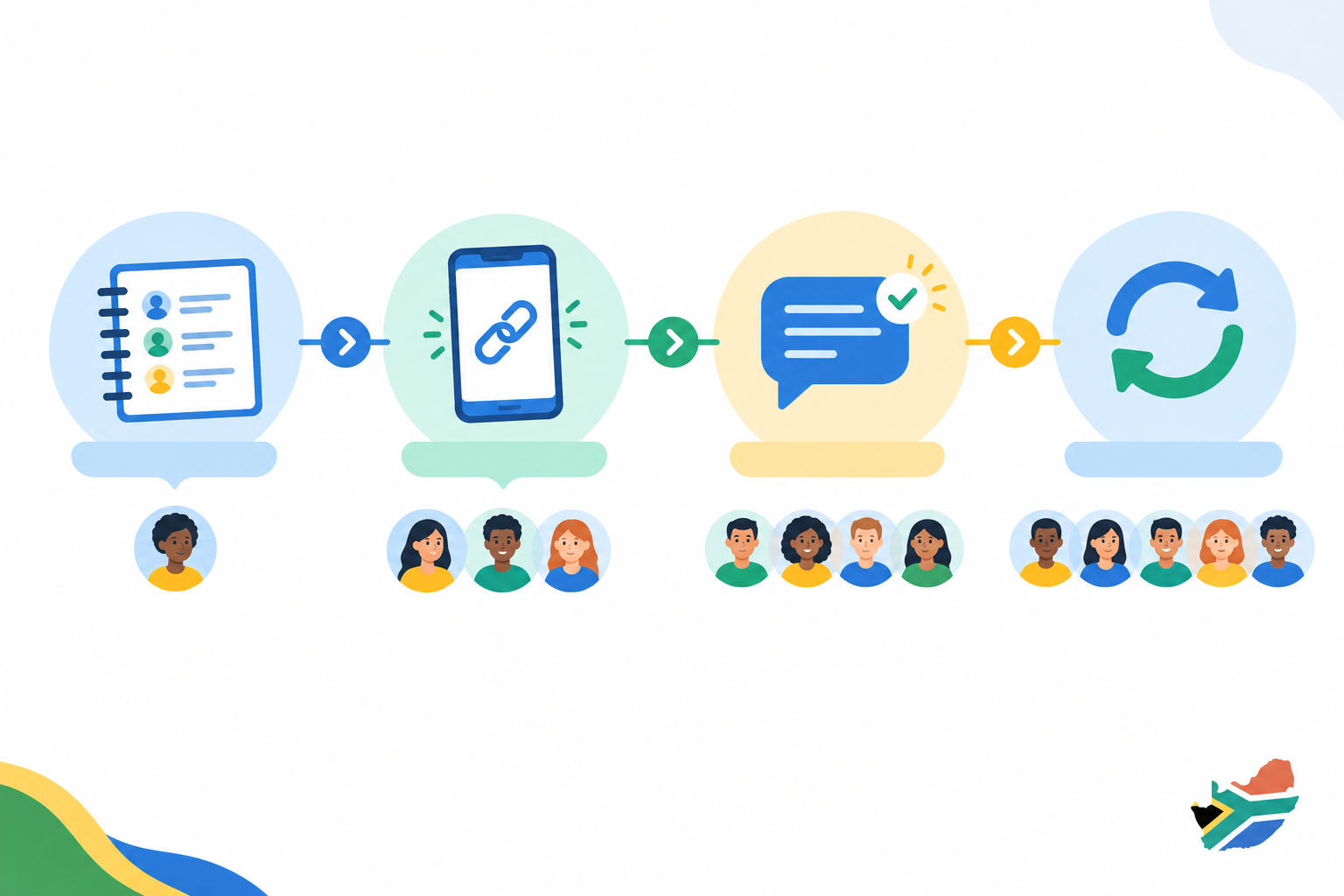
If there's one idea behind this whole plan, it's this: small, regular, personal asks usually beat one big launch that everyone scrolls past.
How to get first customers online: start with people who already trust you
Warm contacts are the easiest place to start because they already know you, so you don't have to build trust from scratch. Nielsen's global Trust in Advertising study found that 88% of people trust recommendations from people they know. That's a global figure and it measures trust, not purchases, but it matches what I see among sellers.
The reach is there too. DataReportal estimated around 45 million internet users in South Africa at the start of 2024. You don't need to reach all of them. You need about ten.
Build a list of 30 potential customers and connectors
Grab a notebook or your Notes app and write down 30 names. Scroll through:
- Your WhatsApp contacts and recent chats
- Family and extended family
- Old colleagues and former bosses
- School, varsity, church and community groups
- Gym buddies and sports teammates
- Neighbours in your estate or complex
Then sort them into three groups:
- Likely buyers: people who'd genuinely want what you offer.
- Connectors: people who might know someone who would.
- Cheerleaders: people who may never buy but will share, encourage and give feedback.
Don't have 30 names? That's fine. Write down what you have, then bring Week 2 forward: join two or three local groups you genuinely belong to and start taking part before you share anything.
How to tell friends and family without being pushy
Be upfront that you're starting something, say clearly what it is, and give people an easy way to say no. A personal message that starts with someone's name and mentions something real about them feels kind. A copy-pasted broadcast feels like spam. With a goal of 10 customers, you can afford to write each message yourself.
A quick POPIA note
POPIA (the Protection of Personal Information Act) regulates unsolicited electronic direct marketing in section 69, and consent is the central idea. A promotional message can fall under those rules even when you type it yourself on WhatsApp, so don't assume that messaging people you know is automatically exempt.
A cautious approach: ask first ('Can I send you details of what I'm starting?'), only add people to a broadcast list or newsletter once they've clearly opted in, and make opting out easy. WhatsApp Business tools like catalogues and quick replies don't replace permission. Check the Information Regulator for current guidance, and get legal advice if you're unsure. This is general information, not legal advice.
Make one clear starter offer customers can understand
When you're starting, one clear offer beats a full catalogue. There's less to explain, less for the buyer to decide, and it's easier to share in a chat. A good starter offer has a specific result (what does the buyer actually get?), a fair price that's low enough to say yes to but high enough to cover your costs, and a clear delivery timeline. You can also add a small launch incentive, like a launch price or a free extra, as long as the deadline is real.
Some South African examples:
- A Joburg home baker selling a box of six milk tart slices for R150
- A Cape Town photographer offering a 30-minute mini-session for R450
- A Durban maths tutor offering a first lesson for R200
- A creator selling a template pack as a digital download for R99
You aren't locked into one type of sale. Shopstar supports physical products, digital downloads, bookings for services, event ticketing, and memberships and subscriptions through one checkout, so pick whatever suits what you already do well.
Describe your offer in 30 words or fewer
Can you describe your offer in one WhatsApp message of under 30 words? Try: Six fresh milk tart slices, baked Fridays, delivered in Sandton for R150. Order by Thursday noon: [link]. If you add delivery, show the full price upfront. The Baymard Institute's cart abandonment research (US-based, so use it as a guide) found that 48% of shoppers who abandoned a cart cited extra costs like shipping or fees.
Price your offer without losing money
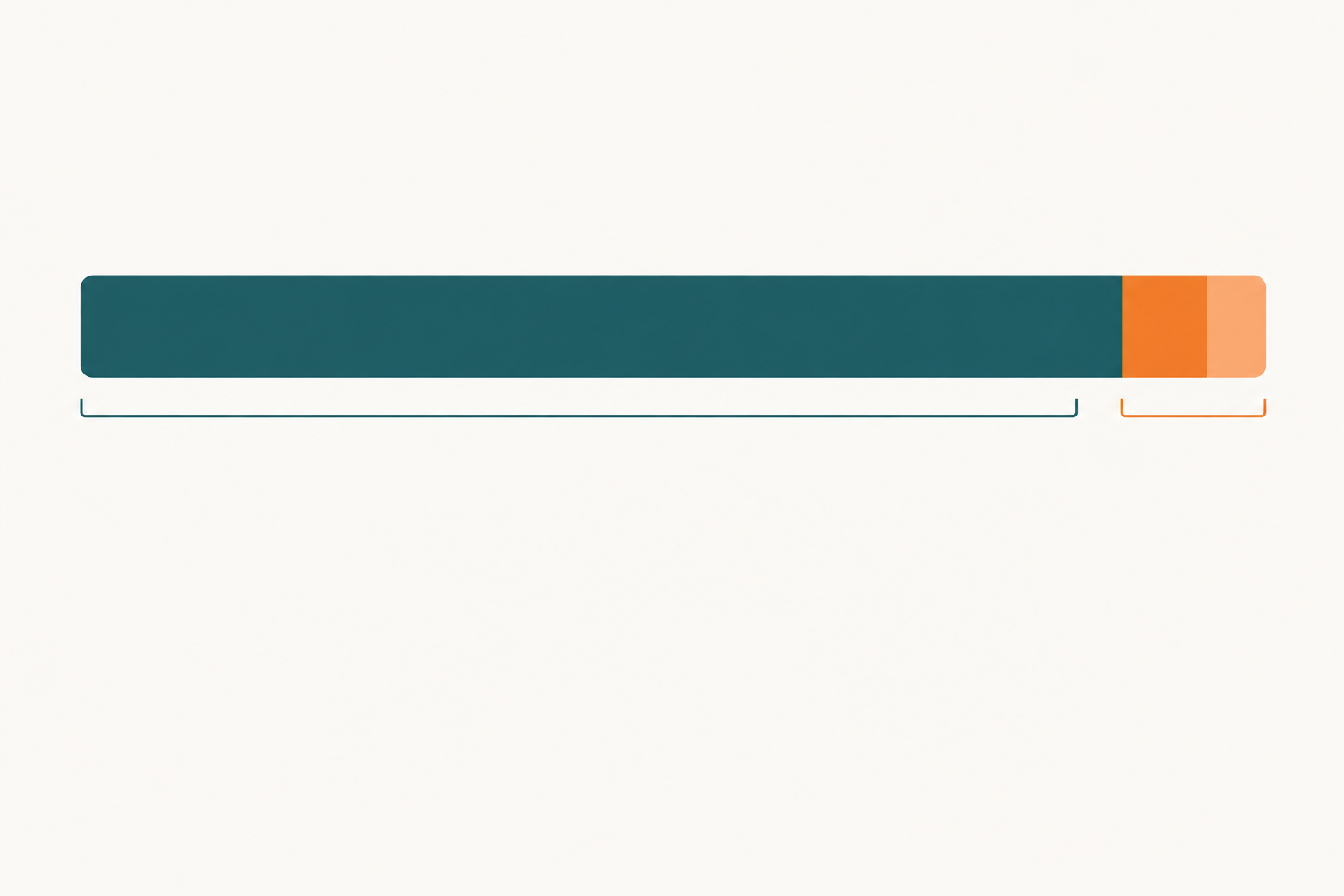
A cheap first sale that leaves you out of pocket isn't a win, so factor in payment fees. As at the time of writing, the Start Free plan has no monthly fee and charges 6% all-in per sale: a 2.9% payment gateway fee plus a 3.1% Shopstar fee. On a R200 sale that's R12, so R188 reaches your bank account before your own costs like ingredients, data or transport. There's also a Lower Fees plan with a monthly fee and 2.9% per sale, which may suit you once sales pick up. Fees can change, so confirm the current figures on Shopstar's pricing page before you set your prices.
Set up an easy online checkout
Shopstar works as a link in bio page and online store builder, so there's no website to build and no code to touch. You can do it in an afternoon:
- Claim your shopstar.page link, or connect your own domain if you have one.
- Add your starter offer with a clear photo, a short description, the price in rand and delivery or booking details.
- Switch on payments with Shopstar Go, so customers can pay by card, Apple Pay or Scan to Pay.
- Add your bank details so payouts reach your South African bank account.
- Test it yourself. Buy your own offer, or ask a friend to try, so there are no surprises when a real customer arrives.
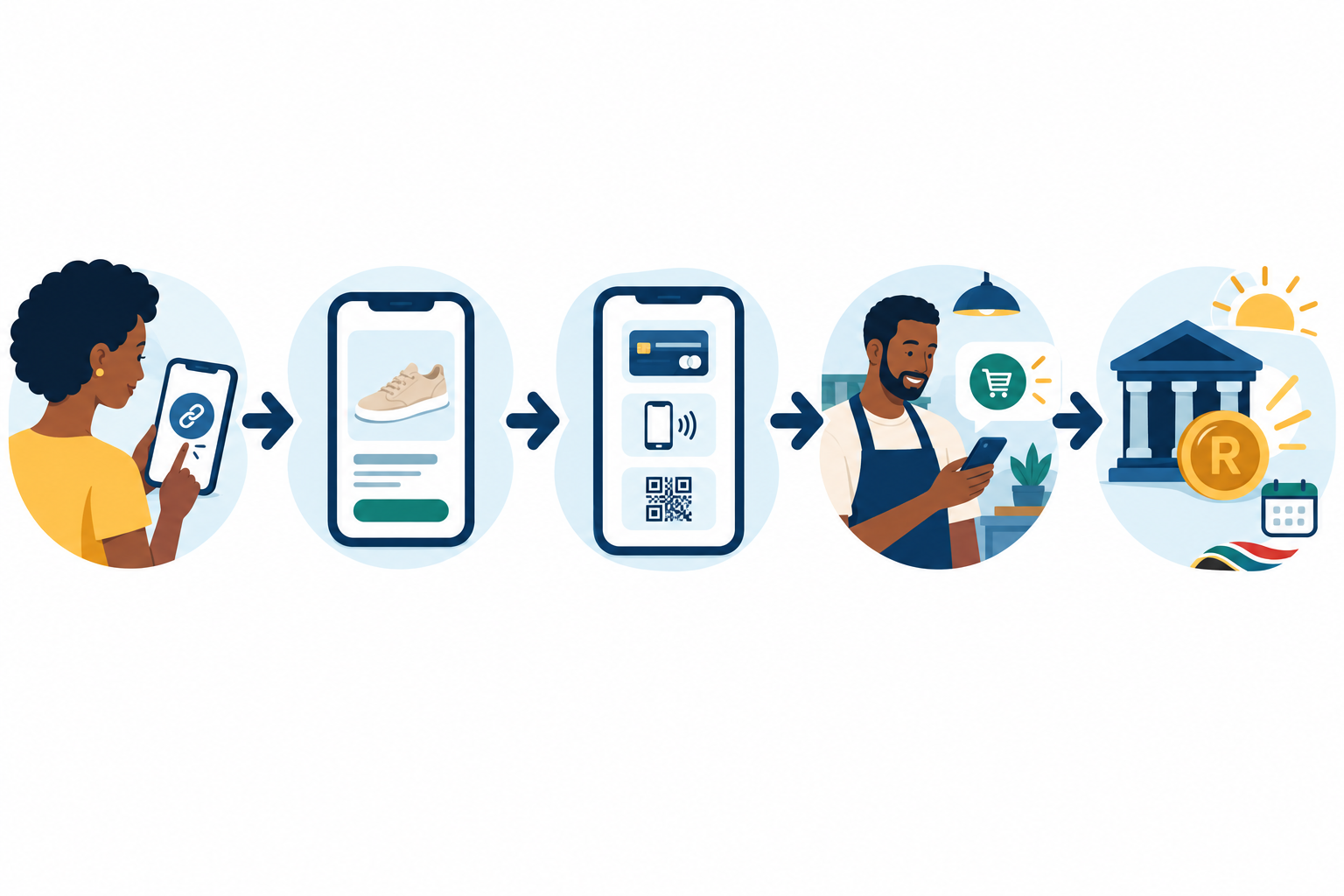
Payouts are automatic and daily, but when the money shows in your account depends on your bank, so treat the diagram's timing as a rough guide and check Shopstar's current payout terms. If you get stuck, Shopstar offers onboarding support, so you can ask a real person instead of digging through help articles at 10pm.
A tidy checkout makes buying easy, but it won't create demand. The sales still come from you sharing the link.
Make your first online sale feel safe for buyers
When nobody knows your brand yet, trust matters more than polish. Baymard's US research found that 19% of shoppers who abandoned an order didn't trust the site with their card details. A few things help ease that worry:
- Show your face and your story. A short bio, a real photo and a line on why you started go a long way.
- Be clear about the basics: price, delivery times, returns and how to reach you.
- Use payment methods people recognise, like card, Apple Pay and Scan to Pay, rather than an EFT to a personal account.
- Reply quickly and confirm each order personally.
What South African online sellers need to know about the law
This is general information, not legal advice. Three South African laws matter most:
- ECTA (Electronic Communications and Transactions Act): Section 43 expects online sellers to give clear information before a buyer pays, including your identity and contact details, the total price, payment method, delivery arrangements and your return or cancellation policy. Section 44 generally gives buyers a seven-day cooling-off period on distance purchases, with some exceptions (for example, certain services and bookings for specific dates). A short 'Before you buy' section on your page covers a lot of this.
- CPA (Consumer Protection Act): Goods should be of good quality and match their description, and your refund and return terms shouldn't conflict with the Act.
- POPIA: Only collect what you need to fulfil an order, explain why, and never share buyer details.
Add a short, plain-language policy page explaining what happens if something goes wrong. Keep it honest and easy to find, and skip the jargon.
Week 2: Share your link where your customers already are
Don't try to build a new audience from nothing. Show up where your people already gather:
- WhatsApp Status and personal chats: Post your offer with a photo and your link, and refresh it every few days.
- Instagram, TikTok and Facebook: Put your Shopstar link in your bio and mention it in posts or stories that show the product or service in action.
- Local community groups: Suburb Facebook groups, school parent groups, estate WhatsApp groups and neighbourhood markets. Check the group rules first, since many admins set specific days for promotions.
- Real-life touchpoints: A printed QR code on packaging, a business card, a poster at the gym, or a note tucked in with deliveries.
Tell small stories rather than just posting prices. 'I started baking milk tart for my gran's birthday and now I'm taking orders for Friday' will often land better than 'Milk tart R150, DM to order'.
Do you need paid ads to get your first customers?
Not for your first 10 customers. Ads work best when you already know which offer sells and what a customer is worth to you. Until then you'd be paying to learn things you can find out for free by talking to people.
Ask for orders (it feels awkward, but it works)
A lot of new sellers share their link and then wait quietly. Nothing happens, so they assume it isn't working. Usually people are just busy, meant to reply, and your message slipped down their chat list. Many of them need a clear, friendly nudge. Most of us also feel a bit silly before sending that first message, and that's completely normal.
Here are some starters to tweak so they sound like you. If you haven't messaged someone about your business before, you can open with a permission-first line such as 'Can I send you details of something I've started?' and share the link once they say yes.
For a close friend:
Hi Naledi! I've started selling homemade milk tart boxes (6 slices for R150). I'd love you to be one of my first customers. Here's the link: [link]. Totally fine if it's not for you, but if you know someone who'd love it, I'd be so grateful for an intro. 💛
For a past colleague:
Hi Pieter, hope you're well! I've started offering 30-minute mini photo sessions in Cape Town for R450. I'm taking six bookings this month. If you or someone you know needs fresh headshots, you can book here: [link].
For a community group (where the rules allow):
Hi everyone! I'm a local maths tutor and I'm offering a first lesson for R200 to the first five Grade 10 learners who sign up this week. Book here: [link]. Happy to answer any questions below.
Each one is warm and specific, with one link and one clear next step. Send one polite follow-up after a few days ('Just checking you saw this, no pressure!'), then let it go. A no is just information, and sometimes 'not now' becomes a yes next month. Honour any request to stop messaging, and never guilt-trip anyone.
Weeks 3 and 4: Follow up, collect reviews and repeat what works
Week 3 is about follow-up and proof. Check in with warm leads who haven't replied, and look after the customers you already have:
- Thank every buyer personally within 24 hours.
- Check they're happy once the order or service has been delivered.
- Ask for honest feedback with an open question like 'How was it? I'd love to hear what worked and what didn't.' Don't script what they should say, and don't pressure anyone into five stars.
- Ask permission before sharing a testimonial or photo publicly.
- Add your best testimonials to your Shopstar page.
Ask for referrals separately: 'Who else might love this?' If you offer a thank-you for referrals, like a small discount on their next order, keep it apart from the review request and be open about it. A review you've rewarded should say so.
Week 4 is about reviewing. Which channel brought the most orders? Which message got replies? Do more of what worked, drop what didn't, and think about a second offer or a bundle once you have a clear winner. Later you could try small ad tests, memberships, bookings or event ticketing. The market is moving your way, too: World Wide Worx estimated South African online retail at around R71 billion in 2023, up about 29% on 2022.
What if nobody buys in the first week?
Slow starts are common, and they usually point to something fixable. Run through this checklist:
- Did enough people see it? Ten views isn't a test.
- Is the offer clear? Does it pass the 30-word test?
- Is the price right? Too high, or so low it looks suspicious?
- Is checkout easy on a phone? Open your link on yours.
- Did you ask directly? A link alone isn't an ask.
Then talk to two or three people who didn't buy and ask what held them back. Change one thing at a time, like the photo, the headline or the price, so you know what made the difference.
Keep your business admin simple from day one
This is general information, not personal tax advice.
- Record every sale and expense. SARS expects you to declare income from a side business, even a small one. A spreadsheet works: date, amount, order reference, expenses and saved receipts. Keep supporting records for at least five years.
- Set aside a portion of each payout for tax, so it doesn't surprise you later.
- Know the VAT basics. VAT in South Africa is 15%, but registration is only compulsory once your taxable turnover passes R1 million in a 12-month period. Voluntary registration is available from R50 000. If you're not VAT-registered, don't present yourself as charging VAT.
- Use your dashboard. Order records and payouts are already logged, which makes bookkeeping easier.
- Consider a separate bank account for the business to keep things tidy.
If you're unsure about anything, speak to an accountant or check the SARS website.
FAQ: Getting your first customers online
Do I need paid ads to get my first customers online?
No. Your WhatsApp contacts, social profiles and local groups are usually enough to start, and they cost nothing. Wait until you know which offer sells.
How do I tell friends and family without being pushy?
Message them personally, ask permission before sending promotional details, make it easy to say no, and thank people either way.
What if nobody buys in the first week?
Work through the checklist above, speak to a few people who didn't buy, and adjust one thing at a time.
How do I make my first sale feel safe for buyers?
Show who you are, describe the offer accurately, state delivery and refund terms, and offer payment methods people recognise. That also supports your obligations under the CPA, ECTA and POPIA.
How much does it cost to start selling with Shopstar?
As at the time of writing, the Start Free plan has no monthly fee and charges 6% all-in per sale, so a R200 sale leaves R188 before your own costs. Check Shopstar's pricing page for current fees. If you'd like a second pair of eyes on your page, Shopstar's support team can help.