How to Turn First-Time Buyers Into Repeat Customers: A Friendly Playbook for Small South African Sellers
Discover how small South African sellers can win repeat customers with a simple 7-day playbook: warm follow-ups, relevant offers and easy loyalty ideas.
12 min read
On this page
How to Get Repeat Customers: A 7-Day Playbook for Small South African Sellers
Repeat customers are built in the first week or so after someone buys. That means a fast, warm confirmation, clear delivery updates, a personal check-in once the order arrives, and one easy reason to come back. You don't need a complicated loyalty programme. Record who bought what, get the right permission to stay in touch (that's POPIA), and send a small, relevant nudge at the right time.
That's the whole playbook. The rest of this post shows how to do it with a tiny team, a link-in-bio page or simple store, and no big marketing budget. 🙂
Why repeat customers matter more than you think
Picture a Joburg candle maker who sits down after a busy festive season and finally looks properly at her orders. (She's an illustrative example, but I've seen versions of this story again and again.) She expected hundreds of different names. Instead, a small group of people had bought three, four, even five times, and that handful was driving about half her revenue. She had never run an ad to reach them. They came back because the first experience felt good.
The maths is friendlier than you'd expect. Take a R450 order. On Shopstar's Start Free plan, the all-in fee is 6% (a 2.9% payment gateway fee plus a 3.1% Shopstar fee), so that order costs about R27 in fees. On the Lower Fees plan, the per-sale fee is 2.9%, roughly R13 on the same order, before the plan's monthly fee is added. When a known customer buys again, you skip the cost of finding them. It still isn't pure profit, though. You pay for the product, packaging, delivery, your time and your overheads.
The research points the same way. Harvard Business Review has reported that acquiring a new customer can cost anywhere from 5 to 25 times more than keeping an existing one (see Amy Gallo, 'The Value of Keeping the Right Customers', hbr.org/2014/10/the-value-of-keeping-the-right-customers). Bain & Company's Frederick Reichheld has estimated that a 5% increase in retention can lift profits by 25% to 95%. Those figures come mostly from larger, international businesses and vary a lot by industry, so treat them as a direction, not a forecast. Your own results depend on your margins, your product and how often people naturally need to buy again.
Why does this hit small teams hardest? You're already juggling load shedding, data costs, packing orders and answering DMs. Every rand spent finding a stranger is a rand you can't spend elsewhere. Looking after people who already trust you is some of the cheapest growth going, and you can do all of it from your phone with a few saved templates.
Your first 7 days after purchase: a repeat-customer timeline
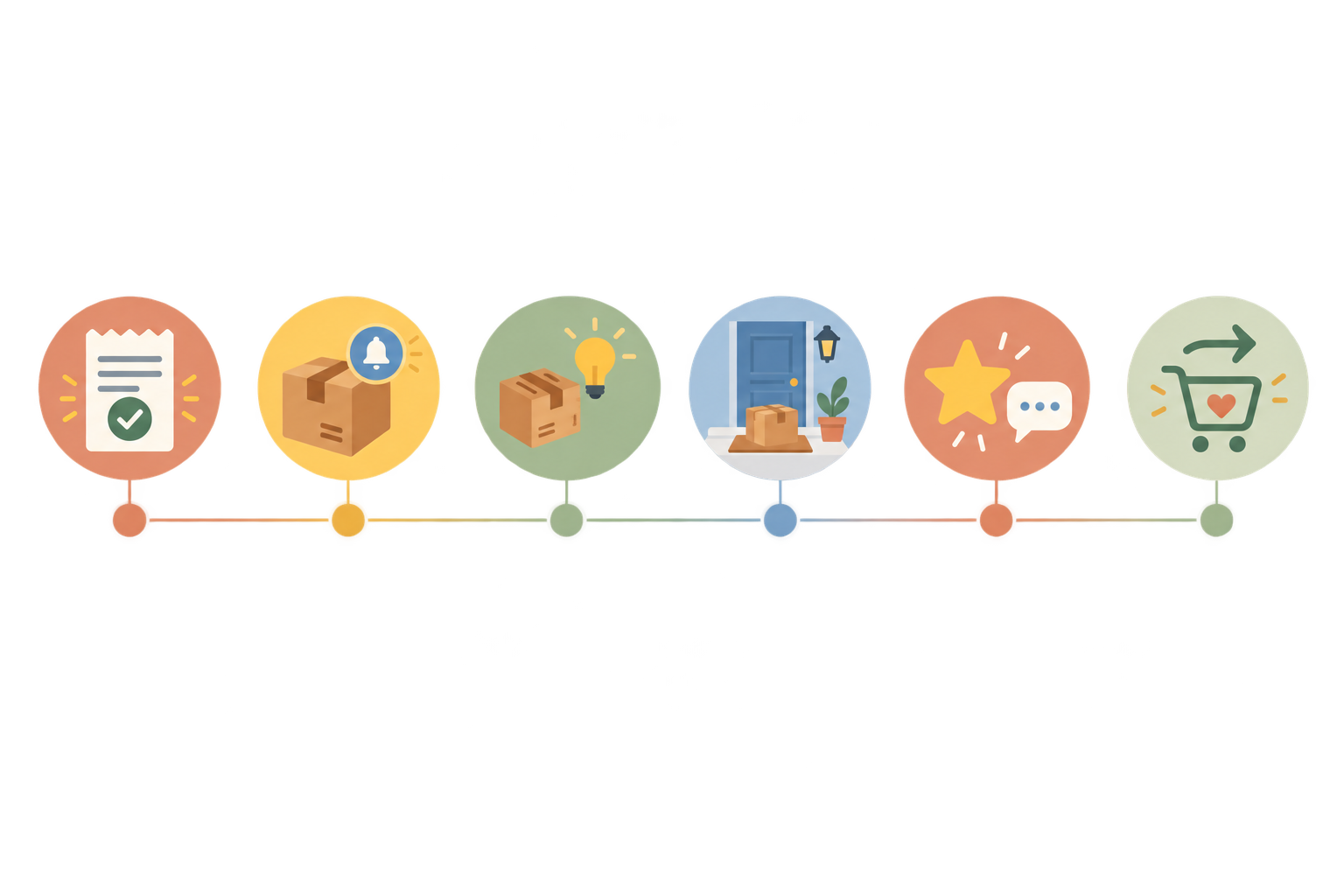
Here's the sequence I'd suggest for a physical product. One rule matters: some steps hang off the purchase date and others hang off the delivery date. If your courier takes 2-3 days, this all fits in about a week. If delivery takes longer, start the clock for steps 4-6 when the parcel actually arrives.
- Day 0, instant order confirmation. Send it straight away. Use the customer's name, include the order summary, and say what happens next. This is a transactional message, so it doesn't need a marketing opt-in.
- When it ships, a dispatch update. Share the courier or collection details, whether that's The Courier Guy, Pargo, PUDO or your own delivery, plus a tracking link or pick-up window.
- While it's in transit, a useful tip. Share how to care for the product or get more out of it. A candle-burning tip or a quick skincare routine works nicely.
- 1-2 days after delivery, a personal check-in. Ask if everything arrived well. Keep it short and human, and don't sell anything.
- Once they've had time to use it, a gentle review request. For something used straight away, that's about 3-7 days after delivery. For slower-use items, wait longer.
- Later, depending on the product, a low-pressure nudge. Suggest a refill, a companion item or something to try next (more on timing below).
Here's a check-in message you can copy and adapt:
'Hi Naledi, it's Thandi from Glow & Wick. Your lemongrass candle should have reached you by now. Is everything okay? If anything's not right, just reply here and I'll sort it out. 🕯️'
How to adapt the follow-up timeline for digital products, bookings and tickets
Not everything ships in a box, so change the rhythm to suit:
- Digital downloads: delivery is instant, so squash the timeline. Send the confirmation and download link at once, a 'how to get started' tip on day 1 or 2, and a check-in plus a related product about a week later.
- Service bookings: confirm immediately, send a reminder with prep instructions before the appointment, then follow up the day after to ask how it went. Offer a rebooking link while the experience is fresh.
- Event tickets: send the ticket and venue details straight away, a reminder a few days before, and a thank-you with a 'next event' note afterwards.
Write each message once, save it as a template, and swap in the name and product. That's the whole workload.
The thank-you that helps turn first-time buyers into repeat customers
A good thank-you is small, specific and a bit surprising. Here's what I'd put in the mix.
Start with their name and what they bought. 'Thanks, Naledi, enjoy your lemongrass soy candle' beats 'Dear Customer' every time. A handwritten note or short voice note costs almost nothing and feels very personal. If you have room, add a line about who packed their order or why you started the business, because people like buying from people. A small extra, like a sample, a sticker or a bonus digital download, feels like a gift rather than a bargaining chip. And tell them where to find you, whether that's your Instagram, your WhatsApp Business number or your shopstar.page link, so coming back is effortless.
If it sounds like a form letter, rewrite it.
Following up after delivery: how soon is too soon?
The short answer: check in 1-2 days after delivery, ask for a review once the product has been used, and send a next-step nudge when they're likely to need more. Count from the delivery date, not the purchase date.
- Coffee or skincare: nudge at 3-5 weeks, around when the first batch runs low.
- Clothing: 4-8 weeks, or when the season changes.
- Candles, snacks and other quick-use items: 1-3 weeks.
- Digital downloads: about a week later, with something related.
- Services: a rebooking reminder based on the usual cycle, such as every 6 weeks for a haircut.
Solve problems before you sell
Always ask 'is everything okay?' before 'want more?'. A check-in that really tries to help builds trust, and trust is what brings people back. Jump straight to a pitch and the thank-you feels like a setup.
If a customer says the parcel arrived late or damaged, reply quickly, apologise sincerely and fix it without making them argue. A resolved problem often earns more loyalty than a flawless order, because the customer sees how you behave when things go wrong.
Choose the right channel for customer follow-ups
Use whatever the customer is comfortable with: email, WhatsApp or SMS. A number they gave you for delivery updates doesn't automatically cover promotions. The compliance section below explains why.
Offers that bring repeat customers back
You don't need a clever offer, just a clear one. It should be easy to understand, realistic to earn, and relevant to what the customer already buys.
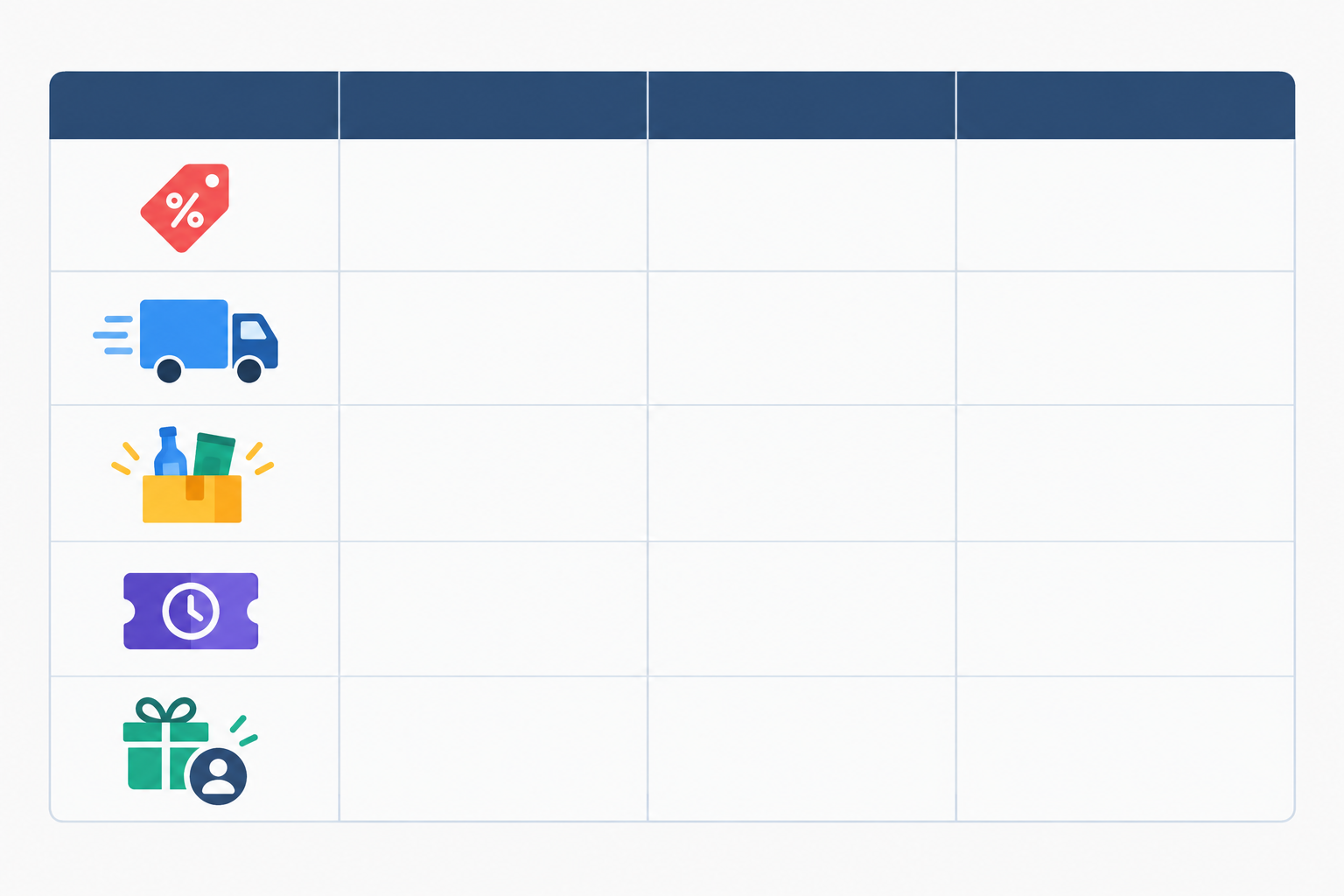
| Offer type | Best for | Example in rand | Watch-outs |
|---|---|---|---|
| Second-order discount code | Physical products | R50 off orders over R400 | Check your margins after fees and costs |
| Free delivery threshold | Encouraging bigger baskets | Free delivery over R500 | Make sure the threshold covers your courier costs |
| Bundles and 'complete the set' | Beauty, food, homeware | A R350 candle plus a R150 snuffer for R450 | Don't bundle slow-moving stock you can't afford to discount |
| Early access or limited drops | Anyone with a loyal following | Past buyers get a 24-hour head start | Honour the head start, or it loses its meaning |
| Referral reward | Community-driven brands | R50 credit when a friend buys | Keep the rules simple and track who referred whom |
A small birthday treat, like a R30 voucher or free sample, also works if customers have chosen to share their birthday with you.
Set a clear expiry date and state any exclusions upfront, so nobody feels tricked. If you're VAT-registered (15% in South Africa), make sure discounts and credits show correctly on your invoices, and keep proper records for SARS. If you're unsure how a credit should be treated, ask your accountant.
A worked example: did the repeat-customer offer pay off?
Say you send a R50-off-orders-over-R400 code to 40 past buyers who opted in. Six use it, so that's a 15% redemption rate. Here's the rough maths, using assumed numbers:
- Six customers each pay R400 after the discount: R2,400 in sales.
- Platform fees at 6% (Start Free plan): about R144.
- Product cost at an assumed R180 per order: R1,080.
- What's left: about R1,176, before packaging, delivery and your time.
If that still leaves a healthy margin, the offer worked. If not, adjust the threshold or the discount. Test one offer at a time, otherwise you'll never know which one did the job.
Do you need a loyalty programme to get repeat customers?
Probably not yet. Most tiny teams do better with a simple idea like 'buy 5, get the 6th free' or a VIP list than with a points system. Woolworths Rewards, Checkers Xtra Savings and Pick n Pay Smart Shopper show what loyalty can do, but those chains have the tech and budgets to run it. You can borrow the principle (give returning customers a visible benefit) without copying the machinery.
A formal programme starts to make sense when customers buy often and spend small amounts each time, like coffee, snacks or consumables. For everyone else, try a VIP group on WhatsApp or early access to new products for repeat buyers. If you're spending Sunday afternoons updating a points spreadsheet, it's too much.
One legal note: the CPA expects promotional and loyalty terms to be clear and not misleading. Keep your rules simple and written down somewhere customers can see them.
How to track customers and use data to personalise follow-ups
Start with what you already collect: name, contact details, items bought, order dates and order value. That's enough to do a lot, whether it lives in your store's order records or a simple, tidy spreadsheet.
Split your customers into three groups: first-time buyers, repeat buyers, and 'gone quiet' buyers (no purchase in 60-90 days). Each group gets a different message. Then personalise in small ways. Suggest a refill, a complementary item or the next size up, and mention what they bought last time. If you ask for preferences like favourite scent, size or dietary needs, only keep what you'll actually use. And keep the data tidy and secure, updating or deleting details when someone asks.
A simple health check is your repeat purchase rate: the share of customers who've bought more than once in a chosen period. Compare the same time window each time so the changes mean something.
Memberships, subscriptions and rebookings as built-in loyalty
Recurring revenue turns a one-off sale into a relationship. A monthly box, a members-only content library or a regular treatment plan gives customers a reason to stay, and gives you more predictable income. A few examples:
- A Durban hair stylist selling shampoo and treatments, with rebooking slots for the next appointment.
- A Pretoria fitness coach offering a monthly membership with workout plans and group sessions.
- A Stellenbosch wine farm selling event tickets for harvest lunches plus a cellar club for regulars.
Digital downloads are an easy add-on for past buyers too. There's no stock and no shipping, so a recipe book, guide or template pack can go straight to people who already like what you do. Shopstar, for example, lets you sell products, bookings, tickets, memberships and digital downloads through one checkout, which makes this kind of cross-selling simpler. Check what your own platform supports before you plan around it.
Keep pricing simple. Something like R199 a month for members-only content is easy to understand, as long as the benefit is clear and ongoing, such as priority booking or a regular service.
One caution: ECTA and the CPA give consumers rights around cancellation and clear terms. For fixed-term agreements, a consumer can generally cancel on 20 business days' notice, subject to a reasonable cancellation penalty, and you may need to give advance notice before a term expires. Make cancelling easy and your terms plain. It's the right thing to do, and it builds trust.
Stay on the right side of POPIA, the CPA and ECTA
This part isn't glamorous, but it protects you and your customers.
- POPIA: Customer names, numbers, addresses and purchase histories are personal information. Collect only what you need and keep it safe. For electronic direct marketing (email, SMS, WhatsApp), the general rule is that you need the person's consent. There's a limited exception for marketing your own similar products or services to existing customers, but it only applies if you gave them a chance to object when you collected their details and you offer an easy opt-out in every message. Those conditions are easy to miss, so getting a clear opt-in at checkout is the safer route.
- CPA: Customers have the right to refuse direct marketing, and your promotions and terms must be honest and clear. Be accurate about prices, stock, delivery charges and promotion conditions. Sales resulting from direct marketing can generally be cancelled within a 5 business day cooling-off period.
- ECTA: Online sellers must give clear business details, a description of the goods or services, the total price and a way to review the order before buying. Many online purchases also carry cooling-off rights, so a clear checkout and confirmation email help.
- SARS: Keep proper sales records, and charge VAT at 15% if you're registered.
A practical step: add a plain-language tick-box at checkout, such as 'Yes, send me news and offers from [your shop] by email/WhatsApp. I can unsubscribe any time.' Keep a record of when and how each person agreed. Keep order updates (confirmations, delivery notices) separate from promotions, because placing an order doesn't automatically mean someone agreed to marketing.
This is general guidance, not legal advice. For current details, check the Information Regulator, the National Consumer Commission and SARS websites.
Your 30-day action plan to get more repeat customers
Don't try to do everything at once. Here's a month that fits around your real life:
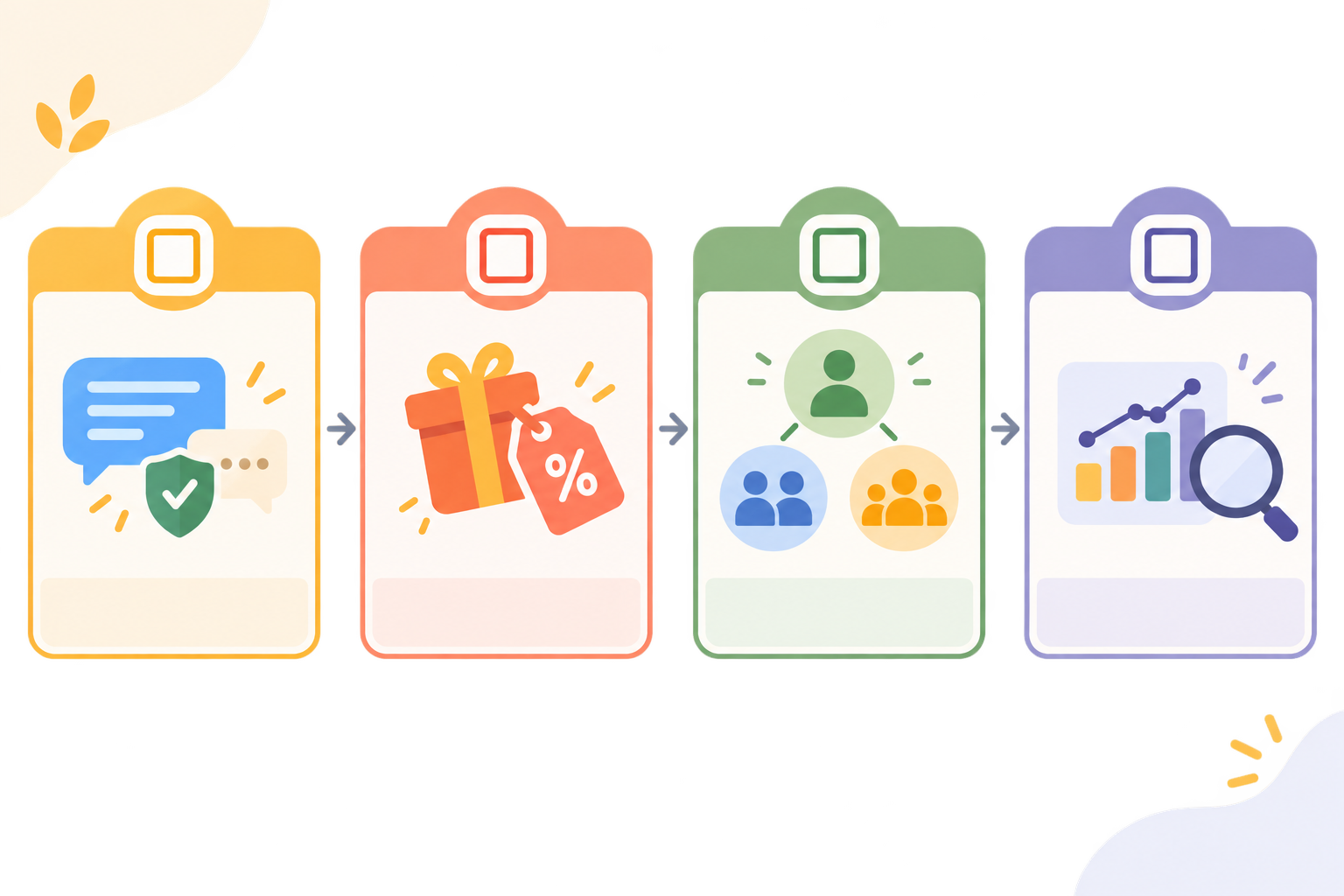
- Week 1, set up the basics. Write your confirmation, shipping and check-in messages as templates, and add a consent tick-box to checkout.
- Week 2, choose one return offer. Something like R50 off the second order, added to your thank-you message.
- Week 3, segment your customers. Sort them into first-timers, repeat buyers and quiet buyers, then send a friendly 'we miss you' note to the quiet ones who've given permission.
- Week 4, review. Look at redemption and reply rates, then decide whether a membership, rebooking option or VIP list could be your next step.
Start small and stay consistent. That's what works. 💛
FAQ: Repeat customers
How soon should I contact a customer again after they buy?
Send an order confirmation straight away, a dispatch update when it ships, and a personal check-in 1-2 days after delivery. Wait until they've had time to use the product before asking for a review or suggesting something new. That's roughly 1-3 weeks after delivery for fast-moving products and longer for items like clothing.
Do I need a loyalty programme to get repeat customers?
Not at first. A thoughtful thank-you, a quick follow-up and one simple return offer will do more than a points system most small shops can't maintain. Consider a formal programme when customers buy often in small amounts, and keep the rules clear, as the CPA expects.
What offers work best for small shops?
Simple ones: a modest second-order discount (for example R50 off), free delivery over a set amount, bundles, early access and small surprise extras. Test one at a time and check the offer still leaves a healthy margin after fees and costs.
How do I keep track of customers without a complicated system?
Start with names, contact details, what they bought, when and how much. Keep it in one place, and group customers into first-time, repeat and quiet buyers so you know who to message and when.
Can I message customers on WhatsApp or email without asking?
Order updates, like confirmations and delivery notices, are fine. For promotions, POPIA generally requires consent. The exception is marketing your own similar products to existing customers, and it only applies if you offered a chance to object when collecting their details and in every message. The safest approach is a clear opt-in at checkout, a record of consent and an easy way to unsubscribe. Check the Information Regulator's current guidance if you're unsure.