Cancellation Policy Examples for Freelancers and Service Pros: Copy-and-Adapt Wording for South Africa
Explore cancellation policy examples for South African service businesses, with adaptable wording on notice periods, fair fees, emergencies and where to display your policy.
13 min read
On this page
Cancellation Policy Examples for South African Service Businesses (Copy and Adapt)
A good cancellation policy is short, specific and visible before the client pays. Most South African service pros do well asking for 24 to 48 hours' notice, charging a fair portion of the booking fee for late cancellations, and showing the policy on the booking page and in the confirmation message. Below are relaxed, balanced and strict cancellation policy examples you can copy and adjust. I've also covered how to handle emergencies and regular clients without feeling like the bad guy. 🙂
Why every South African service business needs a written cancellation policy
Picture this. You've blocked out Saturday at 10:00 for a R600 photo session. At 09:50 the client messages: "So sorry, something came up!" Or you're a tutor and a R450 maths lesson evaporates with ten minutes' notice. You can't resell that hour. The slot is gone, the petrol is spent, and you're left deciding whether to say something or swallow it.
A written cancellation policy isn't about punishing clients. It protects your income and treats everyone the same way. Clients like clarity too. An unwritten rule feels personal ("Why is she charging me?"), while a written one feels professional ("Oh, that's just how it works").
There's a South African angle as well. Load shedding, Friday traffic on the N1 and the odd taxi strike mean last-minute changes are a fact of life. Having a plan beats improvising every time, and it keeps you fair when a genuine curveball lands. And when the client agrees to your terms before paying, the conversation happens before the booking, not in a tense WhatsApp argument afterwards.
What to include in a service business cancellation policy
You don't need a legal essay. You just need answers to the questions clients will otherwise ask at the worst possible moment:
- Notice period: the cut-off after which a cancellation counts as late (for example, 24 or 48 hours).
- Fee or deposit: a clear rand amount or percentage, such as 50% of R800 = R400.
- Rescheduling rules: how many free reschedules are allowed, and how far ahead they must be requested.
- Late arrivals: whether the session is shortened or the full fee still applies.
- No-shows: what happens if the client doesn't pitch and doesn't tell you.
- Your own cancellations: what you'll do if you need to cancel, such as a refund or priority rebooking, so the policy feels fair both ways.
- Refund method and timing: how refunds are paid and roughly how long they take.
My golden rule is about five short lines on the booking page. If it needs a scroll bar, nobody will read it. (The longer examples below are templates, so trim them to fit.)

How much notice should I ask for, and should I charge a cancellation fee?
There's no single South African notice period that fits every service booking. The right window depends on your service, how far ahead people book, and how easily you can refill the slot. My rule of thumb: the longer it takes you to refill a slot, the longer your notice period should be.
Here are typical starting points. These are policy choices, not legal requirements, so adjust them to your own work:
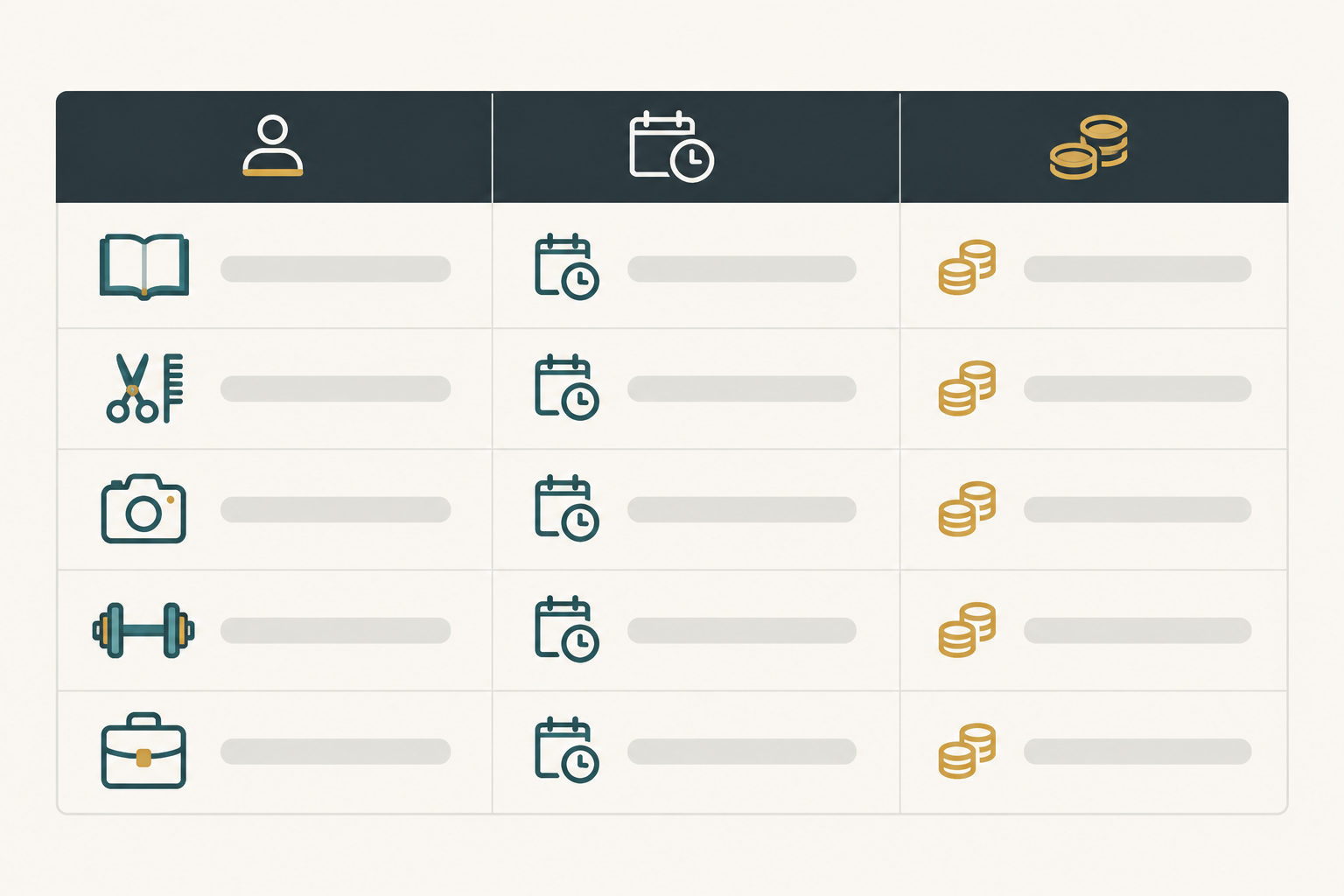
| Service type | Typical notice window | Common fee approach |
|---|---|---|
| 1-on-1 coaching or tutoring | 24 hours | 50% fee or reschedule credit |
| Hair and beauty | 24 to 48 hours | Deposit forfeited for long appointments |
| Photography and videography | 7 to 14 days | Non-refundable deposit plus fee for very late changes |
| Personal training | 12 to 24 hours | Session charged or credit used |
| Consulting and project work | 48 hours to 5 working days | Fee for time already reserved or work done |
Cancellation fee options
You've basically got four choices for late cancellations:
- Full fee: you charge the whole session.
- 50% fee: a middle path that covers some of your lost time without feeling extreme.
- Forfeited deposit only: the client loses what they paid upfront and owes nothing more.
- Credit toward a future booking: the client keeps some value and you keep the relationship.
A cancellation fee example in rand
Say you charge R750 for a session and take a R200 deposit when the client books. A client cancels two hours before. Here's how each option plays out:
- Deposit only: you keep the R200. You've absorbed R550 of lost income, but nobody's upset.
- 50% fee: the fee is R375. The R200 deposit counts toward it, and the client owes the remaining R175.
- Credit approach: the R200 deposit becomes credit. When they rebook, they pay the remaining R550. Decide upfront whether credit expires (say, after 60 days) and put it in your policy.
So, should you charge? For late cancellations and no-shows, most service pros sensibly do. Just pick a fee you'd be comfortable explaining to a friend over coffee.
One legal note. Under the Consumer Protection Act (CPA), section 17 lets consumers cancel advance bookings, but lets you charge a reasonable cancellation fee. What counts as reasonable depends on the nature of the service, how much notice was given, and your chance of finding a replacement customer. A fee tied to your genuine loss is far easier to defend than an automatic full charge, and if you do rebook the slot, reducing the fee is both fair and smart.
Deposits help too. A client who has already paid R200 has a good reason to show up, and you've got something concrete to work with if they don't.
Cancellation policy examples: relaxed, balanced and strict
Here are three examples at different levels of firmness. Copy them, tweak the numbers, and make them sound like you.
Relaxed cancellation policy
Good for new freelancers, community-based services and low-priced sessions.
Life happens! Please let me know at least 12 hours before your booking if you can't make it and we'll find a new time. If you cancel later than that, I'll offer a reschedule credit valid for 60 days.
Balanced cancellation policy
The best fit for most service pros.
I ask for 24 hours' notice to cancel or reschedule. Cancellations inside 24 hours are charged at 50% of the booking fee, with any deposit counted toward that amount. No-shows are charged in full. If I need to cancel, you'll get a full refund or priority rebooking.
Strict cancellation policy
For high-value, limited-capacity work like photography, workshops or retreats.
A 30% deposit secures your date. Rescheduling is free up to 7 days before, and your deposit moves to the new date. If you cancel more than 7 days before, I keep the deposit and nothing more is owed. If you cancel inside 7 days, 100% of the booking fee applies. Your deposit counts toward that amount, so you pay only the balance.
A quick caution on the strict version: a full charge needs to line up with your genuine loss. If you can rebook the date, consider reducing it. South African law, including the Conventional Penalties Act, lets a court reduce a penalty that's out of proportion to the actual prejudice. So a flat "no refunds, ever" isn't the safe shield it sounds like.

How to choose the right cancellation policy
Match strictness to two things: how hard the slot is to refill, and how much prep you do in advance. A R300 walk-in-friendly service can be relaxed. A wedding shoot that blocks your whole Saturday and needs a week of editing should be strict.
How to write a firm but friendly cancellation policy
- Use "I" and "you". It sounds human.
- Explain the why in one sentence ("I keep my diary small, so late gaps can't be refilled").
- Skip the shouty capitals and legal-sounding threats.
Before (harsh): "NO REFUNDS. CANCELLATIONS WITHIN 48 HOURS FORFEIT 100% OF FEES. NO EXCEPTIONS. CLIENTS WHO FAIL TO ARRIVE WILL BE BLACKLISTED."
After (firm but friendly): "I keep my diary small so every client gets my full attention, which means late gaps are hard to fill. Please give 48 hours' notice to move or cancel. Inside 48 hours, a 50% fee applies. If I manage to rebook your slot, I'll happily reduce it."
Same boundary, completely different feeling.
Cancellation policy examples by service type
Each of these states a notice period, a consequence, how the deposit is treated and what rescheduling is allowed. Swap in your own rand amounts and deadlines, then trim to fit your booking page.
Photographer or videographer
A R1 000 deposit locks your date and is deducted from your final invoice. Reschedule free up to 14 days before. If you cancel more than 14 days before, I keep the deposit. Inside 14 days, 50% of the package price applies, with the deposit counted toward it. If weather or load shedding makes an outdoor shoot unsafe or impossible, we'll move it to the next available date at no extra cost.
Tutor or coach
Please give 24 hours' notice to reschedule; you can move a session once for free. Later cancellations or no-shows are charged at 50% of the session fee. Session packs are valid for 3 months, and unused sessions expire after that.
Hair, beauty and wellness pro
Please give 24 hours' notice (48 hours for appointments over 2 hours). Later cancellations forfeit the R150 deposit, which is otherwise deducted from your total. No-shows are charged 50% of the service price. If you're more than 15 minutes late, I'll shorten your service so I don't run into the next client.
Personal trainer or fitness instructor
1-on-1 sessions need 12 hours' notice, otherwise the session is charged. Group classes: cancel up to 6 hours before to keep your credit; after that the class is forfeited. Monthly memberships can be paused with 7 days' notice before the next billing date.
Consultant, designer or freelance writer
Calls and workshops can be moved once for free with 2 working days' notice; later changes are charged at 50% of the session fee. If you cancel a project after work has started, you'll pay for work completed to date plus any unavoidable third-party costs, and any unused deposit is refunded.
Workshop or event host
Tickets can be transferred to another person up to 3 days before the event. Cancellations more than 7 days before receive a refund minus a R50 admin fee; after that, tickets are non-refundable but transferable. If I cancel or reschedule, your ticket carries over to the new date, or you can request a full refund.
The workshop wording is only a sample, so set the admin fee and deadlines to match your real costs.
What if a regular client cancels?
Here's the tension: you want to reward loyal clients without making new clients feel the rules are unfair. The fix is a consistent rule with room for goodwill.
Try a standing perk like "one courtesy reschedule per quarter" for repeat clients, and apply it the same way to everyone who qualifies. That's a policy, not favouritism.
Quietly waiving a fee is perfectly fine. What isn't fine is rewriting the policy for one person in public. Keep the policy intact and make the exception your choice. A simple message does the trick:
"This one's on me, but I'll need 24 hours next time."
And keep an eye on patterns. One slip from a loyal client is no big deal. Three late cancellations in two months is a conversation worth having.
How to handle cancellation emergencies gracefully
Every policy needs a pressure valve. Say upfront that you'll use discretion for genuine emergencies, and spell out what you mean: illness, bereavement, an accident, or a serious infrastructure failure like a long power or water outage or a road closure.
The CPA regulations also say a supplier may not charge a cancellation penalty where the person the booking was made for can't honour it because of death or hospitalisation. For CPA-covered bookings, waiving in those situations isn't just kind, it's expected.
A simple cancellation decision flow
Ask yourself:
- Was it genuinely unavoidable?
- Is this the first time?
- Can I refill the slot?
Then choose: waive the fee, offer credit, or charge a partial fee.

Practical tips for handling cancellation emergencies
- Offer credit or a reschedule as a goodwill option when a client is in a bind. It can keep the relationship and your income, but it doesn't replace any refund the client is legally entitled to, and you should never force it on someone. If a refund is due, pay it.
- Handle your own emergencies with the same grace. Apologise, then offer priority rebooking or a small gesture like a discount on the next session.
- Keep a short note of exceptions so you stay consistent and can spot patterns later.
Here's an empathetic reply you can paste into WhatsApp or email:
"Oh no, I'm so sorry to hear that, please don't worry about today. I can move your session to a new date or give you a credit, whichever suits you best. Look after yourself!"
Where should your cancellation policy appear on your booking page?
The best policy in the world is useless if the client never sees it. The CPA expects consumer-facing terms to be in plain language (section 22). Terms with real consequences, like a fee or non-refundable amount, should be brought to the client's attention clearly and before they commit (sections 48 and 49). The Electronic Communications and Transactions Act (ECTA) also expects online suppliers to make their terms available. So burying it in a footer or a later email isn't enough.
Here's where I'd put it:
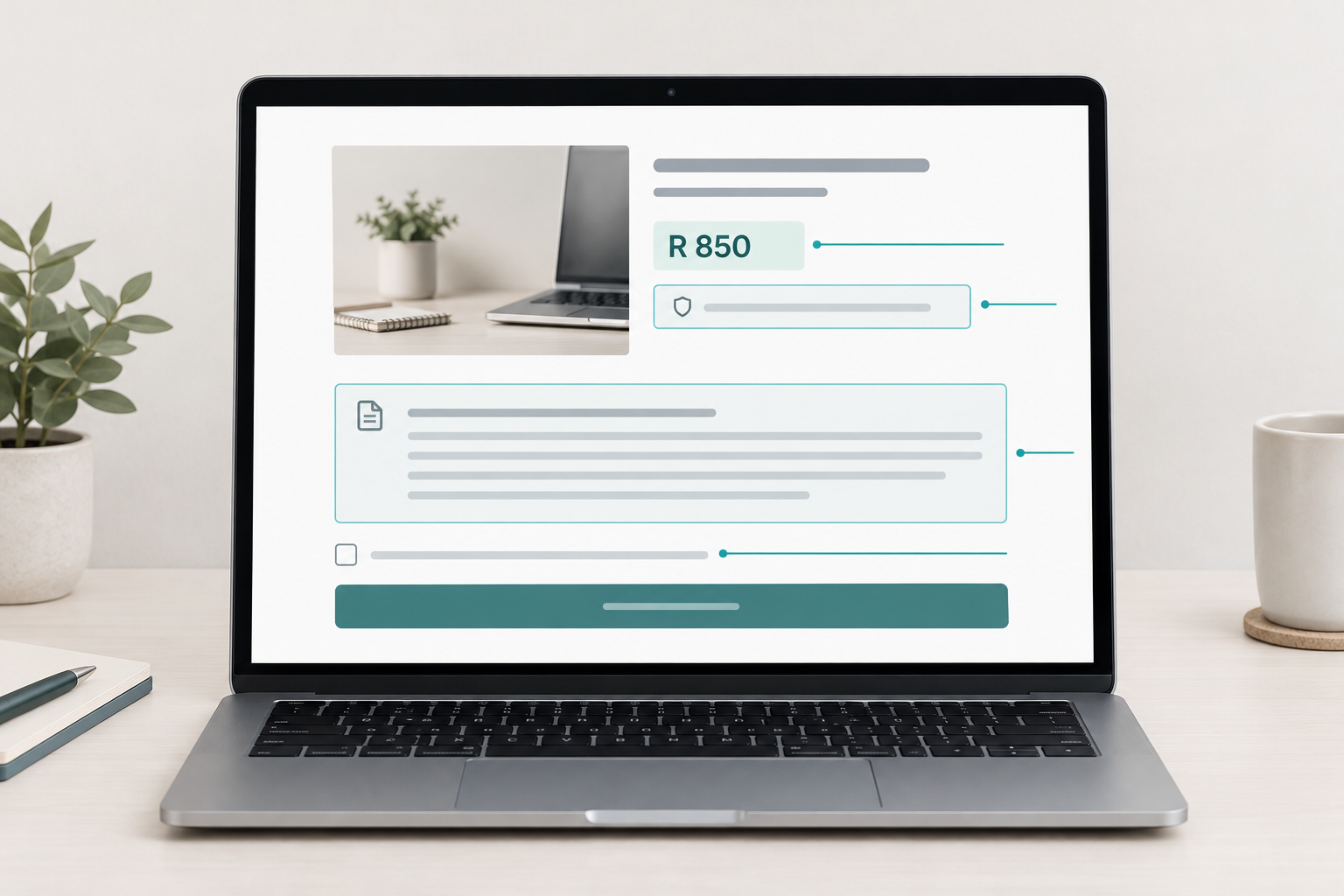
- A one-line summary under the service price, for example: "Free cancellation up to 24 hours before."
- The full policy in the service description, above the Book Now button.
- A tick-box at checkout, so the client agrees before paying.
- A repeat in the confirmation and reminder messages, so there are no surprises.
- A link from your bio page, Instagram highlights and WhatsApp Business profile.
Include the steps for cancelling or rescheduling, the deadline, how any fee is worked out, and what happens to a deposit. If anyone ever says "I didn't know," you can point to exactly where they agreed.
If you'd rather not build a website for this, a tool like Shopstar lets you set up service bookings and appointments with your policy on the same page where clients pay. Whatever tool you use, check that it supports an acknowledgement step at checkout.
South African legal and tax basics for cancellation policies
I'm not a lawyer or accountant, and this is general guidance, not legal or tax advice. How these rules apply depends on your service and your client, so treat this as a starting point for a conversation with a professional.
- CPA: Section 17 lets consumers cancel advance bookings while allowing a reasonable fee, so keep fees proportionate to your real loss. The CPA generally doesn't apply to juristic-person clients above a prescribed turnover or asset threshold (R2 million when it was set), so check current rules if you mostly serve businesses.
- ECTA: It requires clear information for online transactions and includes a seven-day cooling-off right for certain online consumer purchases. There are exclusions, including for some services to be provided on a specific date, so confirm how it applies to your bookings before promising or refusing a refund.
- POPIA: When clients book, you collect names, numbers and sometimes health or personal details. Only collect what you need, store it safely and tell clients how you'll use it.
- SARS and VAT: Cancellation fees and retained deposits are generally part of your business income. If you're VAT-registered, VAT at 15% may apply, so a R1 000 fee that includes VAT carries R130.43 of VAT. How a deposit is treated can depend on whether it's security or payment for a service, so ask your accountant.
- Payment processing costs: If your payment provider charges fees on each sale, check how those fees apply when you refund, so your refund rules and your maths match.
The practical takeaway: keep your fee reasonable and explainable, put it clearly in front of the client, keep proof they accepted it, and get a quick professional check if you're unsure.
How to keep your cancellation policy consistent
Consistency is what makes a policy feel fair rather than personal.
- Use the same wording everywhere: booking page, quotes, invoices, WhatsApp and social bios.
- Apply it the same way to every client, and make exceptions deliberately.
- Review it twice a year. If you're getting too many late cancellations, tighten it. If clients keep pushing back, soften the wording.
- Keep a simple log of cancellations, fees charged and waivers so patterns jump out.
- Tell existing clients when you update the policy, and give them notice before it applies.
- Send automatic reminders if your booking tool offers them. They can cut no-shows and save admin time.
Your next steps for writing a cancellation policy
- Choose relaxed, balanced or strict, based on how hard your slots are to refill.
- Copy an example and adjust the notice period and rand amounts.
- Publish it on your booking page, confirmation message and bio links.
- Check the legal and tax points with a professional if your situation is unusual.
Writing a clear policy takes an afternoon at most, and it can save you plenty of awkward messages. You've got this. 💪
Cancellation policy FAQs
How much notice should I ask for?
For most one-on-one services, 24 hours is a fair starting point. Go for 48 hours if the slot is hard to refill, and 7 to 14 days for bigger bookings like photography shoots or workshops.
Is it legal to charge a cancellation fee in South Africa?
Generally yes, as long as the fee is reasonable and clearly communicated before the client pays. The CPA allows a reasonable fee for cancelled advance bookings, so tie your fee to the time and income you actually lose. For your specific situation, check with a legal professional.
Should I ask for a deposit?
For longer or higher-priced bookings, it's worth considering. A deposit of 20% to 50% commits the client and makes your cancellation terms easier to apply.
What if a regular client cancels at the last minute?
Apply a consistent rule, with a clearly defined courtesy reschedule or the odd goodwill exception. Explain the policy kindly, and keep an eye out for repeated last-minute cancellations.
How do I handle a client who keeps cancelling at the last minute?
Start with a friendly reminder of the policy, then apply the fee. If it keeps happening, ask for payment upfront or a deposit for future bookings.