How to Price Your Services in Rand Without Underselling
Learn how to price your services in South Africa: calculate a sustainable rate from income, costs, billable hours and payment fees, then present clear packages.
13 min read
On this page
How to Price Your Services in Rand Without Underselling Yourself
The short answer to how to price your services: start with the monthly take-home income you actually need, work out the pre-tax profit that produces it, add your business costs, then divide by the hours you can realistically bill. Build payment fees into your final price instead of absorbing them. Then put two or three clear packages on your booking page so clients can say yes without asking for a quote.
Below, I walk through a full pricing calculation in rand, including tax and fees, so you can set a rate from your own numbers instead of a guess. 🧮
A note on figures: the SARS tax and VAT numbers here reflect the 2025/26 tax year as I understand them at the time of writing. Rules and thresholds change, so confirm them on sars.gov.za or with a registered tax practitioner before you publish prices.
Why service providers undercharge, and what it really costs
Picture a photographer in Durban. She charges R600 for a portrait session because that's what a friend charged, and it feels safe. Her diary fills up, which seems like proof the price is right. Yet at the end of the month she's exhausted, the data bill and petrol are paid, and there's barely anything left to save.
I see this pattern with coaches, tutors, stylists and consultants. Underpricing is rarely a maths problem. It's a confidence and information problem. We don't know what we need to earn, so we copy someone else, or we pick a number that won't make anyone flinch.
The real cost goes beyond a thin bank balance. You burn out from needing too many bookings just to break even, you can't take leave, and there's no money left for equipment or training. If you suspect you're already charging too little, jump to the self-check below, then come back and do the maths.
How to price your services: start with what you need to earn
A sound pricing formula runs in one direction. Take-home income comes first, then the profit needed to deliver it after tax, then business costs, then hours.
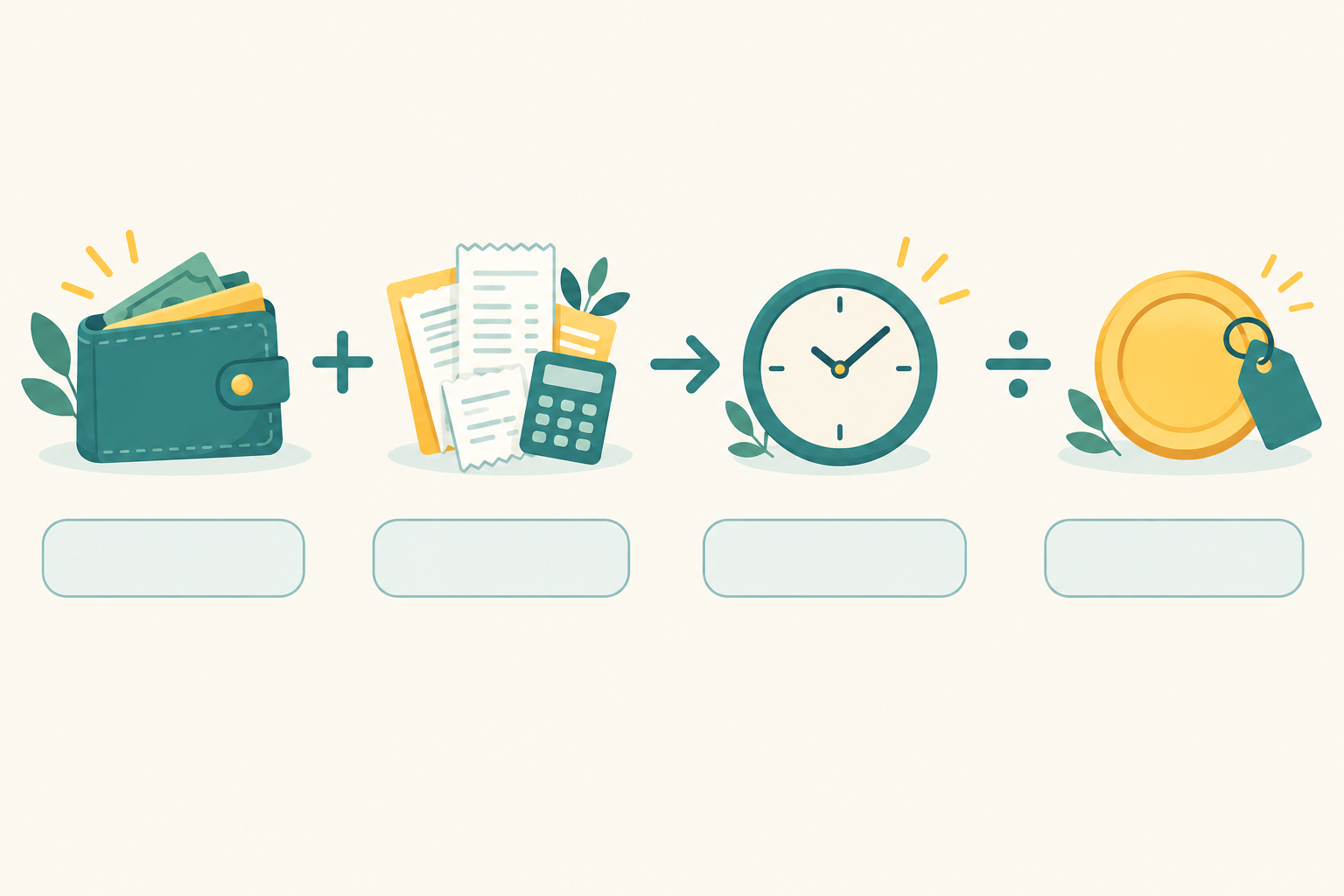
The infographic shows the quick version, which gives a baseline of about R410 an hour. That number is incomplete. It ignores tax and payment fees, so it can't yet deliver a R20,000 take-home. Here's how to finish the calculation.
- Write down your take-home income. Work out what you need each month for rent or bond, food, transport, medical aid, savings and a buffer. Count the boring things too, like car services and licence renewals, split into monthly amounts.
- Estimate your business costs. Think data, software, equipment, insurance, workspace, travel and marketing. Include irregular costs like replacing a laptop, and divide the yearly amount by twelve.
- Convert take-home into the profit you need before tax. Freelancers are generally taxed through SARS provisional tax instead of PAYE on a payslip. Tax is calculated on your taxable profit (income minus allowable expenses), not as a flat add-on to your rate. Individual rates for 2025/26 run from 18% to 45% in progressive brackets, and the primary rebate for people under 65 is R17,235. Your effective rate will sit well below your top bracket, and your own situation (other income, medical credits, retirement contributions) changes the answer. Treat the example below as an estimate and check it with a tax practitioner.
- Work out realistic billable hours. A month might have about 160 working hours, but you won't bill 160. Marketing, admin, travel, messages, training and rest all come out. Many service providers land somewhere between 50 and 70 billable hours, depending on the work.
- Divide the revenue you need by your billable hours. That gives you an hourly floor.
How to calculate a service price: a worked example
Assumptions: you're a sole proprietor under 65, with no other income, no medical credits or retirement deductions, and fully deductible business costs of R4,500 a month.
- Take-home target: R20,000 a month, or R240,000 a year.
- Pre-tax profit needed: at 2025/26 rates, about R276,000 a year gives roughly R240,000 after tax. The tax is around R35,500 after the rebate, an effective rate of about 13%. That works out to about R23,000 a month in profit.
- Add business costs: R23,000 + R4,500 = R27,500 a month in revenue.
- Divide by 60 billable hours: R27,500 ÷ 60 = about R458 an hour.
So the honest floor is around R458 an hour, not R410, and that's before payment fees. Treat it as a floor, not a target. It's the lowest price at which your business meets your needs. It says nothing yet about your skill, demand or results.
How VAT affects service pricing in South Africa
VAT in South Africa is 15%. Registration with SARS is compulsory once your taxable turnover passes R1 million in any 12-month period. Voluntary registration is allowed from a lower threshold, which was raised in 2025, so check the current figure on the SARS website. If you're not registered, you don't charge VAT. If you are, the VAT you collect isn't your income, because you're holding it for SARS. Your displayed prices should be VAT-inclusive, so a R1,000 service before VAT becomes R1,150 on your booking page. The rate in our example is before VAT.
Don't forget payment fees and admin time when pricing your services
Your hourly floor covers the hours you bill. It doesn't automatically cover the unpaid ones around them.
Account for hidden, non-billable hours
Think about everything that happens before and after a session:
- Replying to enquiries and answering the same questions again
- Sending quotes and waiting for answers
- Rescheduling when a child is sick or load shedding hits
- Invoicing and chasing late payments
- Bookkeeping and keeping business expenses separate from personal ones
If you don't price this in, you pay for it out of your own pocket. The cleanest fix is to count admin as non-billable hours (step 4 above). A booking page where clients pick a slot and pay at checkout can also cut a good chunk of the back-and-forth.
How do payment fees affect your service rate?
Every card payment has a processing cost. Here's a R1,000 session using Shopstar's published plans as an example. Fees and plan terms can change, so check the current Shopstar pricing page before you rely on these numbers.
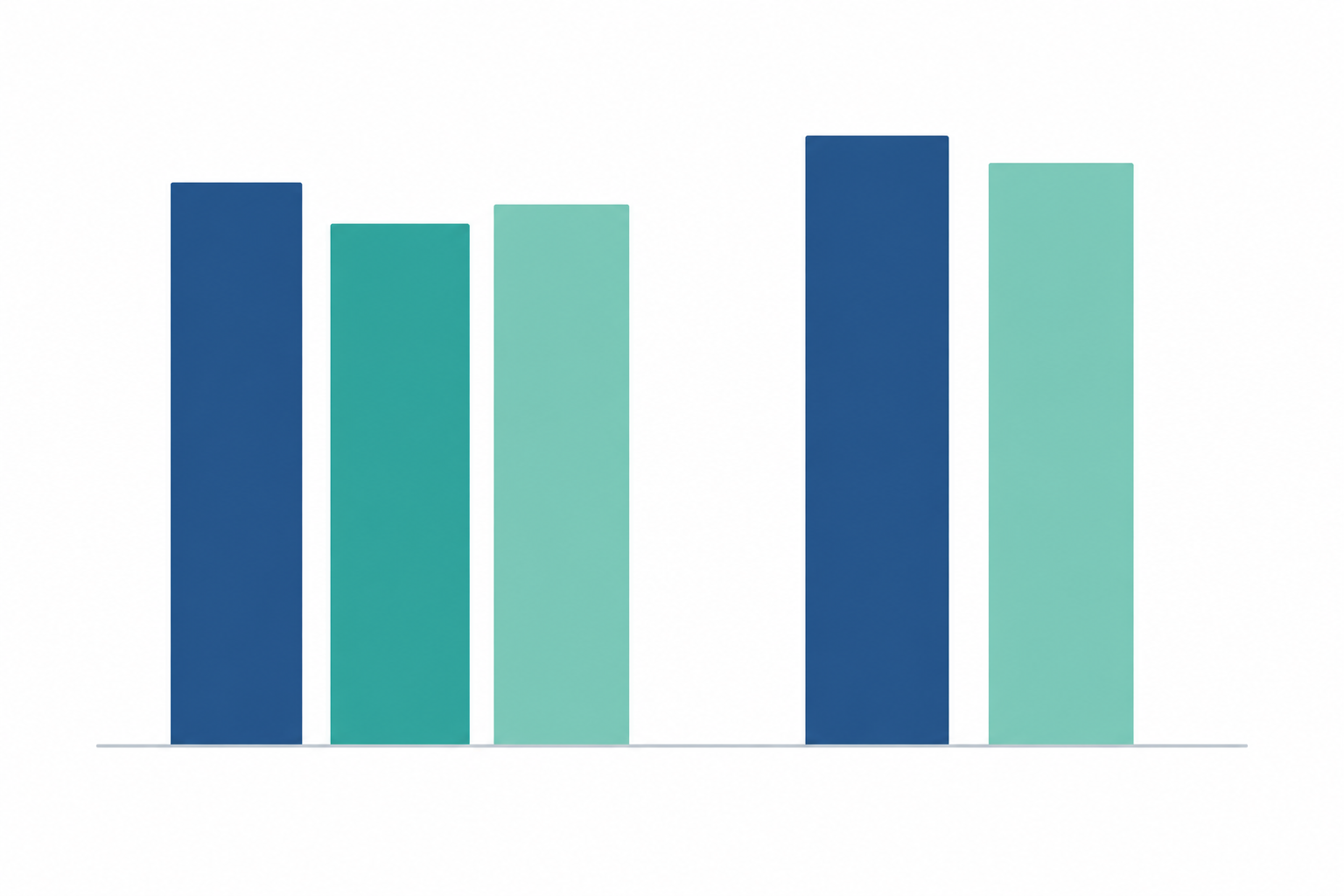
- Start Free plan: no monthly fee, and 6% all-in per sale (a 2.9% payment gateway fee plus a 3.1% Shopstar fee). A R1,000 session leaves you R940.
- Lower Fees plan: a monthly fee, and 2.9% per sale. A R1,000 session leaves you R971, before the monthly fee.
To keep the full R1,000, don't just add 6% on top. You need to gross up:
- At 6%: R1,000 ÷ 0.94 = about R1,064
- At 2.9%: R1,000 ÷ 0.971 = about R1,030
The fee comes out of the total the client pays, not out of the amount you wanted. Add 6% to R1,000 and you get R1,060, but 6% of R1,060 leaves you with R996.40. You'd be short on every booking.
Applied to our worked example, R458 an hour grossed up becomes roughly R472 at 2.9% or R488 at 6%. Fees only apply to payments taken through the platform, so adjust if some clients pay another way.
Which payment plan suits your business?
Start Free is the low-risk way to begin, because you pay nothing until you make a sale. The Lower Fees plan can make sense once the per-sale saving (3.1 percentage points) exceeds the monthly fee. To test it, multiply your typical monthly bookings by 3.1% and compare the result with the monthly fee. On R20,000 of monthly bookings, that saving is R620, so if the monthly fee is lower than that, the plan pays for itself.
Either way, build the fee into your price instead of shaving it off your own pay. Clients see one clear price, and you keep what you planned to earn.
Hourly vs fixed vs package pricing: which model is right for you?
Once you know your floor, decide how to present it. The best model depends on how predictable and repeatable your service is.
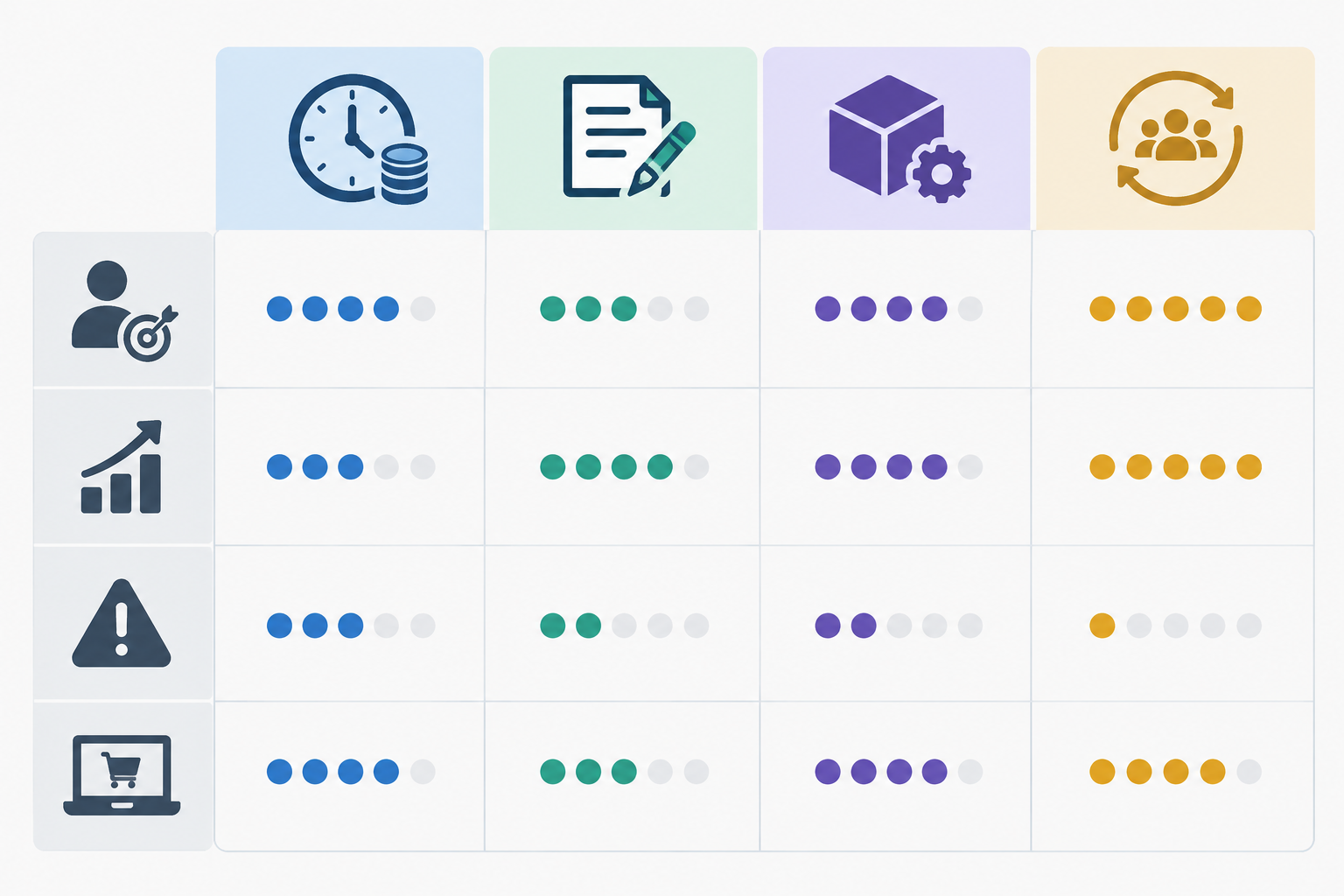
| Hourly | Fixed project | Packages | Retainer or membership | |
|---|---|---|---|---|
| Best for | Consulting, tutoring, unpredictable work | Brand shoots, CV rewrites, clearly scoped jobs | Coaching, personal training, styling | Ongoing support, content, recurring access |
| Income ceiling | Capped by your hours | Higher, if you work efficiently | Good, and grows with upsells | Steady and predictable |
| Main risk | You're penalised for being fast | Scope creep | Too many options confuse people | Needs regular delivery |
| Ease of selling online | Easy, but the final cost is unclear | Easy, if you list what's included | Very easy: clients compare and choose | Easy with a membership site |
A few notes on each service pricing model
Hourly is simple and fair when you can't predict the work. The downside is that the better you get, the less you earn for the same result.
Fixed prices suit work with a clear start and finish. Protect yourself from scope creep with a plain 'what's included' list, and say what counts as an extra, like additional edited photos or a second round of revisions.
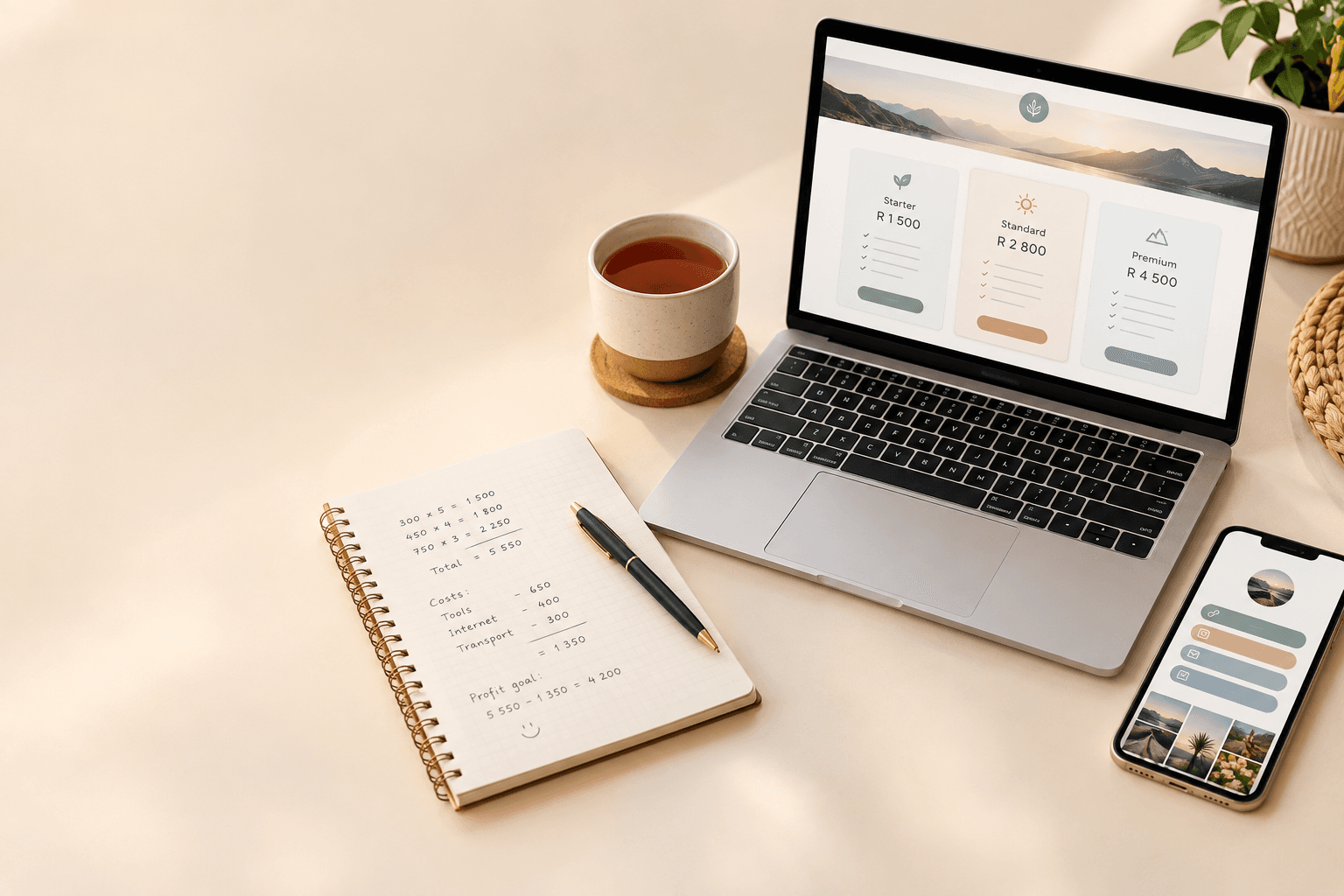
Packages are my favourite for repeat services. Clients compare options easily, and many tend to pick the middle one. Three tiers give people a way to decide without asking for a custom quote.
Retainers and memberships give you recurring monthly income in exchange for ongoing access to your time or content.
Value-based pricing isn't in the table, because it's a way of setting any of the above. You charge for the outcome, not the hours. Say you help a small business owner fix their pricing and they add R5,000 a month in profit. A R6,000 package is easy to justify, even if it took you eight hours. It works well, but you need to explain the result in plain language and be able to back it up.
Many providers mix these: a package for the core service, hourly for one-off extras, and a monthly option for loyal clients.
How to show your service prices clearly on a booking page
You've got your numbers. Now you need to show them.
Should I publish my prices?
In most cases, yes. Published prices filter out poor-fit enquiries, save you repeating yourself, and build trust. Only use 'on request' when scope genuinely varies, and even then give a starting price such as 'from R850' and explain what changes the final cost.
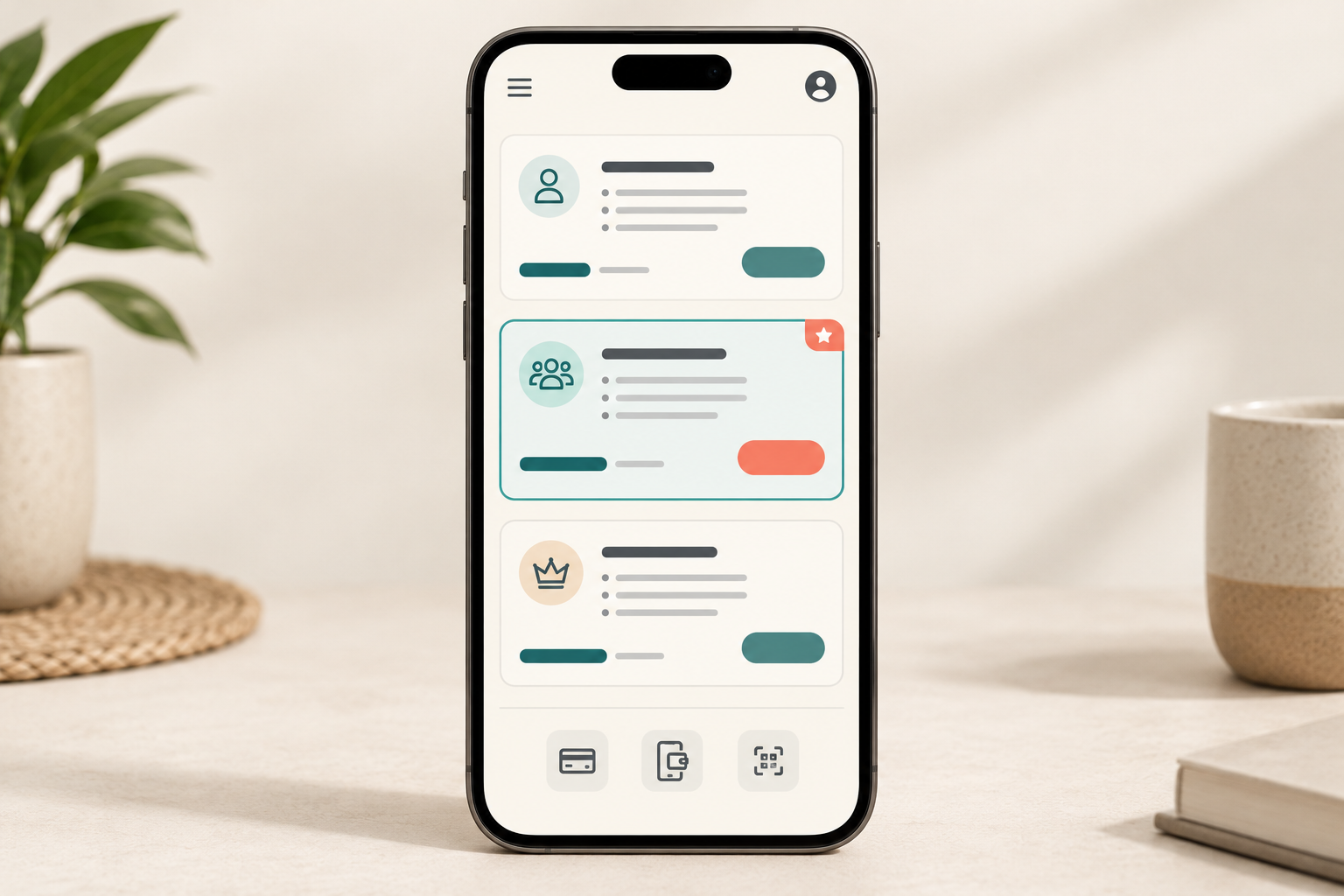
What to include on a service booking page
- Two or three named packages. For each one, say what's included, how long it takes and the price in rand. Resist adding a fourth or fifth option, because too many choices can stall decisions.
- A route from social media. Clients arriving from Instagram, TikTok or WhatsApp should land straight on bookable services with prices, not a generic homepage. A link in bio page that doubles as a simple store, like Shopstar's, means you don't need a full website.
- Online booking and payment. Let clients choose a slot and pay at checkout, so you're not going back and forth in DMs. Check which payment methods and payout schedule your platform currently supports.
- A deposit or full payment upfront. This can reduce no-shows and protects your time. Spell out the amount, when it's due and the balance, for example: 60-minute consultation, R850 (VAT included). Pay a R200 deposit to book; R650 balance due at the appointment.
- Plain-language cancellation and rescheduling terms, such as 'Free rescheduling up to 24 hours before your session.'
Keep the legal housekeeping light
I'm not a lawyer, so confirm specifics for your business, but here's the short version:
- The Consumer Protection Act (CPA) expects clear, honest pricing and fair terms. Section 23 deals with disclosure of prices, so show the price the client will actually pay and flag extras before they book.
- ECTA (the Electronic Communications and Transactions Act) expects online sellers to give full price details and terms before a purchase is confirmed.
- VAT: if you're VAT-registered, show the VAT-inclusive price and say so.
- POPIA: bookings collect names, phone numbers and sometimes health or personal details. Add a short note on how you use that information and who can see it.
There's a business reason to do this too. Baymard Institute research found that 48% of surveyed US shoppers who abandoned an order cited extra costs as too high, and 21% said they couldn't see the total upfront. That's retail rather than bookings, but the lesson carries over: surprise costs lose sales.
Once your core services are priced, you can add extras to the same page, like a prep guide or template pack as a digital download, or tickets to a group workshop.
How do I know if I'm charging too little?
No single sign proves it, so treat these as prompts to check your numbers. If several sound familiar, revisit your calculation:
- Your effective hourly rate (income divided by all hours worked, including admin) is below the floor you calculated earlier
- You're fully booked but still can't cover your costs or save
- Your prices haven't changed in over a year, but your costs have
- You have a waiting list, or most enquiries convert without any questions or negotiation (a hint that demand is strong, worth checking against your conversion numbers)
- You dread certain jobs because the pay doesn't match the effort
- Peers with similar experience and results charge noticeably more (a sense-check only, since you don't know their costs)
Here's a simple test. Raise the price for new enquiries only, leave existing clients alone, and watch for a month or two. If bookings keep coming at about the same pace, you may have room to grow. If they dry up, you've learnt something useful at a low cost.
When and how to raise your service rates
Raising prices feels scary, but it's a normal part of running a business. Here's a calm way to do it.
Know your triggers. Common ones are a waiting list, rising costs (fuel, data, rent), new skills or results, or your annual review.
Decide the new price. Start from your calculated floor, then add an increase that reflects your cost rises and demand. Many sellers review once a year, because one clear increase is easier on everyone than small nudges every few months.
Update your booking page first. New clients should see the new price straight away.
Give existing clients fair notice. About 30 days is a common courtesy. Keep it short and warm. For example:
Hi Naledi, a quick heads-up: from 1 March, my one-hour sessions will be R950 instead of R850. This reflects rising costs and the extra training I've done this year. You're welcome to book before then at the current rate. Thanks so much for your support!
Reward loyalty if it suits you. A grace period, or a locked-in rate for pre-paid bookings, goes a long way.
Honour what's already booked and paid. Anything confirmed and paid at the old price stays at the old price. That's fair dealing, it's consistent with the CPA, and it protects your reputation.
Expect a few clients to leave. That's normal, not failure. Often the most price-sensitive clients go first, though not always, so keep an eye on why people drop off.
Common service pricing mistakes and quick fixes
- Copying a competitor's price. You don't know their costs, tax position or hours. Fix: use your own numbers as the base and compare only as a sense-check.
- Pricing for the client's budget. Fix: price for your numbers, then offer a smaller package for tighter budgets instead of cutting your rate.
- Forgetting fees, VAT or tax. Fix: gross up for payment fees, set money aside for provisional tax, and show VAT-inclusive prices if you're registered.
- Offering too many options. Fix: keep to two or three named packages.
- Discounting first. Fix: adjust the scope instead. A shorter session or fewer deliverables protects your hourly rate.
- Charging after the work. Fix: take a deposit or full payment upfront.
- Never reviewing prices. Fix: put a yearly review in your calendar.
Here's my nudge: grab a pen and write down your take-home target, your monthly business costs and your realistic billable hours. Run them through the five steps, gross up for fees, and pick two or three packages. That one page of numbers is where a price you can stand behind starts. ✨
FAQ: how to price your services
Should I publish my prices?
For most service providers, yes. If your work varies a lot, show a starting price such as 'from R850' and explain what changes the final cost.
How do payment fees affect my rate?
Fees come off every sale, so gross up your price: divide the amount you want to keep by 1 minus the fee rate. For example, R1,000 ÷ 0.94 is about R1,064 on a 6% all-in fee.
How do I announce a price increase?
Update your booking page first, then give existing clients about 30 days' notice in a short, friendly message with the new rate and start date. Honour anything already booked and paid.
Do I need to charge VAT?
Only if you're registered. SARS requires registration once taxable turnover exceeds R1 million in any 12-month period, and VAT is 15%. Check the current voluntary registration threshold on the SARS website or with a tax practitioner.
Is it better to charge per hour or per package?
Packages usually suit repeatable services because clients know what they get. Hourly rates still make sense for open-ended work like consulting, and many providers use both.
How often should I review my prices?
At least once a year, and any time your costs jump or you're consistently booked out.