How to Sell a Mini Course or Online Workshop in South Africa: A Practical Guide
Learn how to sell online workshop tickets or a mini course in South Africa, set your price in rand, and choose simple tools to sell a course online.
14 min read
On this page
How to Sell Online Workshop Tickets or a Mini Course in South Africa: A Practical Guide
To sell online workshop tickets—or a small course—you don't need a course platform for a first offer. Pick one specific outcome, choose between a recorded mini course (delivered as a digital download or members area) or a live workshop (sold as a ticket), price it in rand, and put it on a simple sales page with checkout. If you already sell ebooks or templates, a live one-hour workshop is usually the fastest way to test demand. You can follow it with a recorded version.
That's the short version. Below, I'll walk through how to sell an online workshop without learning complicated software or building a full website. 🙌
Why a workshop or mini course is a natural next step if you already sell digital downloads
If people already buy your ebook or templates, they've told you something useful: they trust you to solve a problem. A workshop or mini course lets you walk them through that problem instead of leaving them alone with a PDF. In my experience, that's where buyers get the most out of what you offer, and where you can charge a little more for it.
Let's keep the definitions plain:
- A mini course is a short, recorded, self-paced product. Think a handful of quick video lessons plus a workbook.
- A workshop is a single, focused session, usually live and usually 60 to 90 minutes, where people work through something together with you.
Neither needs to be a university programme. Small, specific and finished beats big and perfect every time.
Picture a home baker in Cape Town who sells a costing spreadsheet. Customers keep messaging her the same question: "How do I price my cupcakes so I'm not working for free?" She runs a one-hour live session for R250 and answers questions in real time. Then she records it, and a few weeks later she sells the tidied-up replay with a workbook. She never built a course site. She just followed the question her customers kept asking.
We'll cover how to pick your topic, compare live and recorded formats, structure your content, price in rand, set up checkout, and follow up with buyers.
Step 1: Pick a small, specific outcome for your online workshop or mini course
Most first-time course creators start with a topic. Start with a result instead.
- Lead with the result, not the subject. "Set up an Instagram content calendar in one afternoon" beats "Social media marketing". The first one tells a buyer exactly what they'll walk away with.
- Mine your existing customers. Look at the questions people ask about your ebook or templates in emails, DMs, comments and WhatsApp messages. The question that keeps repeating is your workshop.
- Run the "by the end, you'll be able to..." test. If you can't finish that sentence in one line, the scope is too big. Cut until you can.
- Borrow from real local examples. A Joburg bookkeeper could run a "get your admin ready for tax season" session. A Durban photographer could teach phone product photography for small sellers. Both are narrow, practical and easy to explain.
- Check demand before building anything. Run a poll on Instagram Stories, ask five past buyers directly, or float the idea in a WhatsApp community. If three of the five say "yes, when?", you're onto something.
Step 2: Recorded mini course or live workshop: which format should you choose?
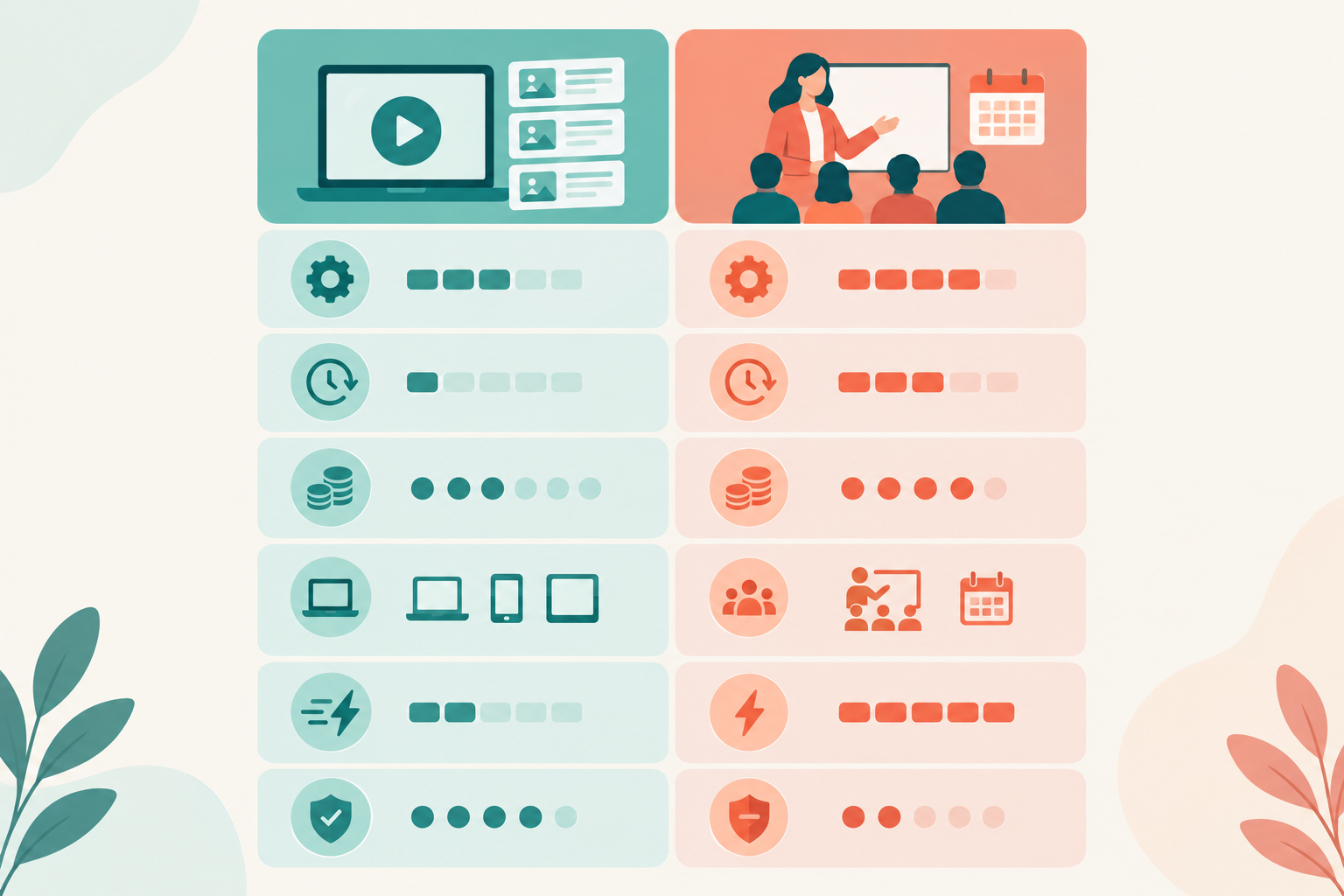
This is the big decision, and neither answer is wrong. Here's how the two formats compare side by side. The prices are starting guidance, not market averages.
| Recorded mini course | Live workshop | |
|---|---|---|
| Effort upfront | Higher: scripting, recording, editing | Lower: outline and slides |
| Ongoing effort | Low: buyers can access it without you being online at a set time | Each live session needs you there |
| Typical price (guidance) | About R300 to R900 | About R150 to R450 |
| Delivery | Digital download (video links, PDFs, workbook) or a members area | Event ticket with a set date and joining link |
| Urgency | Low: buyers can start whenever | High: a fixed date nudges people to book |
| Buyer expectations | Polished, clear, self-paced | Interaction, real-time answers |
| Risk if few people sign up | You've already done the work | Low: you can reschedule or convert it |
Who each format suits
Live suits you if you're comfortable on camera and want quick validation. A set date creates urgency, and the questions people ask in real time feed straight into your next product.
Recorded suits you if you prefer to edit and polish, or you already have a bigger audience likely to buy straight away.
My recommendation: start live, then create a recorded mini course
Run the workshop live first. Record it, tidy up the recording, add your workbook, and sell the replay as a mini course. By then you've tested demand, done most of the content work in a single hour, and collected real questions to make the recorded version better.
A South African reality check for online workshops
Some of your attendees will be on limited data, and load-shedding can knock out a connection at the worst moment. Offering a replay and downloadable notes can ease that worry, but only if you say so clearly. State on your sales page whether a replay is included, how long buyers have access to it, and how they'll receive it. Tell attendees at the start of the session that you're recording. If the recording shows their faces, names or comments, handle that footage responsibly under POPIA.
Do you need a course platform to sell a mini course?
Usually not for a first mini course. A dedicated course platform adds another monthly cost, another set of logins, and a learning curve for you and your buyers. That's a lot of friction for five short lessons.
What you really need is a way to take payment, a way to deliver the content afterwards, and a way to contact your buyers.
A bigger platform can make sense if you're running a long, multi-module programme with quizzes, certificates and cohort tracking. If that's not you (and for a first offer, it almost certainly isn't), keep it simple. A single page you can link from your Instagram, TikTok or WhatsApp bio, with checkout built in, covers the basics. I've put a practical example of how that can work in Step 5.
Step 3: How to structure a one-hour workshop or short mini course
A workshop works best when it has a clear shape. Here's a skeleton you can steal.
- Welcome and promise (5 minutes). Say what everyone will have finished by the end, and mention that you're recording if you are.
- The "why" and common mistakes (10 minutes). Keep it short. People came to do, not to listen.
- Guided doing (30 minutes). This is the heart of it. Walk people through the task step by step while they work alongside you.
- Q&A (10 minutes). Take live questions and write them down, because they're gold for your next product.
- Wrap-up and next steps (5 minutes). Point to your replay, your workbook, and your related ebook or templates.

Give workshop attendees one tangible deliverable
Attendees should leave with something finished: a completed template, a draft, a checklist. That's what makes a workshop feel worth the money. Pair it with a companion download such as a workbook or slides. It's also a low-pressure way to mention your existing templates or ebook.
How long should a mini course be?
Aim for roughly 3 to 7 short lessons of 5 to 15 minutes each, ideally something a buyer can finish in one sitting or over a weekend. My rule of thumb is to cut anything that doesn't directly help the buyer reach the promised outcome. If a lesson is interesting but not essential, it goes.
Tech basics for South African online workshops
- Connection: Test it beforehand. A phone hotspot is a good backup.
- Load-shedding plan: Keep a power bank and a charged laptop, and schedule outside known outage slots for your area.
- Audio over video: Decent sound matters far more than a fancy camera. A cheap headset beats a built-in laptop mic.
- Delivery tool: Zoom, Google Meet or Teams all work fine. Make sure the joining link is in your ticket or confirmation, and send a reminder email too, in case a buyer misses the first message.
Step 4: How to price your first online workshop or mini course in rand
Pricing is where many creators freeze. Here's how I'd think about it.
- Anchor to the outcome, not the hours. What is the result worth to the buyer? What would they otherwise spend on a freelancer, a longer course, or a mistake? A one-hour workshop that saves someone a weekend of confusion is worth more than its running time.
- Start with sensible ranges, as guidance rather than rules. A live workshop often lands around R150 to R450, and a recorded mini course around R300 to R900, depending on your niche and audience. Professional audiences (bookkeeping, business skills) can often go higher. Treat these as a hypothesis to test with real buyers, not a market average.
- Say what's included. Show the price in rand and spell out whether buyers get live access, a replay, downloadable materials or later support.
- Consider a founding-buyer price. A discounted first-cohort price with a set number of places or an end date is a simple way to test demand and reward early buyers. A workshop-plus-template bundle works nicely too.
A worked workshop fee example
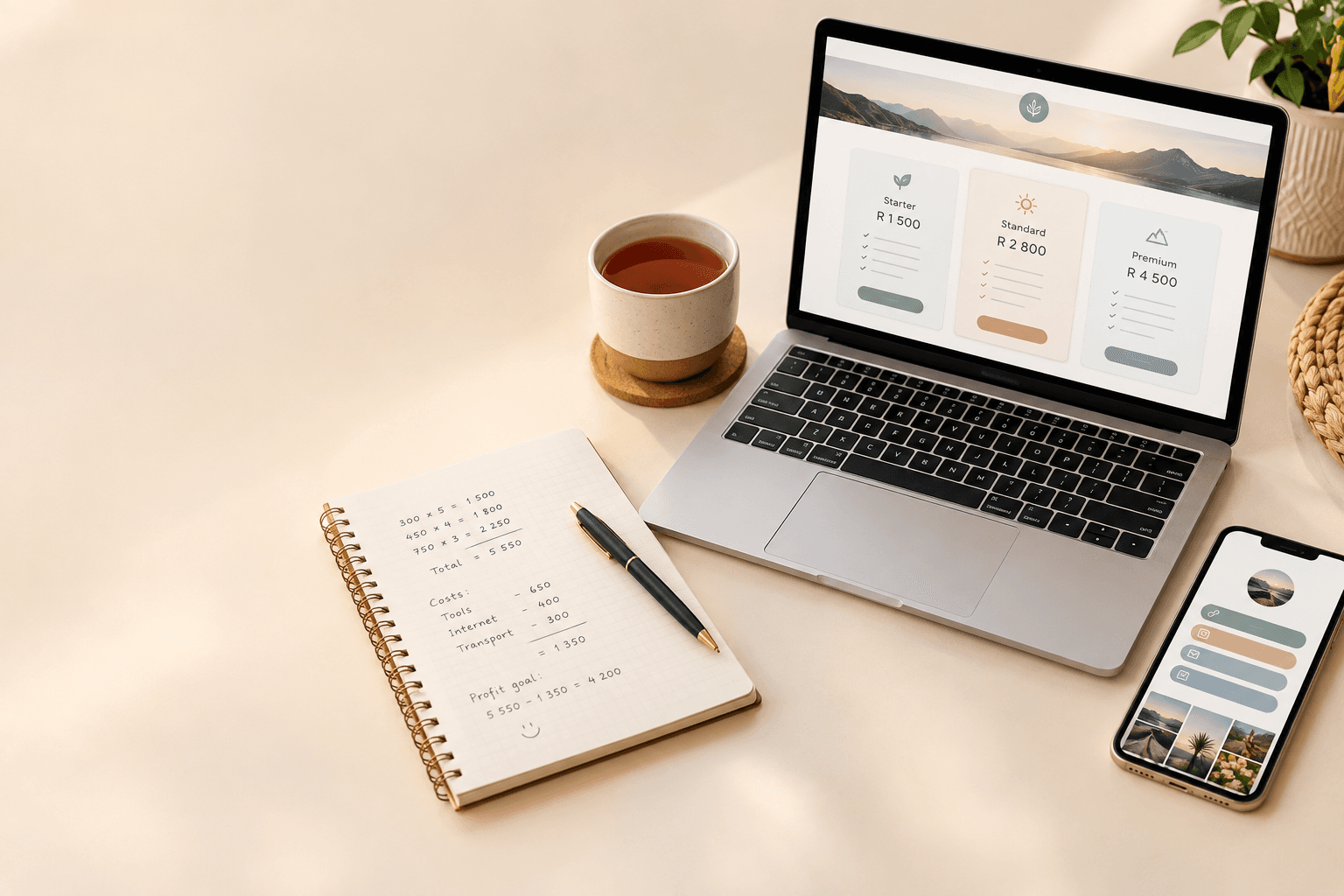
Say you sell a workshop ticket for R350. These are the Shopstar plan rates as I write this. Fees can change, so confirm them on Shopstar's current pricing page before you decide.
- Start Free plan (6% all-in, made up of a 2.9% payment gateway fee plus a 3.1% Shopstar fee): you pay R21 and keep R329.
- Lower Fees plan (2.9% per sale, plus a monthly fee): you pay R10.15 per sale and keep R339.85, before the monthly fee is deducted.
Now picture 20 seats at R399. That's R7,980 in gross sales before fees, refunds and tax. At that volume the difference between plans is real but modest, so starting free and watching your sales build is a reasonable approach. Switching makes sense once your monthly sales are high enough that the lower per-sale rate outweighs the monthly fee. Do the maths with your own numbers, and remember that other costs, such as your video tool or email service, sit outside these figures.
Tax on workshop and mini course sales in South Africa
- VAT in South Africa is 15%. According to SARS, registration is compulsory once your taxable turnover exceeds R1 million in a consecutive 12-month period, and voluntary registration is possible once it exceeds R50,000. If you're registered, make sure your displayed price accounts for VAT.
- Workshop income is taxable income. Keep clear records of your sales and expenses, and check current SARS guidance or speak to an accountant about your situation.
Step 5: Set up a sales page and checkout to sell online workshop tickets or your course
This is easier than most people expect. Here's the order I'd do it in.
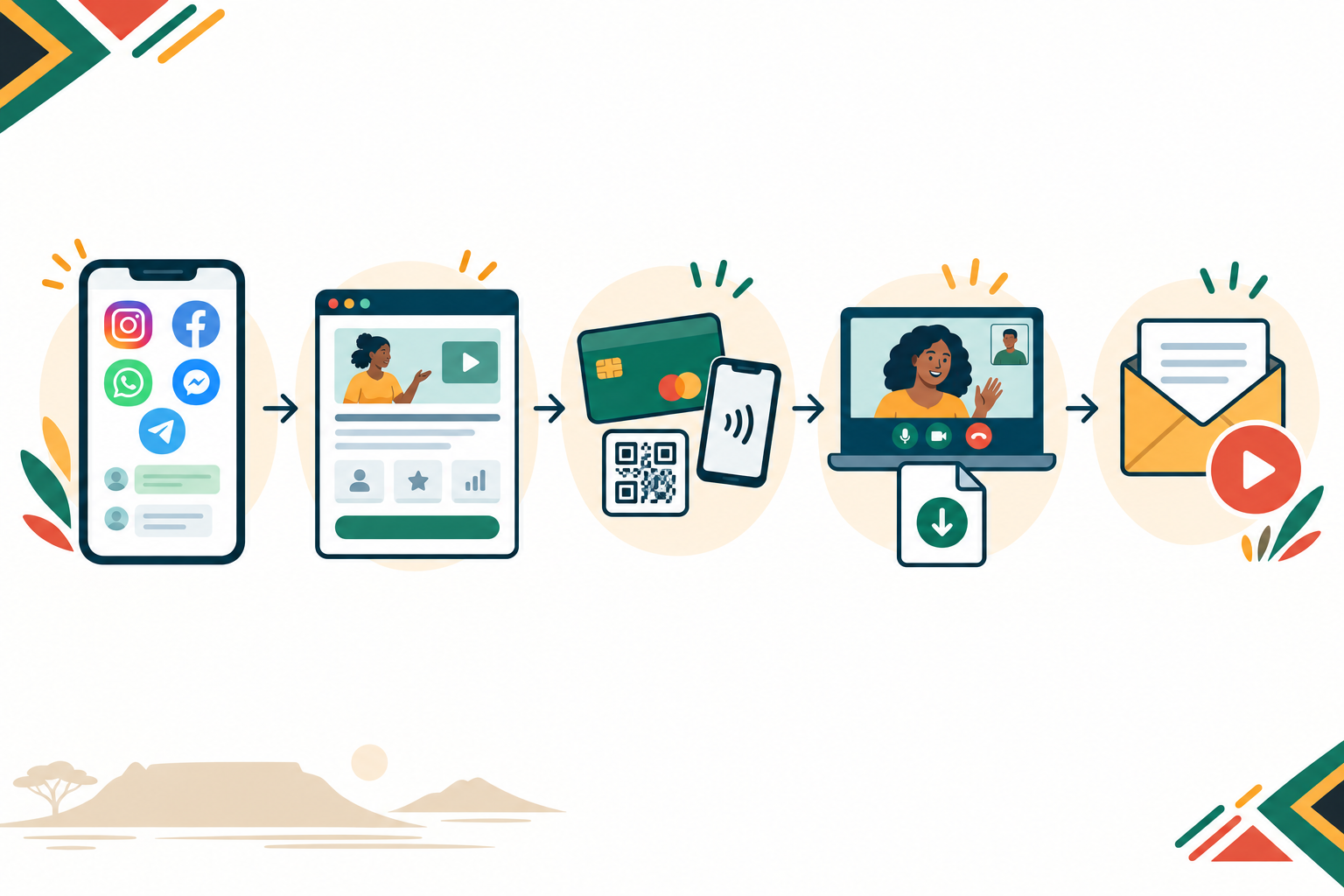
- Create your product. Add the workshop as an event ticket (with date, time and capacity), or add the mini course as a digital download or members area.
- Write a sales page that leads with the outcome. Include a headline promise, who it's for, what they'll walk away with, what's included, the date or access details, and a clear price in rand. Put a buy button near the offer and repeat it after the key details.
- Add proof. Screenshots of ebook reviews, testimonials from past template buyers, or a short intro video all help.
- Be upfront about refunds and cancellations. Your terms matter, but they don't override your legal obligations. The Consumer Protection Act (CPA) and the Electronic Communications and Transactions Act (ECTA) can apply to online sales. ECTA, for example, requires certain supplier and transaction information to be disclosed and includes cooling-off provisions for some distance sales, with exceptions that can differ for events, services and digital content. Check current guidance from the National Consumer Commission, or have your terms reviewed by a legal professional, then state them clearly before payment.
- Offer easy payment. Make sure buyers can pay in ways they trust: card, and where available, options like Apple Pay or Scan to Pay.
- Share the link everywhere you already show up: your Instagram or TikTok bio, WhatsApp Status, email signature and newsletter.
- Set up delivery before you launch. Decide what buyers receive after paying (a joining link, a download or members-area access), then check that your confirmation message actually includes it.
Platform example: selling a workshop or mini course on Shopstar
Here's where I can speak from the inside, so treat this as one example rather than the only route. On Shopstar you can sell a live workshop as an event ticket and a recorded mini course as a digital download or members area, all from one shopstar.page link (or your own domain). Shopstar Go can accept card, Apple Pay and Scan to Pay, with payouts to your South African bank account. What's available to you depends on your plan and account setup, and delivery details such as joining links and download access depend on how you configure each product and its confirmation. Shopstar also offers onboarding support if you'd like a hand with setup. Whatever platform you choose, run through the same checklist: payment, delivery, contact details.
Test your checkout like a buyer
Before you announce anything, make a test purchase on your phone. Check the confirmation, the links and the access. Most of your buyers will be on mobile, often on mobile data, so a short, clear checkout and a light page matter. Baymard Institute's cart abandonment research puts the global average at around 70%. That's not a South African figure, but it shows why every unnecessary step costs you sales.
What if nobody signs up for your online workshop?
First, breathe. A quiet first launch is information, not failure. Here's how I'd work through it:
- Check the usual suspects. Is the outcome specific enough? Is the price in line with the value? Is the page clear? Did enough people actually see it?
- Talk to people directly. DM ten past buyers or followers and ask what's holding them back. You'll learn more from ten replies than from a week of staring at analytics.
- Adjust and re-run. Tweak the title, shorten the format, add a bonus, or move the date so you get two to three weeks of promotion.
- Decide your minimum in advance. Set a minimum attendance and choose beforehand what you'll do if you miss it: reschedule, convert to a recorded version, or refund buyers. Put that in your terms.
- Warm up your audience. A free mini lesson or teaser before launch builds interest and shows people what your teaching feels like.
Step 6: Follow up with workshop attendees
The sale isn't the end. Repeat customers come from the follow-up.
- Send the replay, slides and workbook within 24 hours, while momentum is high.
- Ask for feedback and a short testimonial. A simple two-question form works well.
- Use what you hear. The questions from your Q&A are the outline for your next product.
- Offer a logical next step: your ebook, templates, a deeper mini course, or a one-on-one session.
- Respect POPIA. Only add buyers to marketing lists with clear consent, make it easy to opt out, and store attendee details responsibly. The Information Regulator has guidance if you're unsure.
- Keep track of who bought what. Even a simple spreadsheet, or your store's customer data if your platform offers it, helps you spot repeat buyers and make the right offer to the right person.
Simple launch checklist for selling an online workshop
- Choose one specific outcome and test it with five people.
- Pick live, recorded or the hybrid path.
- Outline the workshop or lessons and create a companion download.
- Set your price in rand and write your refund and cancellation terms.
- Build the page, add event tickets or digital downloads, and test the checkout yourself on your phone.
- Promote for two to three weeks, then run it, record it (with notice) and follow up.
- Start small, learn fast, and let your first cohort shape what you build next.
Your next step is simple: message five past buyers today and ask which problem they'd pay to have solved in an hour. You already know how to help people. Now you're just packaging it a new way. 💛
FAQ: selling an online workshop or mini course
Do I need a course platform to sell a mini course?
Not usually. For a short mini course or a single workshop, you mainly need a sales page, secure checkout and a reliable way to deliver the content. Many ecommerce platforms, Shopstar included, can sell a workshop as an event ticket or a mini course as a digital download or members area, so you may not need separate course software.
How long should a mini course be?
Three to seven short lessons of 5 to 15 minutes each is a good starting point. Focus on one clear outcome and cut anything that doesn't help buyers get there.
How do I deliver an online course or workshop after payment?
For a recorded mini course, set up your product so buyers receive download links or members-area access in their confirmation. For a live workshop, put the joining details in the ticket confirmation, send a reminder before the session, and email the replay and workbook afterwards. Always test the full journey with your own purchase first.
What if nobody signs up for my workshop?
Treat it as feedback. Check that your outcome is specific, the price matches the value and enough people saw the page. Ask a few people directly what held them back, then adjust the offer or timing and run it again.
Do I have to pay tax on workshop income in South Africa?
Yes, the income counts as taxable income in South Africa, so keep clear records of your sales and expenses. VAT registration is compulsory once taxable turnover exceeds R1 million in 12 months. Check SARS guidance or speak to an accountant about your situation.
Can I offer refunds on a workshop or online course?
You should state a clear refund and cancellation policy on your sales page, but your policy doesn't override consumer rights that apply by law. The CPA and ECTA may apply to online sales, and the rules can differ for events, services and digital content. Check current guidance from the National Consumer Commission, or ask a legal professional to review your terms before you launch.